Coordination Drill on Wunda Chair: Syncing Breath with Movement
 Written by Vivien, Pilates Instructor, Prenatal Pilates Certified, Pilates Academy Arjan
Pilates Academy Arjan offers full classical apparatus including the Wunda Chair in small group sessions. Located at Building 88, Shop 05, Al Barsha South Third in Arjan, Dubai, you can attend classes from 7 AM to 10 PM on weekdays. New clients start with three classes for AED 300 including 5% VAT, booked via Glofox.
What is the coordination drill on the Wunda Chair?
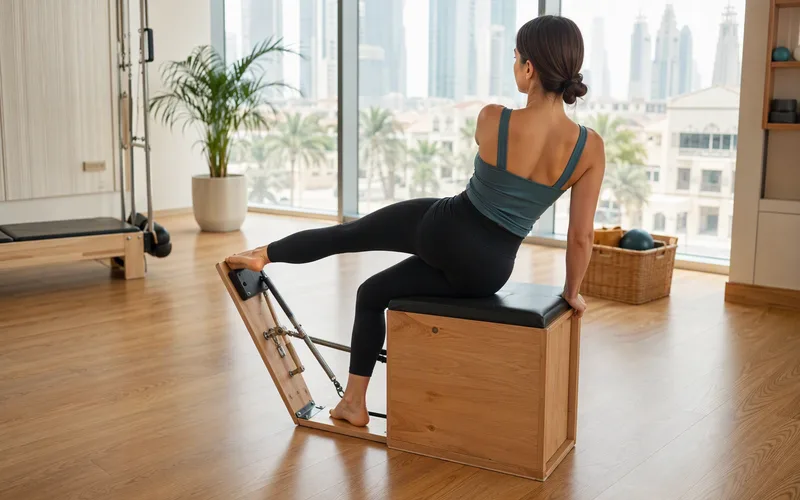
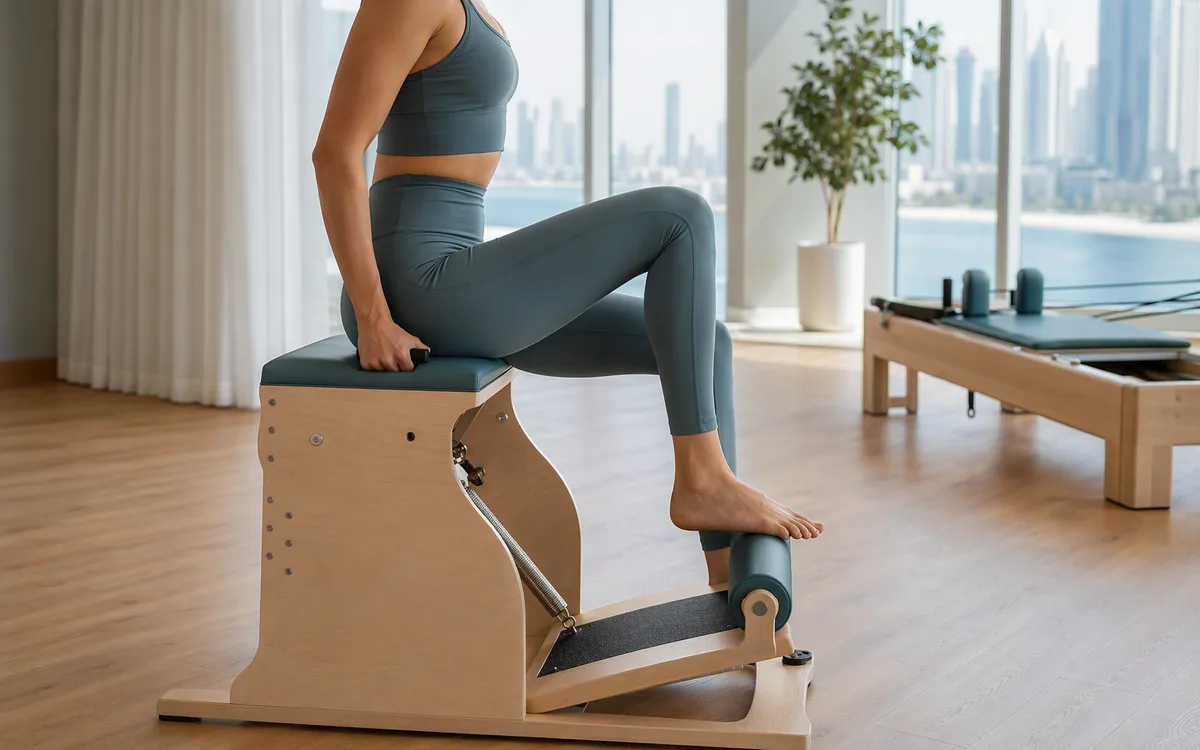
The coordination drill refines your ability to link breath and movement on the Wunda Chair. You position yourself facing the chair's back, feet on the pedal. As you press the pedal down, you exhale fully, drawing your abdominals inward. On the inhale, you allow the pedal to rise slowly under controlled resistance from the springs.
This exercise follows the classical order and prepares you for more complex sequences. Your arms extend forward or alongside your torso to maintain length through the spine. Instructors at Arjan emphasise the role of the transverse abdominis in stabilising your pelvis during the press.
How do you set up correctly for this drill?
Sit squarely on the chair's seat with your sit bones rooted and spine elongated. Place the balls of your feet on the pedal edge, heels together and toes slightly apart. Grip the front handles lightly if needed for initial stability, but aim to release them as you gain control.
Need setup advice? Call the Arjan studio on +971 56 216 8166 or message us on WhatsApp.
Adjust the spring tension to one or two springs for beginners, increasing as your strength builds. Your knees align over your ankles throughout. This precise setup prevents strain and allows smooth breath-movement sync.
Why focus on syncing breath with the press and release?
Breath acts as your internal rhythm in Pilates. Exhale on the exertion phase, the pedal press, to engage your core fully. Inhale on the return supports spinal decompression and refills your body with oxygen.
Without this sync, movements become disjointed, reducing effectiveness. Practice reveals how breath influences ribcage expansion and pelvic floor activation. Over sessions, this timing becomes instinctive, enhancing all apparatus work.
For related Chair exercises, see our guide on Pilates Chair exercises for strength.
What common form errors occur and how to correct them?
Holding the breath
Many newcomers hold their breath during the press, which tenses the upper body. Focus on a full exhale through your mouth to release tension. Inhale deeply through your nose on the rise to reset.
Arching the back
Avoid lumbar arching by imagining a string pulling the crown of your head upward. Draw your navel to spine on every exhale. This maintains neutral pelvis alignment.
Another error is uneven pedal pressure; distribute weight evenly across both feet. Instructors correct these in real time during Arjan classes.
How does this drill improve your overall coordination?
The drill trains multi-joint coordination between legs, core, and breath. Pressing the pedal requires hip and knee flexion while stabilising the torso. This mirrors demands in exercises like Side Plank on Chair.
Regular practice sharpens neural pathways for fluid transitions. You notice better flow in sequences across Reformer or Cadillac. Group classes at Arjan reinforce this through anatomy cues.
When should you progress this drill?
Master the basic version with feet on the pedal before adding arm variations. Progress when you complete 8 to 10 reps with steady breath and no back sway. Introduce hand positions like reaching overhead on the press.
Link it to full Chair series once coordination feels natural. Sessions build progressively in small groups. Track your ease with the breath sync as a readiness sign.
How does the Wunda Chair differ from Reformer for coordination?
The Chair's compact design demands upright posture, unlike the Reformer's supine options. Springs provide direct vertical resistance, honing precise control. This upright work complements Single Leg Circle on Reformer.
Chair drills emphasise standing and seated stability, transferable to daily movement. At Arjan, you experience both for balanced development.
Common questions
Is the coordination drill suitable for beginners?
Yes, start with lighter springs and instructor guidance. New clients at Arjan begin with modifications in capped classes. Build to full range over your first three trial sessions.
How often should you practise this drill?
Aim for two to three classes weekly. Consistency refines the breath-movement link. See our article on how many Pilates classes per week for beginners.
Can you do this drill at home?
No, it requires the Wunda Chair's apparatus. Join Arjan classes for proper equipment and form checks. Home mat variations approximate but lack resistance precision.
What muscles work most in this exercise?
Core stabilisers, hip flexors, and quadriceps lead, with breath engaging the diaphragm. Shoulders and back extensors maintain posture. Instructors detail this anatomy in sessions.
How long until you notice coordination improvements?
Most see gains within four to six classes. Focus on quality over speed. Small group format accelerates feedback and progress.