Fuse Ladder Horse Side Variation: Form for Lateral Leg Work
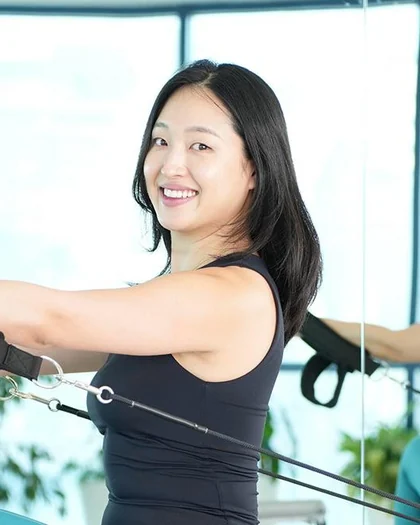 Written by Eun Sol, Pilates Instructor, Prenatal Pilates Certified, Pilates Academy Arjan
This exercise draws from classical Pilates principles, adapted for the Fuse Ladder. It follows the standard Horse exercise but adds a side component for targeted lateral work. At Pilates Academy Arjan, a full-apparatus studio in Dubai, you access this alongside Reformer, Cadillac, Chair and Matwork in group sessions.
What is the Fuse Ladder Horse side variation?
The Fuse Ladder Horse side variation builds on the basic Horse exercise. In the standard version, you perform vertical jumps or presses with both feet on the bar. This side variation introduces lateral shifts, where you move one leg out to the side while the other stays grounded. It emphasises control over power, engaging the outer hip muscles known as gluteus medius.
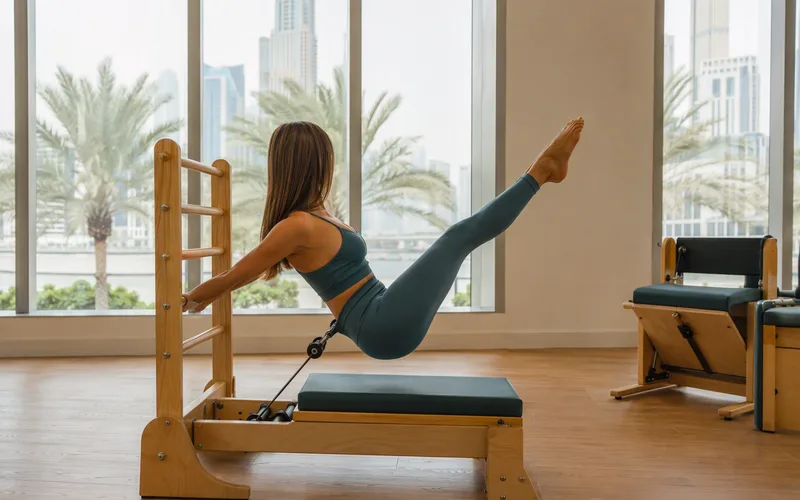
You start in a squat position facing the ladder. Your hands hold the rungs firmly, shoulders relaxed away from ears. As you shift laterally, the moving leg circles slightly outward before pressing back to the bar. This pattern repeats for several sets, alternating sides.
In group classes at Arjan, instructors cue the anatomical focus, such as the role of tensor fasciae latae in stabilising the hip. Read more on the Fuse Ladder Horse for leg strength to understand the foundational move.
How do you set up correctly on the Fuse Ladder?
Position the foot bar at mid-height on the Fuse Ladder, around waist level for most people. Stand with your back to the ladder, feet parallel and hip-width on the bar. Place your hands on rungs at chest height, fingers wrapping around for grip. Your knees track over toes in the starting squat.
Foot placement details
Keep heels and toes even on the bar. Avoid gripping with toes, which can shorten the calves. Press evenly through the full foot to maintain balance during lateral shifts.
Hand and shoulder alignment
Grip the ladder without locking elbows. Shoulders stay down, creating space between ears and shoulders. This prevents tension from creeping into the neck as you move.
Adjust the bar height if needed; shorter people may lower it slightly for stability.
Need setup help? Call the Arjan studio on +971 56 216 8166 or message us on WhatsApp.
What are the key form cues for lateral leg work?
Maintain a neutral pelvis as you shift weight sideways. The stationary leg bends into a plie while the moving leg extends out at hip height. Avoid leaning your torso; use your core to keep ribs stacked over hips. Inhale to prepare, exhale as you press the leg out.
Focus on the hip joint initiating the movement, not momentum from the upper body. The leg traces a small semi-circle, engaging both abductors and adductors sequentially. Return to centre with control, pausing briefly before switching sides.
Common faults include arching the lower back or dropping the ribs. Instructors correct these in real time during Arjan classes. For related outer hip work, see the Fuse Ladder Side Kicks article.
How does breathing support the movement?
Coordinate breath with action for better stability. Inhale as you shift weight and lift the leg, expanding your ribcage laterally. Exhale fully to press the leg out and return to centre, drawing the abdominal wall inward.
Diaphragmatic breath pattern
Use a full inhale into the sides of the ribcage, avoiding shallow chest breathing. This supports lateral expansion matching the leg movement. Exhale engages the transverse abdominis for control.
Practice this pattern slowly at first. It mirrors cues from our First Mat Class breathing basics. Consistent breathing prevents strain during repetitions.
What common mistakes should you avoid?
Do not rush the lateral shift; speed compromises control. Keep the movement deliberate, with the leg hovering rather than swinging. Another error is allowing the pelvis to tilt; imagine a glass of water balanced on your hip to stay level.
Avoid overarching the back by tucking your tailbone slightly under. If shoulders rise, reset your grip and relax. Beginners often neglect the return phase; make it as precise as the outward press.
Watch for uneven reps between sides. Instructors at Pilates Academy Arjan spot these imbalances early. Progress only when both sides feel even.
How do you progress the exercise safely?
Start with small ranges, lifting the leg 20 to 30 cm off the bar. Build to full extension over sessions. Add a pulse at the end range once form holds for 8 to 10 reps per side.
Increase challenge by closing your eyes briefly or slowing the tempo. Advanced variations include crossing the midline slightly before abducting. Always prioritise precision over volume.
Group classes progress collectively, with caps ensuring attention. Link this to full apparatus benefits in What Makes Full Apparatus Pilates Unique at Pilates Academy Arjan.
Common questions
Who can try the Horse side variation?
You need basic familiarity with Fuse Ladder exercises. New clients start with our introductory sequence. Once comfortable, add this variation under guidance. Classes suit various levels with modifications.
How many reps per side?
Aim for 6 to 8 controlled reps per side per set. Do 2 to 3 sets, resting 30 seconds between. Adjust based on instructor feedback in class.
Does it work inner thighs too?
Yes, the return to centre engages adductors. Alternate emphasis builds balanced strength. Focus shifts with precise form.
Can I do this at home?
No apparatus limits home replication. Visit Pilates Academy Arjan for proper setup. Mat alternatives exist but lack resistance.
How often to practise?
Include it 2 to 3 times weekly in sessions. Recovery days prevent overuse. Track progress with instructor notes.