Chair Foot Spring Series Form for Ankle Mobility in Dubai Group Sessions
 Written by Matt, Reformer and Mat Pilates Instructor, Pilates Academy Arjan
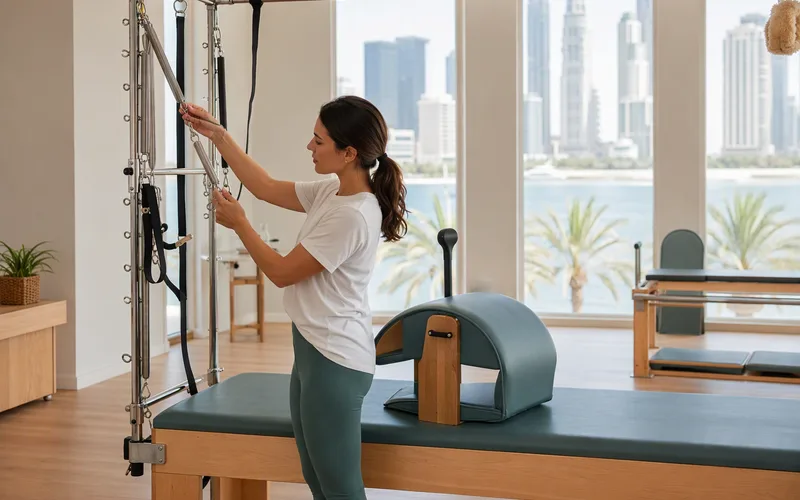
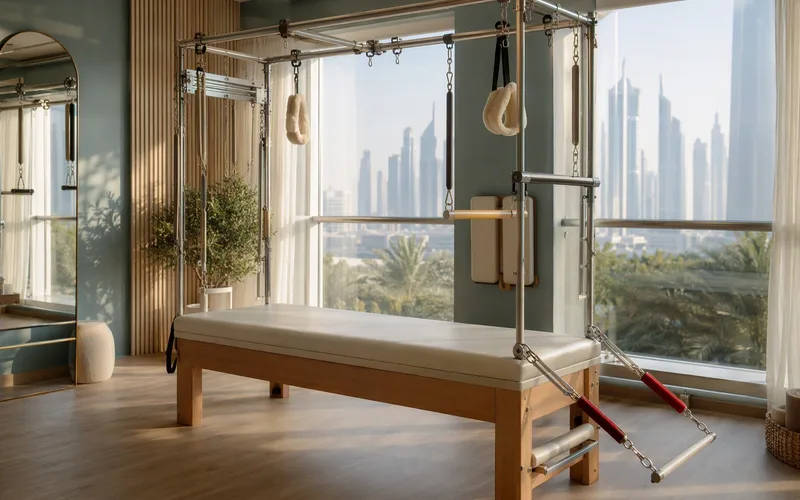
Pilates Academy Arjan in Al Barsha South Third offers full classical apparatus including the Wunda Chair. Unlike reformer-only studios nearby, this setup allows precise work on movements like Foot Spring Series. Classes run Monday to Friday from 7 AM to 10 PM and weekends from 9 AM to 5 PM, serving areas such as Arjan, Dubai Hills and Motor City.
What is the Chair Foot Spring Series?
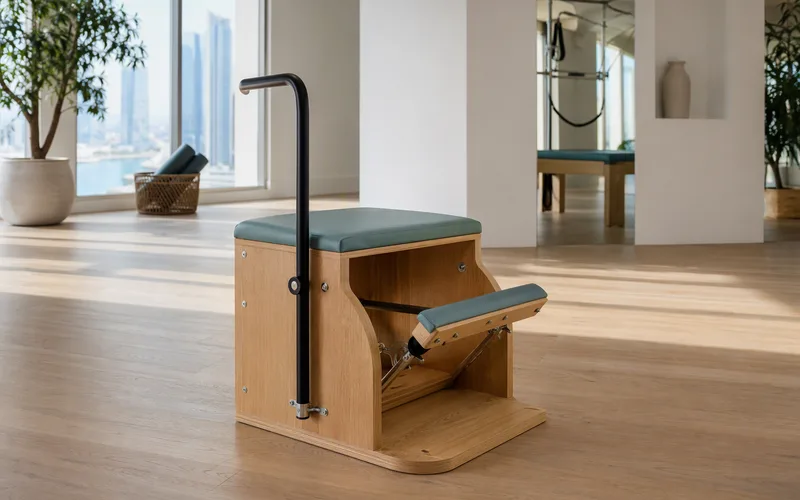
The Chair Foot Spring Series is a classical Pilates exercise performed on the Wunda Chair. You place your feet on the pedal, which connects to springs providing resistance. As you point and flex your feet, you articulate through the ankle joint while keeping your torso stable.
This series targets foot and ankle mobility by encouraging full range of motion in the toes, metatarsals and ankle. In group sessions at Arjan, your instructor demonstrates how to initiate movement from the centre of the foot. They emphasise even pressure distribution to avoid compensatory patterns in the knee or hip.
Foot Spring Series fits into the progression of pedal work on the Chair. It often follows basic footwork to prepare the ankles for more dynamic exercises. Regular practice helps you sense subtle shifts in foot alignment during daily activities.
How do you set up correctly for this exercise?
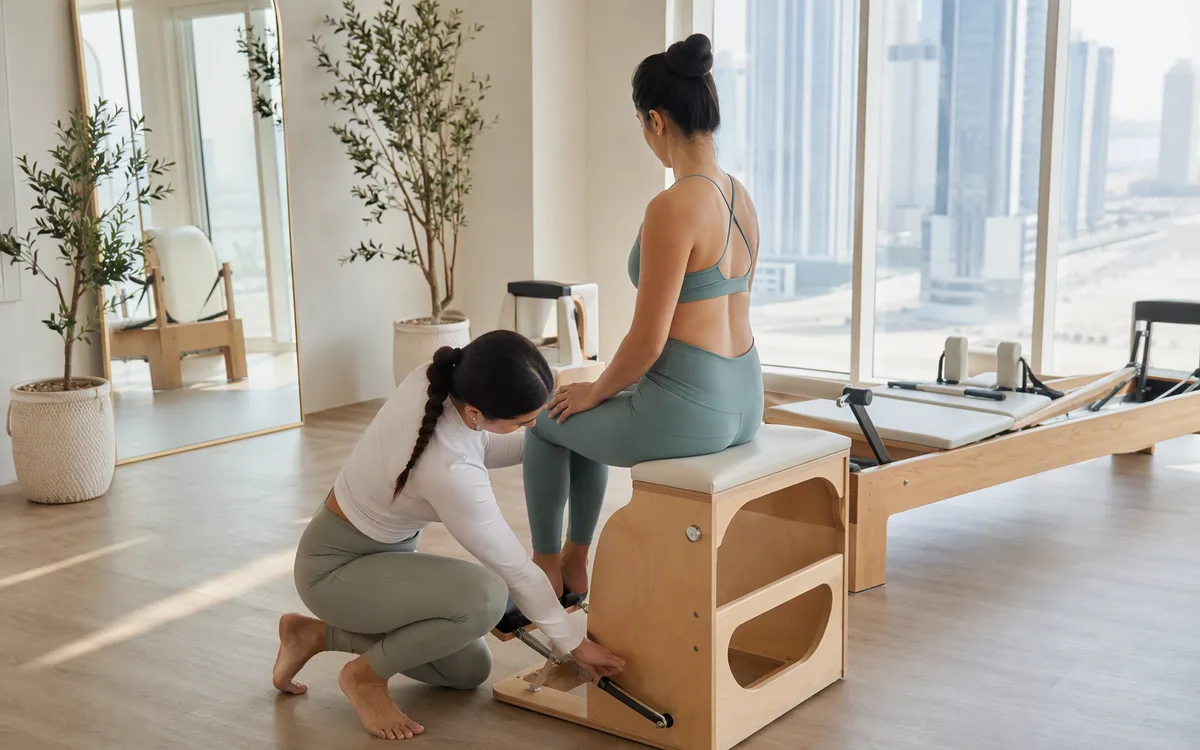
Sit sideways on the Chair seat facing the pedal, with your sit bones grounded. Place the balls of both feet on the pedal edge, heels lifted slightly. Hold the chair frame for support if needed, but aim to balance without gripping tightly.
Adjust the spring tension to a level that challenges control without straining. Lighter springs suit beginners focusing on mobility, while heavier ones add strength once form solidifies. Your spine stays lengthened in neutral, with shoulders relaxed away from ears.
Need setup advice? Call the Arjan studio on +971 56 216 8166 or message us on WhatsApp.
What are the key steps in the Foot Spring Series?
Point the feet
From neutral foot position, press the pedal down as you point through your toes. Reach long through the big toe while keeping heels together. Exhale on the point to engage the calf without locking the knee.
Flex the feet
Return the pedal to start by dorsiflexing the ankles, drawing toes towards shins. Maintain even flexion across the foot arch. Inhale here to stay calm and centred.
Repeat 6 to 8 times per side, alternating feet if working unilaterally. In Arjan group classes, instructors cue breath with movement to build coordination. This mirrors footwork on other apparatus like the Reformer Knee Stretches Series for footwork alignment.
How does it improve ankle mobility?
Controlled spring resistance guides your ankles through full flexion and extension. Over sessions, you gain smoother articulation without forcing the joint. This builds resilience in the ankle for varied terrain in Dubai walks.
Instructors explain how foot intrinsics activate to support the arch. You learn to differentiate ankle movement from hip compensation. Group settings allow observation of others to refine your form.
Combine with mat exercises like Single Leg Stretch for knee-to-nose control to integrate mobility gains into full body work. Sessions suit evening routines for Al Barsha South residents.
What common form mistakes should you avoid?
Avoid letting heels splay outward, which strains the inner ankle. Keep them parallel to maintain alignment. Do not sickle the foot by curling toes under; extend evenly.
Watch for knee valgus where knees cave in. Press out through the feet to track knees over toes. If your back rounds, shorten the range until neutral spine holds.
In small groups of five, instructors spot these issues early. They adjust cues based on your posture, much like in Chair Single Arm Press for shoulder stability.
How does this fit into group sessions at Arjan?
Chair Foot Spring appears in intermediate Chair classes during weekday evenings or weekend mornings. With only five per class, you receive individual feedback on ankle positioning. Book via Glofox for areas like JVC or Dubai Sports City.
It sequences after warm-up footwork and before leg series. This builds ankle readiness for standing Chair work. New clients start with the introductory package to assess readiness.
Opening hours accommodate Motor City commutes, as noted in related morning Chair sessions guidance.
Common questions
Is prior experience needed for Foot Spring Series?
No prior Chair experience is required, but basic Pilates principles help. Beginners start with lighter springs and shorter ranges. Instructors at Arjan teach from fundamentals in small groups. Your first three classes introduce apparatus safely.
How often should you practise ankle mobility work?
Aim for 2 to 3 sessions weekly to build mobility steadily. Combine with daily foot rolls on a ball at home. Consistency in group classes fosters progress without overload. Track improvements via Glofox bookings.
Can this exercise help with foot awareness for walking?
Yes, it heightens sensation in the foot's arches and toes. You carry this into steps around Dubai Hills or JVT. It supports even weight distribution in routines like evening walks near Al Barsha South.
What if you feel calf tightness during the series?
Breathe steadily and reduce spring tension. Focus on slow flexion to ease the calf. Instructors cue hip positioning to release tension. Over classes, tightness lessens with improved mobility.
How do you book Chair group sessions?
Use the Glofox app or website for real-time availability. Select Chair classes within opening hours. New clients purchase the AED 300 package for three sessions including VAT. Spots fill quickly due to small group sizes.