Mat Single Leg Stretch Technique for Knee-to-Nose Control
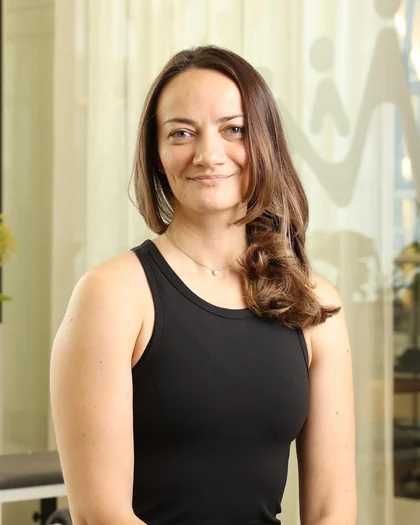 Written by Oxana, Reformer and Mat Pilates Instructor, Pilates Academy Arjan
Matwork forms the foundation of classical Pilates, accessible on any mat without apparatus. At Pilates Academy Arjan in Al Barsha South Third, you join capped classes of five to learn anatomy-informed techniques like Single Leg Stretch. This prepares you for apparatus work such as the Reformer transitions.
What is the starting position for Mat Single Leg Stretch?
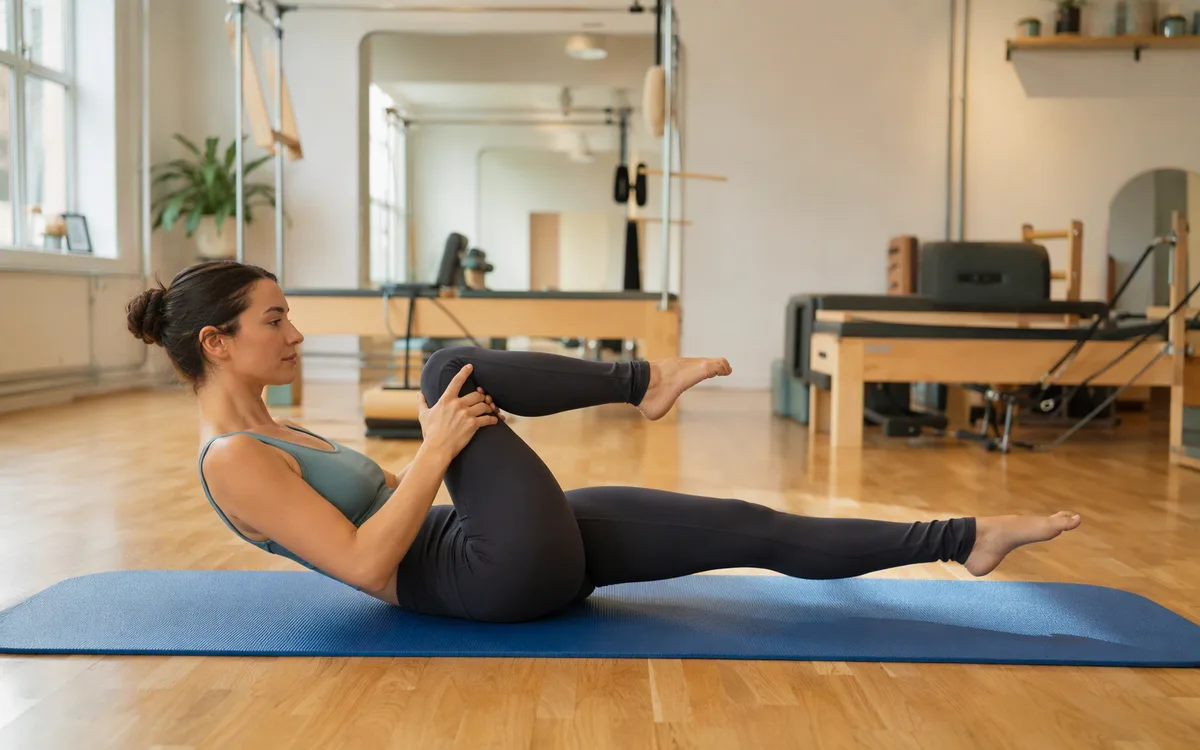
Lie on your back with knees bent and feet flat on the mat, arms by your sides. Inhale to prepare, then exhale as you curl your head, neck and shoulders off the mat, lifting into a gentle C-curve. Your lower back presses lightly into the mat without forcing it flat. Feel the gentle scoop in your abdomen as you lift, engaging the deep core muscles from the start.
Draw one knee towards your chest, placing hands on the shin or behind the thigh. Extend the other leg to a low hover, about 5 to 10 cm off the mat. Gaze towards your navel to maintain neck alignment. In a class at Arjan, you see others holding this position steadily, with the instructor walking around to check each person's alignment and depth of curl.
Common errors to avoid
Keep shoulders away from ears; do not strain your neck. The extended leg stays parallel to the mat, not higher, to challenge abdominal control. Avoid letting the hips rock side to side; keep them square and stable as if balanced on a narrow line.
How do you execute the knee-to-nose movement?
Exhale and pump your arms three to five times while pulling the bent knee closer to your nose. The pumping action comes from your waist, not shoulders. Switch legs on the next exhale, drawing the extended leg in as the other extends. You feel a deepening of the abdominal scoop with each pump, as the arms create a rhythmic resistance that reinforces torso stability.
Maintain the C-curve throughout, with navel drawing to spine. Breathe rhythmically: inhale to switch, exhale to pump. Repeat five to eight sets per side, moving deliberately. In the studio, the mat beneath you provides firm support, and the small group setting lets you hear cues like "pull the knee in with your deep abs, not your arms" for precise execution.
Need form feedback? Call the Arjan studio on +971 56 216 8166 or message us on WhatsApp.
How does breath coordinate with the leg switch?
Breath anchors the movement. Inhale for two counts as you prepare to switch legs, exhale for four to five counts during the arm pumps and knee pull. This matches the advanced breath layering in Mat Hundred. You notice your ribcage staying knit together on the exhale, preventing the chest from lifting and losing the C-curve shape.
Building breath endurance
If breath falters, shorten pumps to three per side. Over time, extend to match full exhale, enhancing core engagement. Practice reinforces the exhale scoop, drawing ribs to hips for stability. In classes, instructors demonstrate how the breath powers the movement, showing you how to feel the expansion in your sides on the inhale and the full contraction on the exhale.
Focus on a smooth transition during the switch; the inhale gives a moment of lightness before the next deep pull. This coordination builds as you repeat, feeling your control grow with each cycle.
What cues improve knee-to-nose control?
Visualise your knee touching nose without rounding lower back excessively. The extended leg remains long and low, toes pointed softly. Hands stabilise the bent leg without pulling shoulders up. Imagine a string pulling your knee towards your nose from your core, keeping the movement centred and controlled.
Engage your deep abdominals to hover the leg steadily. Instructors at Arjan explain the anatomy: transverse abdominis and obliques control the curl and reach. You feel the obliques firing to prevent twisting as the leg extends, and the transverse abdominis holding the hover steady like a gentle brace.
Progress by slowing the switch, pausing briefly with knee to nose for deeper hold. In a session, you might hear "lengthen through the back of the knee on the extension" to refine the line and challenge your balance further.
How does this exercise build abdominal coordination?
Single Leg Stretch isolates one leg while stabilising the torso, training unilateral control. Your core resists rotation as arms pump and legs alternate. This mirrors demands in Fuse Ladder Teaser progression. Each switch requires your abdominals to recentre quickly, building the ability to maintain poise under alternating loads.
Regular practice enhances the mind-body connection, as you layer breath over precise leg action. You sense the coordination deepening when the extended leg stays motionless despite the pumping arms and switching knee.
Transition to full series
After mastering control, add Single Leg Stretch to the Hundred and Roll Up in sequence for flowing matwork. This sequence warms the core progressively, with each exercise cueing the next: the C-curve from Roll Up flows into the stretch, preparing you for smoother transitions in a full mat class.
Why practice in small Arjan group classes?
Classes cap at five, allowing instructors to correct your C-curve and leg hover. You receive anatomy insights, such as how iliopsoas assists knee-to-nose without gripping hip flexors. Book via Glofox for spots from 7 AM to 10 PM weekdays. The studio's full apparatus in the background reminds you of progression paths, but matwork keeps it accessible.
New clients start with three classes for AED 300 including VAT. Areas like Dubai Hills and Motor City fit easily into commutes. In these sessions, you benefit from observing peers, noting how their steady hovers or smooth switches inspire your own form adjustments.
Common questions
How low should the extended leg be?
Hover it 5 to 10 cm above the mat to challenge control without arching your back. If too difficult, rest the foot lightly down and build up. Instructors adjust based on your level during class, cueing you to feel the abdominal engagement intensify as the hover lowers.
Can beginners skip the arm pumps?
Yes, hold the knee steady without pumping to focus on leg control first. Add pumps once the C-curve holds for five breaths per side. This builds foundation before full execution, allowing you to prioritise the knee-to-nose pull and stable extension.
What if my neck strains?
Support your head with hands if needed, or lower briefly to rest. Keep gaze to navel, not toes, to avoid craning. Form checks in small groups prevent this, with instructors spotting tension early and guiding shoulder relaxation.
How often should you practise this?
Aim for two to three sessions weekly in group classes. Combine with other matwork for balanced practice. Consistency via Glofox bookings helps refinement, as repeated exposure solidifies the coordination between breath, arms and legs.
Does it prepare for apparatus work?
Yes, the control translates to Reformer and Chair exercises. Knee-to-nose action supports moves like Cadillac Leg Springs. The unilateral stability you build here carries over, making apparatus transitions feel more natural in studio classes.