Reformer Swan Prep Alignment for Upper Back Strengthening
 Written by Vivien, Pilates Instructor, Prenatal Pilates Certified, Pilates Academy Arjan
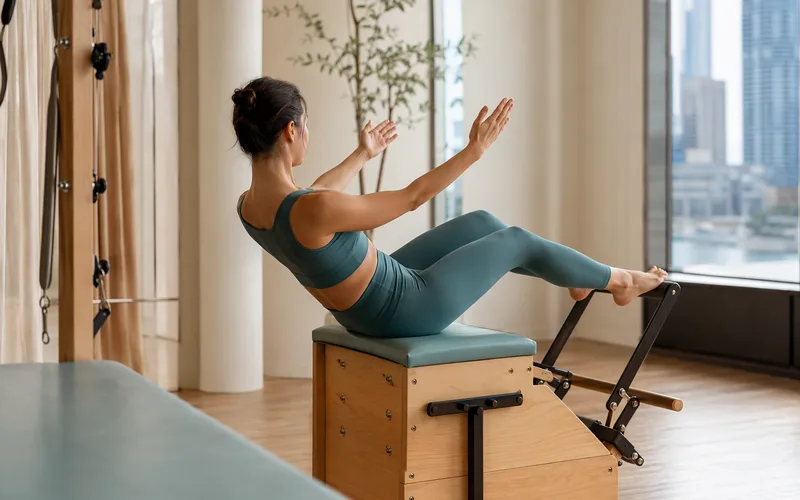
This exercise draws from classical Pilates principles, adapted to the reformer for smooth carriage movement. It suits those building back extensors alongside core stability. At the studio in Arjan, you access full apparatus including reformer during extended hours from 7 AM to 10 PM weekdays.
What is Reformer Swan Prep?
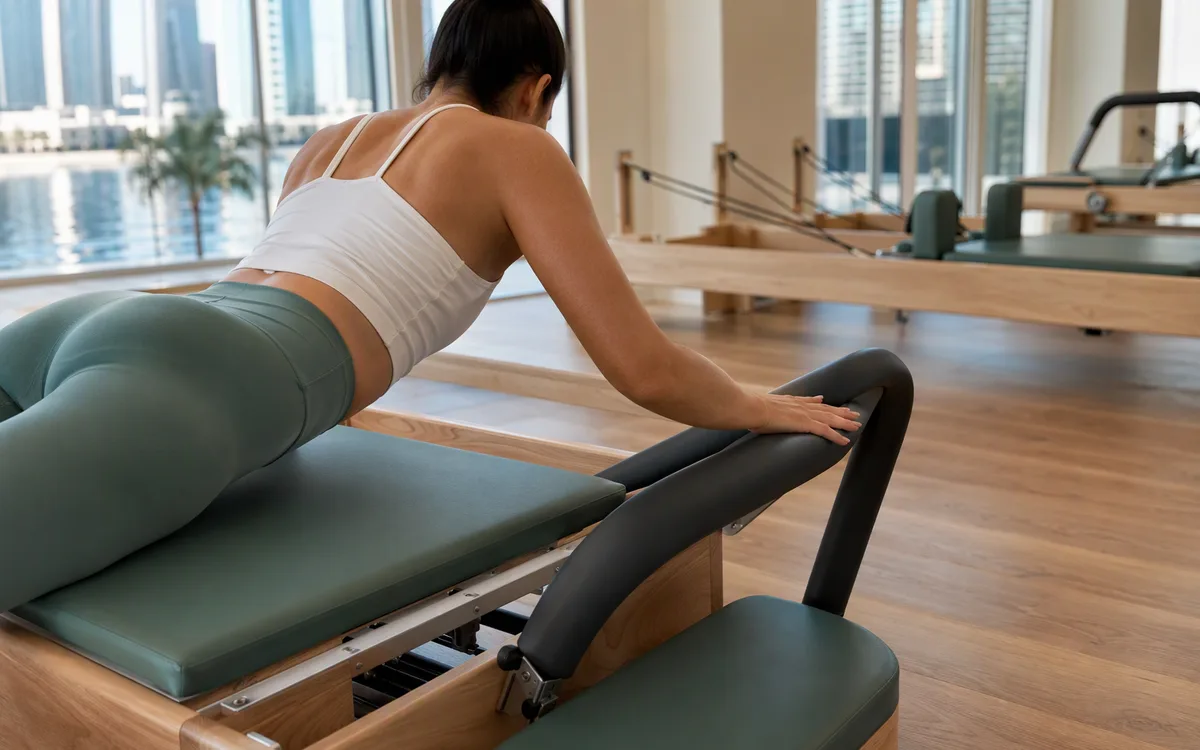
Reformer Swan Prep introduces back extension on the reformer carriage. You start prone, belly down on the carriage, with hands grasping the footbar or handles. As you press the bar, the carriage moves, and you lift your chest slightly while keeping hips grounded.
This prep version limits the range compared to full Swan, focusing on upper back activation without overextending the low back. Instructors cue you to lengthen the neck and draw shoulder blades together. Regular practice strengthens the posterior chain in a controlled setting.
Why focus on alignment in this exercise?
Proper alignment ensures the upper back muscles, such as the mid trapezius and rhomboids, do the work rather than compensatory areas. Misalignment, like shrugging shoulders or tucking the pelvis, reduces effectiveness and strains the neck.
Need form feedback? Call the Arjan studio on +971 56 216 8166 or message us on WhatsApp.
You maintain a neutral spine by imagining a gentle curve in the thoracic area. This targeted approach in capped classes builds strength progressively.
How do you set up on the reformer?
Carriage and spring settings
Adjust the reformer to one or two light springs for prep work, keeping resistance manageable. Position the footbar at its lowest setting. Lie prone with the pubic bone anchored to the carriage edge, feet flexed against the shoulder rests.
Hand and shoulder position
Place palms on the footbar, fingers wide, elbows soft but not locked. Slide shoulders down away from ears to engage the lats from the start. Your gaze stays forward to avoid neck strain.
These cues prepare you for smooth initiation. If transitioning from matwork, review building mat to reformer transitions for JVT clients.
What are the key alignment cues for upper back engagement?
Initiate by pressing hands into the footbar to draw shoulder blades towards the spine's centre. Lift your chest as the carriage glides back, keeping ribs knit together and collarbones wide. Avoid thrusting hips or arching the lower back.
Head and neck placement
Lengthen the neck as if holding a small orange under your chin, eyes level. This prevents forward head posture and directs effort to the upper thoracic extensors.
Exhale on the extension, inhale to return slowly. Practice reinforces muscle memory for consistent form.
How does this build upper back strength?
The controlled resistance of the reformer carriage challenges the upper back to stabilise against movement. Each repetition strengthens the erector spinae and scapular retractors, improving posture over time.
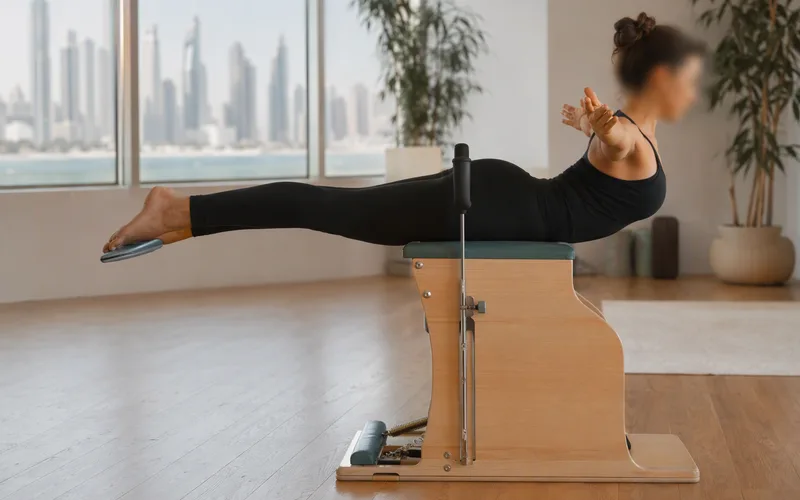
Combine with related moves like Reformer Swimming preparation for comprehensive extension work. In Arjan's small classes, you receive hands-on cues to deepen engagement safely.
Consistency yields noticeable endurance in daily activities requiring upper body lift.
What common errors should you avoid?
A frequent mistake is leading with the arms instead of the back, which shortens the neck. Another is allowing the pelvis to lift, shifting load off the target muscles. Check that elbows remain long without hyperextending.
Breathing pitfalls
Hold your breath less; coordinate exhale with lift to support spinal stability. Shallow chest breathing limits rib expansion, so draw breath deep into the sides.
Filming your form or using mirrors helps self-correct. Link to Chair variations in Chair Swan Prep technique for cross-apparatus practice.
How to progress from Swan Prep?
Once alignment feels solid, add full Swan by increasing lift height and springs. Advance to single-leg versions for asymmetry challenges. Integrate into sequences flowing to Hundred prep for breath endurance.
Track progress in your Glofox bookings. New clients start with three classes for AED 300 including VAT to build foundations.
Common questions
Can beginners try Reformer Swan Prep?
Yes, with instructor guidance in introductory sessions. Start on lighter springs and limited range to master alignment. Small class sizes at Arjan ensure personal attention for safe progression.
How often should you practise this exercise?
Aim for two to three sessions weekly, integrated into reformer classes. Allow recovery days for muscle adaptation. Combine with matwork for balanced routines.
Does it help with posture?
Regular practice strengthens upper back muscles that support upright alignment. You notice improved shoulder position during daily tasks. Focus remains on consistent form over quick fixes.
What if you feel neck strain?
Check shoulder placement and neck lengthening cues. Reduce range or springs until comfortable. Instructors adjust cues in group classes up to five participants.
Can you book private sessions for this?
Yes, use Glofox for privates or small groups. Extended hours fit commutes from Motor City or Dubai Hills. See first steps choosing class level as a Motor City newcomer.