Mat Roll Back Form for Maintaining Abdominal Curvature
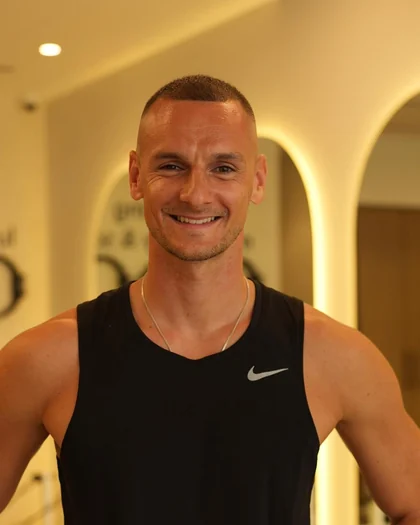 Written by Matt, Reformer and Mat Pilates Instructor, Pilates Academy Arjan
The roll back is a fundamental mat exercise in classical Pilates. It appears early in the sequence to wake up the abdominals and practise spinal articulation. Pilates Academy Arjan offers full apparatus including matwork, distinguishing it from reformer-only studios nearby. Classes run from 7 AM to 10 PM on weekdays.
What is the correct starting position for mat roll back?
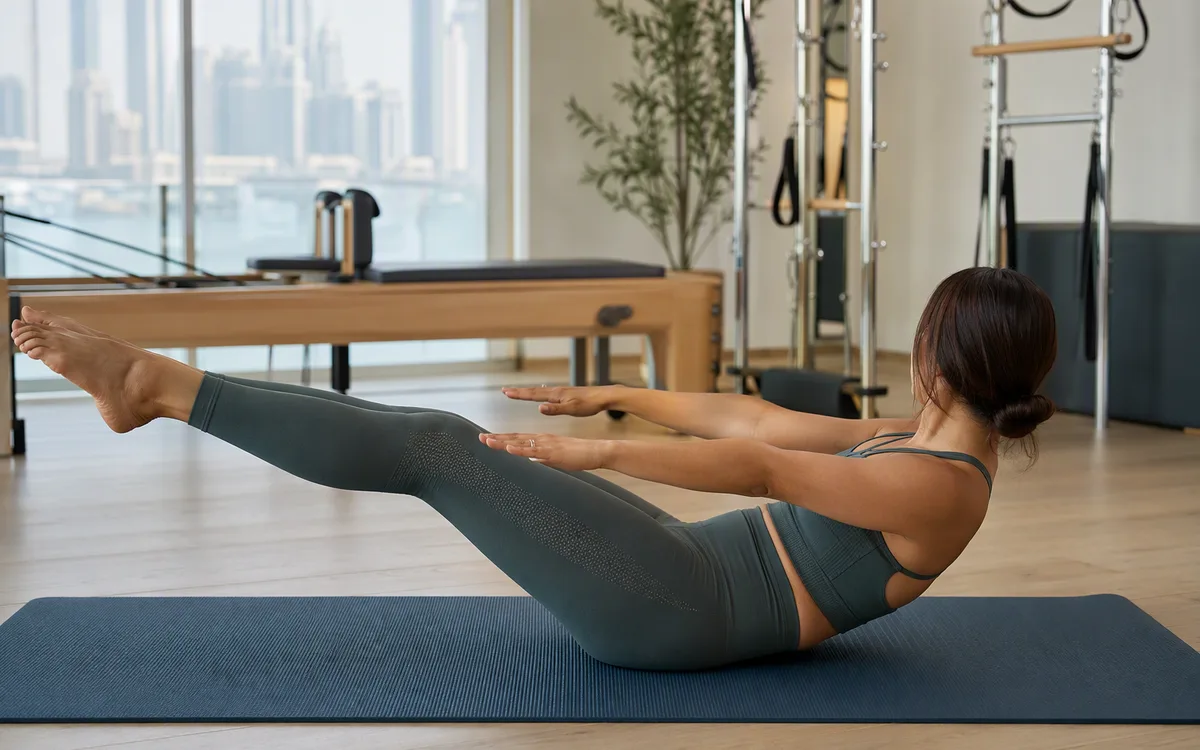
Sit on your mat with your legs extended straight in front of you, hip-width apart. Flex your feet so heels press down and toes point up. Place your hands behind your thighs or on your shins, depending on flexibility.
Lengthen your spine tall, drawing your shoulders down away from your ears. Engage your abdominals by gently drawing your navel towards your spine, creating a subtle C-curve in your lower back. Your gaze is forward, chin parallel to the floor. This position sets the foundation for controlled movement.
Need form cues? Call the Arjan studio on +971 56 216 8166 or message us on WhatsApp.
How do you initiate the roll back while keeping abdominal curvature?
Exhale as you roll back, starting from the upper spine. Think of peeling one vertebra at a time away from the mat. Keep your tailbone curling under to maintain the abdominal scoop, avoiding a flat lower back.
Your hands slide up your thighs as you roll, supporting without pulling. The movement stops when you reach the base of your shoulder blades, with arms extended forward parallel to the floor. Chin tucks slightly to follow the chest's path. This preserves the curvature through core engagement.
What cues help maintain the C-curve during the roll back?
Focus on breath coordination
Match your breath to the movement: exhale to roll back, inhale to pause, exhale to roll up. This rhythm reinforces abdominal activation. Instructors at Arjan emphasise how breath supports the curve.
Visualise the pelvic tilt
Imagine your pelvis tipping into posterior tilt, like pouring water from your lower abdomen. This mental cue keeps the lumbar spine curved. Avoid arching or flattening.
Practice slowly. For more on core rhythm, see our guide on Single Leg Stretch on Mat.
Why does abdominal curvature matter in this exercise?
Maintaining the curve activates the transverse abdominis, the deepest core layer. This builds stability without straining the back. It teaches control that transfers to other exercises.
Flattening the back shifts work to hip flexors, reducing effectiveness. The curve ensures even spinal articulation. In small Arjan classes, you get cues on this anatomy.
Related reading: Anatomy of Movement: Classical Order Insights from Arjan Instructors.
How do you roll up from the roll back position?
Inhale to prepare, then exhale as you circle your arms and roll forward. Start with the head and chest lifting first, sequencing the spine vertebra by vertebra. Keep the abdominal scoop to deepen the curve.
Hands return to shins or thighs as you sit tall. Shoulders stay relaxed. Repeat 5 to 8 times, focusing on smooth flow.
This mirrors the roll down but in reverse, reinforcing control. Pair it with Mat Class Sequence Preview for Beginners.
What common errors should you avoid in mat roll back?
Using momentum instead of control
Do not jerk or fling your body back. Slow, deliberate movement maintains the curve. Momentum flattens the back and reduces core work.
Gripping with hands or arms
Let hands guide lightly; power comes from the core. Tense arms pull you off balance. Relax neck and face too.
Another error: tucking chin too early. Keep neck long. Instructors correct these in real time during class.
How does this exercise fit into a mat class sequence?
The roll back often follows the hundred and precedes series of five in classical mat order. It warms the spine and core for more demanding work. At Arjan, mat classes cap at five for feedback.
Progress by adding a roll back with twist once form solidifies. Book via Glofox for areas like Arjan or Dubai Hills.
Common questions
Can beginners do the mat roll back?
Yes, start with bent knees if needed to reduce leverage. This makes maintaining curvature easier. Build to straight legs over time in guided classes. Arjan new client offer is three classes for AED 300 including VAT.
How often should you practise roll back?
Aim for 3 to 5 sessions weekly as part of mat classes. Consistency improves curvature control. Combine with full apparatus work available at the studio.
Does it help with everyday posture?
Yes, it strengthens the core awareness needed for upright posture. You carry the scoop into daily activities. Small classes ensure proper form.
What if you struggle with the curvature?
Use a small ball or rolled towel under your lumbar to feel the shape. Remove it as you improve. Instructors provide such props in class.
Is roll back suitable before other exercises?
It prepares the core for mat progressions like the spine twist. See opening hours: weekdays 7 AM to 10 PM. Book to experience the sequence.