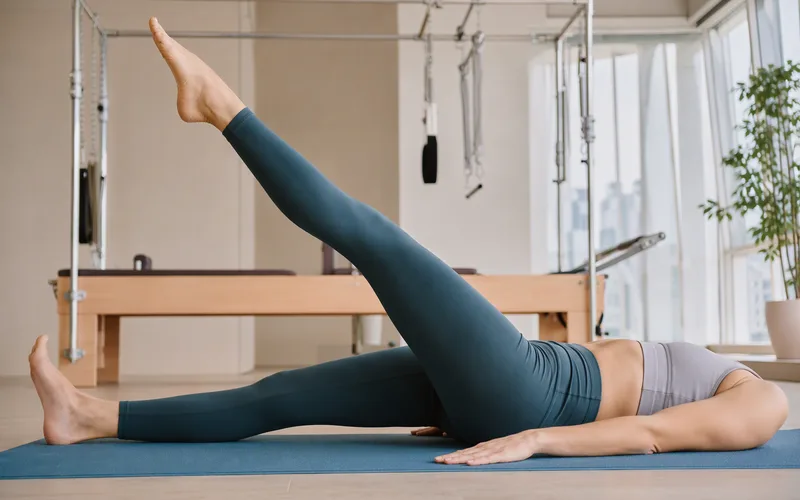
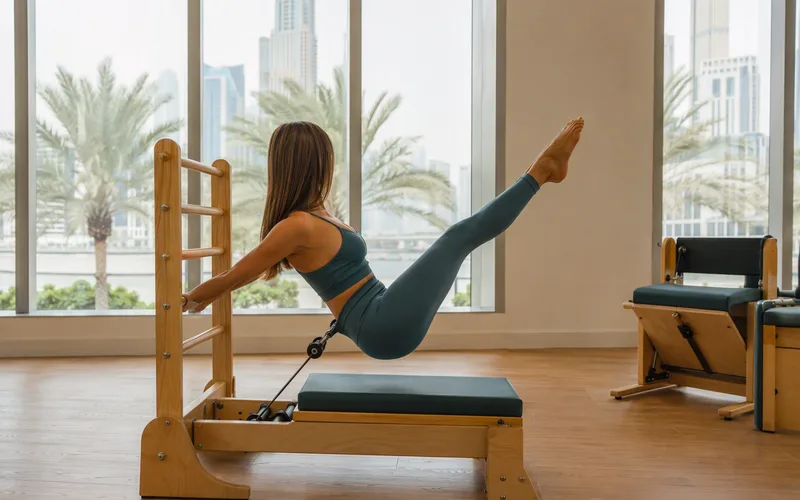
Single Leg Stretch on Mat: Coordinating Breath and Knee Pulls for Core Rhythm
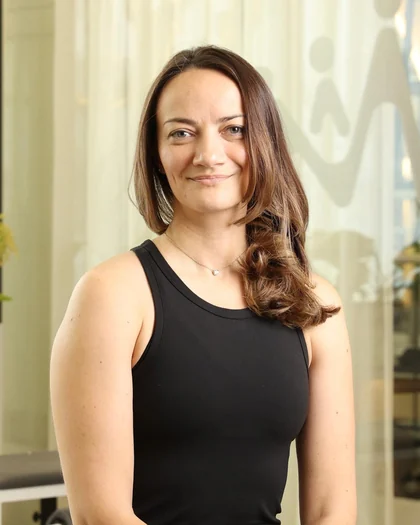 Written by Oxana, Reformer and Mat Pilates Instructor, Pilates Academy Arjan
Pilates Academy Arjan in Al Barsha South Third offers full classical apparatus including matwork. You practise exercises like Single Leg Stretch in small groups with attention to breath and alignment. Instructors teach the muscles involved, such as the abdominals and hip flexors. This differs from reformer-only studios nearby.
What is Single Leg Stretch?
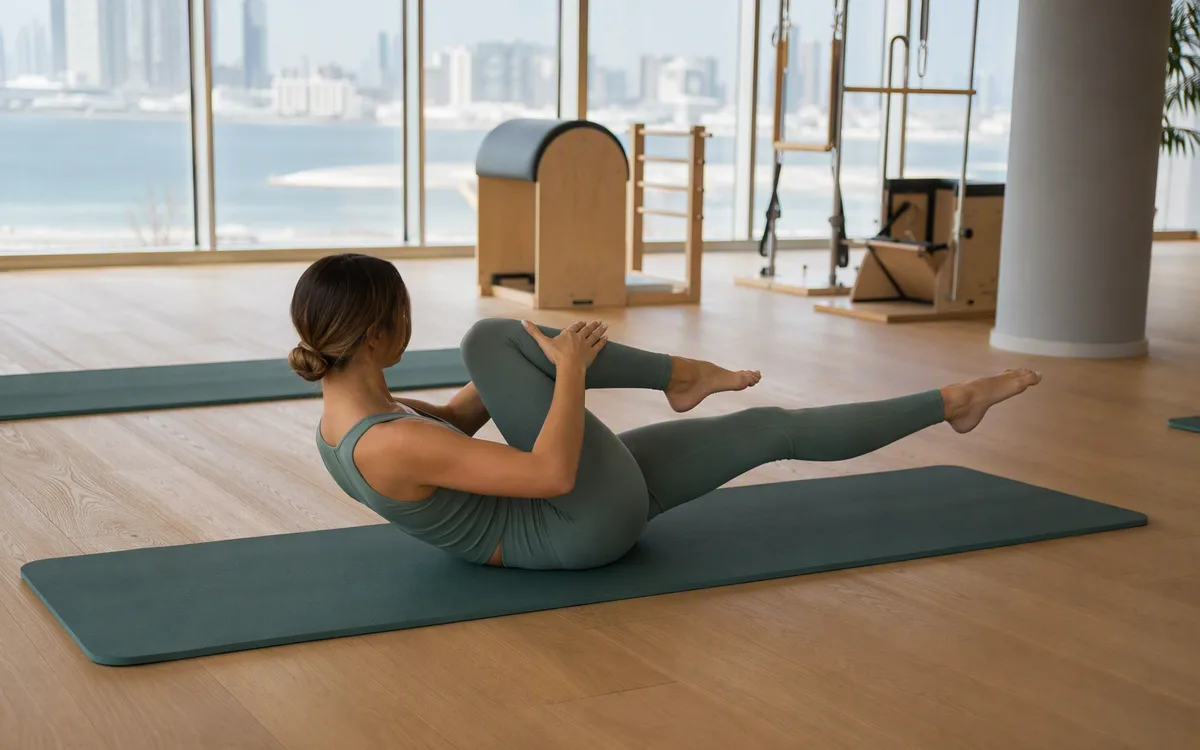
Single Leg Stretch is a mat exercise from Joseph Pilates original sequence. You lie supine, lift your head and shoulders into a curl, and hug one knee towards your chest while stretching the other leg parallel to the floor. Your arms hold the shin or ankle of the bent leg, elbows wide. The movement alternates sides as you breathe steadily.
This exercise follows the Hundred in many mat sequences, transitioning from breath focus to leg coordination. It challenges your ability to keep the pelvis stable while the legs move. In small group classes at Arjan, you receive cues on maintaining the curve in your spine.
Regular practice builds endurance in the deep core muscles. You learn to resist the urge to grip with your hip flexors alone, engaging the transverse abdominis instead.
How do you start the setup correctly?
Lying position and initial lift
Lie on your back with knees bent and feet flat. Place your hands on your shins. Inhale to prepare, then exhale as you curl your head, neck and shoulders off the mat, drawing your lower abs in. Extend one leg out at a 45 degree angle or lower if needed.
Arm placement
Slide one hand to your ankle and the other to the knee of the bent leg. Keep elbows open to broaden your collarbones. Avoid pulling your knee with your shoulders; let your trunk curl come from the abs.
This setup ensures your low back stays anchored. In Arjan mat classes, instructors watch for common errors like arching the back. See the full mat class sequence preview for beginners.
Need form cues? Call the Arjan studio on +971 56 216 8166 or message us on WhatsApp.
How do you coordinate breath with knee pulls?
Inhale as you pull the bent knee closer to your chest, deepening the curl. Exhale to switch legs, pumping the extended leg slightly towards you before extending the other. Keep the rhythm even, like a steady wave. Your breath drives the movement, not your arms.
Focus on nasal breathing if possible, to engage the diaphragm fully. This syncs with core activation. In small groups, you adjust tempo based on instructor feedback.
Common mistake: holding the breath. Practice exhaling fully to scoop the abs deeper. Link this to other breath work like the Hundred on Cadillac.
What are the key form cues for torso stability?
Keep your gaze at your navel to maintain neck alignment. Your ribs stay knit together, avoiding flaring. The pelvis remains neutral, imprinted lightly into the mat. If the extended leg dips, bend it more or lower the height.
Engage your front hip of the extended leg to prevent swinging. Instructors at Pilates Academy Arjan emphasise pubic bone to navel connection. This prevents strain in the low back.
Head and neck position
Curl just enough to see your lower abs working. Do not crane your neck forward. Relax your jaw for fluid rhythm.
With practice, torso stability transfers to dynamic moves like Spine Twist on Mat.
How does it build core rhythm?
The alternating knee pulls create a pulsing rhythm synced to breath, training your core to fire consistently. This develops control for advanced matwork like the Teaser. You feel the obliques working to stabilise during switches.
In group classes limited to five, you match the class tempo while refining your own pace. Over sessions, the movement becomes automatic, freeing mental focus for precision.
It also improves coordination between breath and limbs, foundational for sequences. Areas like Dubai Hills and Motor City residents fit this into evening routines.
What common errors should you avoid?
Pulling the knee with arms instead of abs shortens the spine incorrectly. Tucking the tailbone excessively rocks the pelvis. Extended leg too high fatigues hip flexors over core.
Fix by slowing down: exhale longer on switches. Watch mirrors in studio for feedback. Beginners often rush the rhythm; count breaths to steady.
Breathing pitfalls
Shallow chest breathing reduces power. Deep belly breaths enhance the scoop. Practice off-mat if needed.
Studio hours from 7 AM to 10 PM weekdays suit JVC schedules. Book via Glofox.
How do you progress Single Leg Stretch?
Once stable, lower the extended leg closer to the mat without arching. Add a twist by reaching the opposite elbow past the knee. Increase speed while keeping form crisp.
Progress to Single Leg Stretch with twist for oblique emphasis. In Arjan classes, instructors cue based on your level. Matwork caps at five ensure personal adjustments.
Integrate into full sequences for flow. New clients start with three classes for AED 300 including 5% VAT at Building 88, Shop 05.
Common questions
Is Single Leg Stretch suitable for beginners?
Yes, it suits beginners after the introductory curl practice. Start with bent extended leg for control. Instructors modify in small Arjan groups. Build to straight leg over sessions.
How many repetitions per side?
Aim for 6 to 8 switches per side, or follow instructor count. Focus on quality over quantity. Classes use 3 sets typically. Matches mat sequence standards.
Does it help with flexibility?
It improves hamstring and hip flexor length through controlled stretch. Core strength supports better extension. No stretching claims, but form aids mobility in practice.
Can I practise at home?
You can review form on mat at home after classes. Studio feedback accelerates progress. Book trials via Glofox for guided sessions in Arjan.
What muscles does it target?
Mainly deep abdominals, obliques and hip stabilisers. Breath engages diaphragm. Instructors explain anatomy during mat classes.