Spine Twist on Mat: Rotational Control for Core Engagement
 Written by Matt, Reformer and Mat Pilates Instructor, Pilates Academy Arjan
This exercise forms part of the classical Pilates mat sequence, emphasising torso rotation without momentum. You perform it early in sessions to wake up the core and prepare for more complex twists like Helicopter on Mat. At Pilates Academy Arjan, instructors explain the anatomy of rotation during classes capped at five people.
What is Spine Twist on the mat?
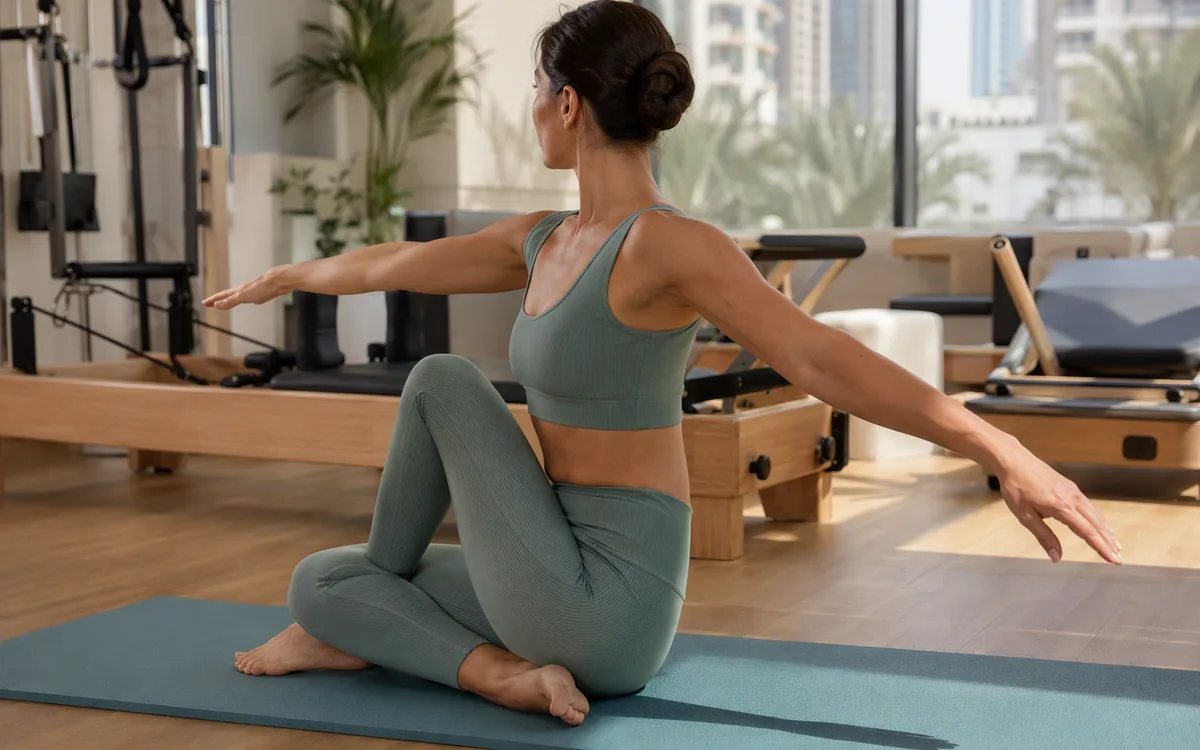
Spine Twist involves seated rotation to challenge your core's ability to stabilise and move the torso independently from the pelvis. You lengthen through the crown of your head, drawing the navel to the spine to maintain a neutral lumbar curve. The movement targets the obliques, transverse abdominis, and multifidus muscles, which control rotation.
Unlike dynamic twists in other workouts, this exercise demands slow, deliberate action. Inhale to centre, exhale to rotate, ensuring each vertebra participates sequentially. Regular practice enhances postural awareness, as you learn to avoid compensatory shoulder or hip shifts.
How do you set up for Spine Twist?
Sit at the front of your mat with legs extended forward, feet flexed and together. Bend your knees slightly if needed for balance, or cross ankles for comfort. Extend arms to shoulder height, palms down, in line with shoulders. Lift through the chest to create space between ribs and hips.
Ground your sit bones evenly to avoid rocking. Gaze forward initially, then follow your top hand as you twist. This setup promotes even weight distribution and prepares your core for engagement.
What are the step-by-step instructions?
Prepare and initiate
Inhale deeply to lengthen your spine, feeling expansion through the sides of your ribcage. Exhale as you rotate to the right, scooping the waistline and leading with the right shoulder blade. Keep the left hip heavy to prevent shifting.
Return and repeat
Inhale to return to centre, resisting the urge to flop. Exhale to twist left, mirroring the action precisely. Complete 3 to 5 sets per side, focusing on quality over quantity.
Maintain steady breath; pauses indicate core fatigue, so ease back until control returns.
What common mistakes should you avoid?
A frequent error is allowing hips to lift or swivel, which reduces core work and strains the lower back. Keep them anchored by imagining roots growing into the mat. Another issue is leading with the arms or head, collapsing the torso forward.
Shoulders often hike toward ears during rotation; draw them down actively. If your neck tenses, soften the gaze and initiate from the mid-back. Practice in front of a mirror or with instructor feedback at Arjan to self-correct.
Need form cues? Call the Arjan studio on +971 56 216 8166 or message us on WhatsApp.
How does it link to other mat exercises?
Spine Twist precedes more advanced rotations like Boomerang Mat Exercise, building foundational control. It complements spinal articulation in Roll Over on Mat, teaching segmental movement.
In a full mat class, follow it with Hundred for overall core activation, transitioning smoothly as breath patterns align. This sequence supports progression to apparatus work, such as transitioning from mat to Reformer.
How can you modify Spine Twist for your level?
Beginners place hands behind head to reduce leverage, focusing on upper torso rotation. Advanced variations add a pulse at the end range or extend one leg for instability. If seated rotation challenges balance, try it lying supine with knees bent.
Always prioritise precision; shorten the range if full twist compromises form. In small Arjan classes, instructors tailor cues to your needs using full classical apparatus like the Cadillac for similar rotational work.
What benefits does it offer for core strength?
This exercise strengthens the rotational muscles around your spine, improving everyday movements like turning to reach or pivoting in sports. It enhances core endurance, as you sustain control against gravity. Over time, you notice better posture and reduced upper body tension.
Integrate it into routines from building a weekly Pilates habit for JVT residents. Sessions at Pilates Academy Arjan, with Reformer, Cadillac, Chair, Fuse Ladder and Matwork, refine your technique amid Dubai's busy schedules.
Common questions
Can I do Spine Twist every class?
Yes, include it 2 to 3 times weekly as part of mat sequences. It warms the core without overload. Space sessions to allow recovery, combining with apparatus for variety at Arjan.
Does it help with back flexibility?
It promotes segmental spinal mobility through controlled rotation. Focus on even twisting to maintain balance. Instructors demonstrate anatomy to guide safe practice.
Is it suitable after meals?
Wait 1 to 2 hours post-meal to avoid discomfort. Early morning classes from 7 AM suit Dubai routines. Book via Glofox for Arjan slots.
How does breath affect the twist?
Exhale initiates rotation, engaging deep core. Inhale recentres with length. Steady breath prevents straining.
Can I practice at home?
Yes, on a mat with mirror feedback. Start slow, film yourself. Join Arjan classes for progression and group support.