Helicopter on Mat: Twisting Core Technique for Beginners
 Written by Oxana, Reformer and Mat Pilates Instructor, Pilates Academy Arjan
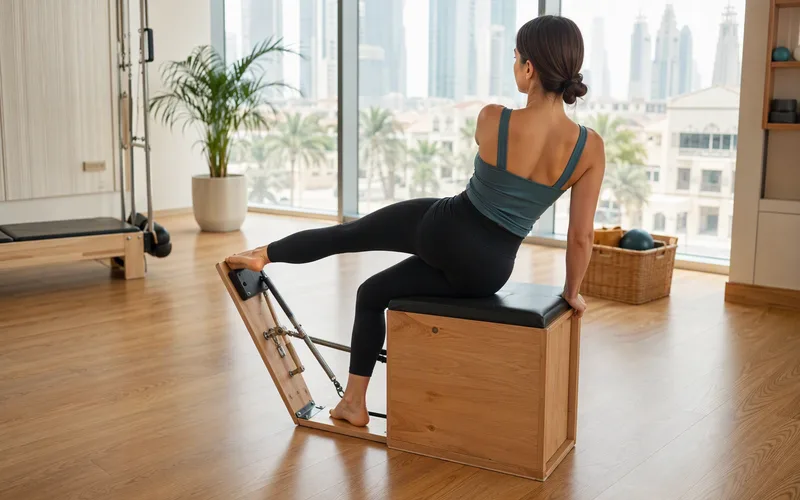
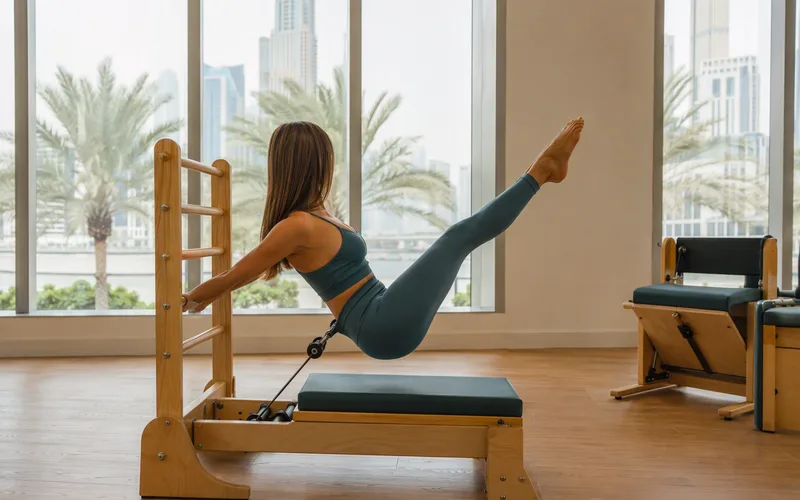
Pilates matwork forms the foundation of classical Pilates, accessible without apparatus. At Pilates Academy Arjan, you work on full classical apparatus including Reformer, Cadillac, Chair, Fuse Ladder and mat, with classes capped at five for individual cues. Instructors explain the anatomy of movement to help you refine form.
What is Helicopter in Pilates matwork?
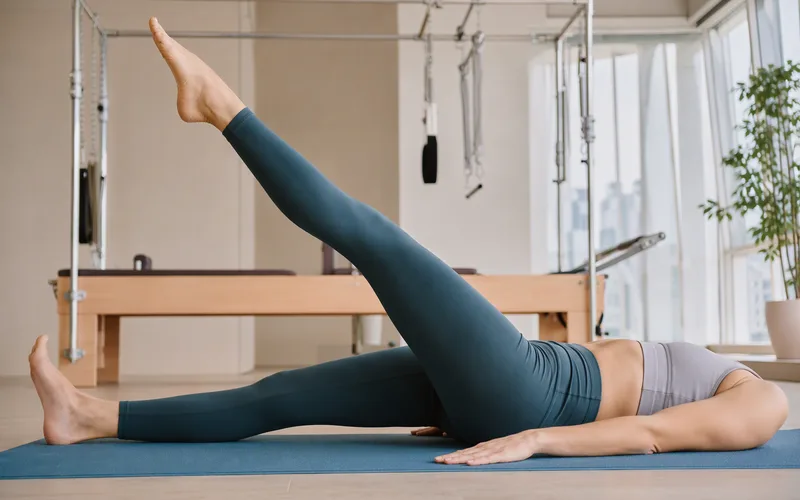
Helicopter appears in the Single Leg Series on Stomach, but beginners often start with a supine variation to master the twist. You engage your core to circle one leg while the torso stays stable, mimicking a helicopter blade. This teaches oblique activation and hip dissociation.
In classical Pilates order, it follows exercises like Single Leg Circle, building on hip mobility. Single Leg Circle on Reformer shares similar circling principles, but mat Helicopter adds rotation without springs. You feel the work in your waistline as you resist lifting the opposite hip.
Regular practice enhances torso stability, useful for daily activities like turning to reach something behind you. At Arjan, mat classes integrate this into sequences for progressive challenge.
How do you set up for Helicopter on the mat?
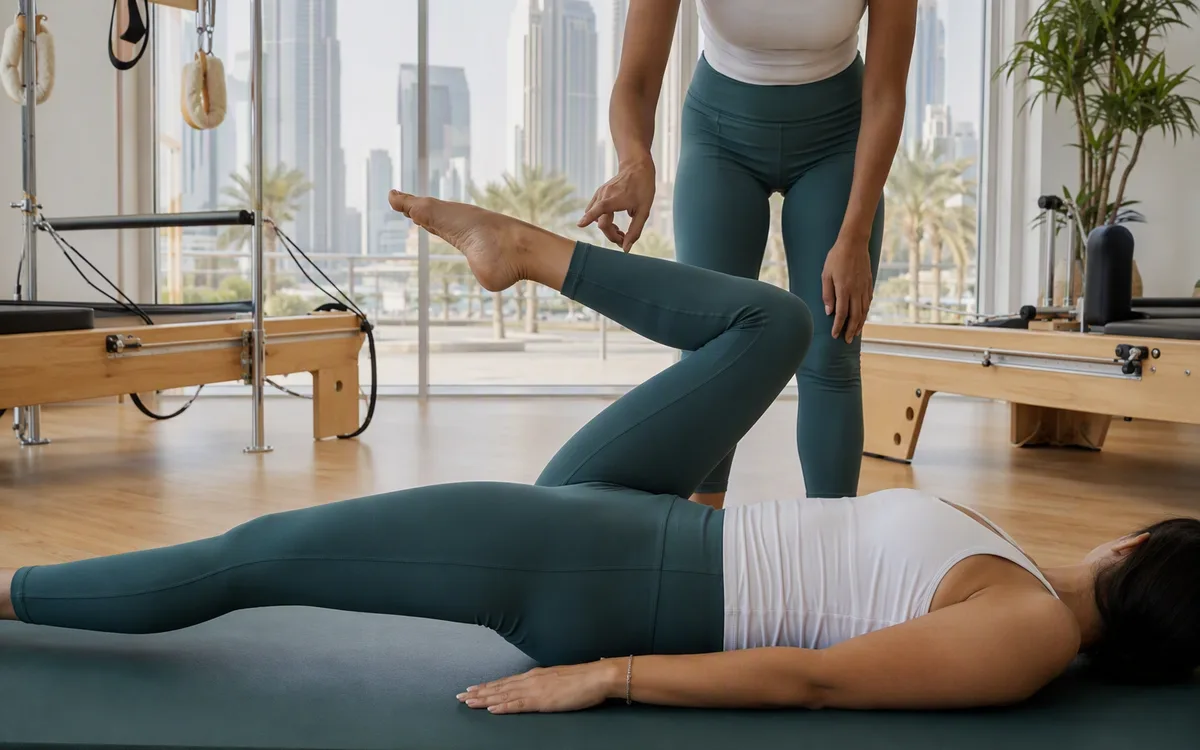
Lie on your mat in supine position with legs extended and arms long by your sides, palms down. Bend your right knee into tabletop, keeping the left leg straight on the mat. Inhale to prepare, then exhale as you circle the right knee outward, across to the left side.
Keep your right shoulder blade pressing into the mat and left hip bone down. The circle completes by bringing the knee back to centre, then to start. Switch sides after five to eight reps.
Need form cues? Call the Arjan studio on +971 56 216 8166 or message us on WhatsApp.
What are the key form cues for beginners?
Torso stability
Anchor your ribcage and pelvis to resist the twist pulling you off the mat. Imagine your spine as a stable axis while the leg orbits around it. If shoulders lift, reduce the circle size.
Breathing rhythm
Inhale to prepare and start the circle, exhale through the cross midline and return. This links breath to oblique engagement. Avoid holding your breath, which tenses the neck.
Progress by increasing circle amplitude only when stable. Link to Roll Over on Mat for overhead leg control cues.
Which muscles does Helicopter target?
The primary movers are the obliques, working to rotate the torso against the circling leg. Your deep abdominals, transversus abdominis, stabilise the centre. Hip flexors and rotators guide the leg precisely.
Secondary support comes from the shoulders pressing down and quadriceps extending the straight leg. This full core activation builds endurance for twisting in other exercises like Boomerang.
In group classes at Arjan, instructors cue these muscles to deepen awareness without strain.
How does it fit into classical Pilates mat sequence?
Helicopter slots into the early matwork after Hundred and Roll Up, preparing for leg springs and stomach series. It bridges supine and prone work, enhancing control before Swan Prep on Mat.
In full classical order, explored in Exploring Full Classical Pilates Order, it reinforces principles of centring and control. Practice three to five times weekly in our max five person classes.
What are common beginner errors to avoid?
Many newcomers let the opposite hip lift, shortening the waist. Counter this by pressing the hip down firmly. Another issue is rushing the circle; keep it deliberate and even.
Avoid tucking the pelvis, which reduces oblique work. If neck strains, place hands behind head lightly. Film yourself or ask for mirrors in class to self correct.
How can you progress Helicopter safely?
Once basic circles feel stable, add a hover by lifting the straight leg to 45 degrees. Then try both legs in opposition for advanced challenge. Integrate into flows with Teaser prep.
Track progress by noting ease of grounding and breath flow. In Arjan sessions, move to apparatus variations like on Cadillac for assisted progression.
Common questions
Is Helicopter suitable right away for beginners?
Yes, start with small circles and instructor guidance. New clients at Arjan begin with three classes for AED 300 including VAT. Build to full range over weeks.
Can I do Helicopter if I have back sensitivity?
Use modifications like smaller range or straight leg version. Focus on control, not amplitude. Consult your instructor for cues tailored to you.
How often should beginners practice this?
Aim for two to three sessions weekly in group classes. Combine with mat fundamentals like Roll Up. Consistency builds the control needed.
Does it help with everyday twisting movements?
It strengthens the core rotators used in golf swings or reaching. Improved stability carries over to sports and daily tasks.
What next after mastering basic Helicopter?
Progress to prone versions or apparatus like Chair twists. See Wunda Chair intro for sequencing.