Exploring Full Classical Pilates Order on Apparatus in Dubai Group Classes
 Written by Matt, Reformer and Mat Pilates Instructor, Pilates Academy Arjan
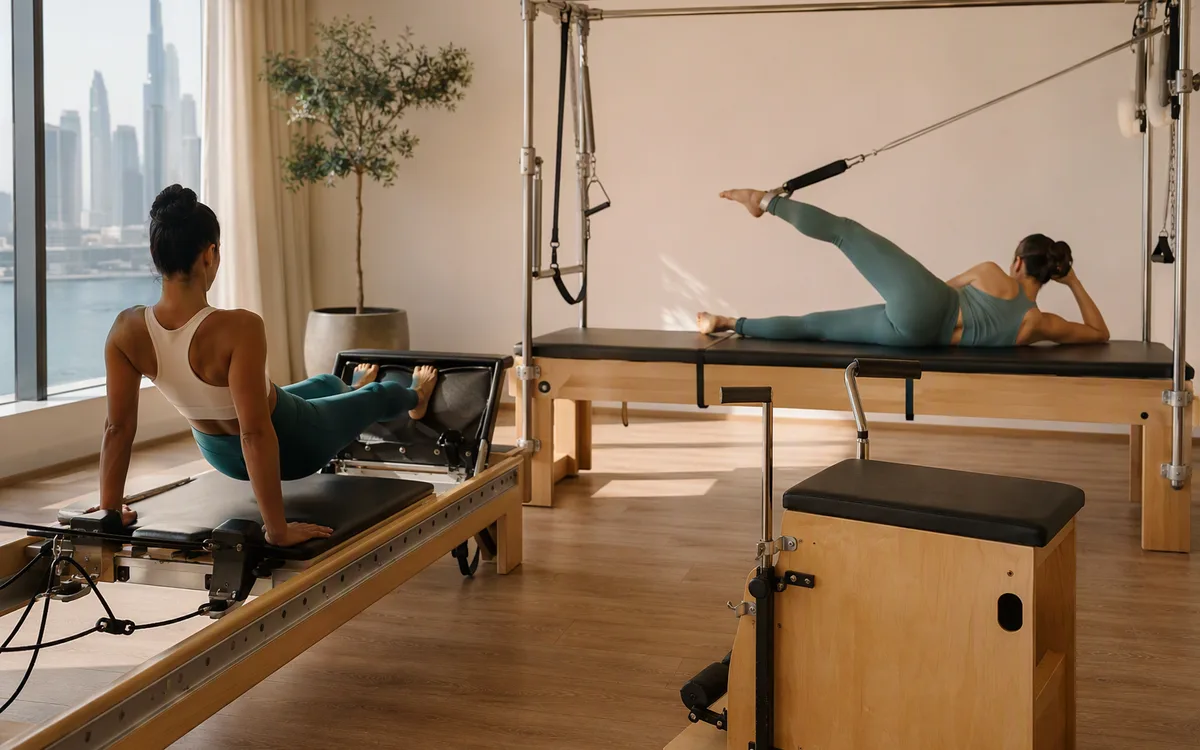
This studio stands apart from nearby reformer-only options by providing the complete classical apparatus. Group classes follow Joseph Pilates's original order, moving logically from one piece to the next. You receive individual feedback in small groups, which helps you master the sequence over time.
Wondering about the class flow? Call the Arjan studio on +971 56 216 8166 or message us on WhatsApp.
What is the full classical Pilates order?
The full classical Pilates order refers to the exact sequence of exercises developed by Joseph Pilates. It begins on the Mat with fundamental movements, then moves to apparatus like the Reformer for controlled resistance work. You continue to the Cadillac for upright and hanging exercises, the Wunda Chair for push and pull actions, and the Fuse Ladder Barrel for spinal articulation and strength challenges.
This order builds progressively. Early exercises warm your core and limbs, preparing you for more demanding ones later. In group classes at Arjan, instructors guide you through this flow, adapting to your level while maintaining the sequence.
Understanding the order helps you see the method's logic. Each piece targets specific muscle groups in relation to the whole body. Over sessions, you notice how movements connect, improving your overall control.
How do group classes follow this order?
In a typical class, you start with Matwork to activate your centre. The instructor then leads you to the Reformer for footwork and leg springs, following the classical progression. With only five participants, you rotate between apparatus without waiting, keeping the session fluid.
Rotation between apparatus
You spend about 10 to 15 minutes on each piece, completing key exercises before moving on. For example, after Reformer leg circles, as detailed in our Single Leg Circle on Reformer guide, you transition to Cadillac teaser prep. This keeps energy high and ensures everyone experiences the full order.
Instructors cue the group simultaneously but adjust springs or straps for your needs. Book through Glofox to secure your spot in these structured sessions.
What apparatus will you use in sequence?
The sequence starts with Matwork for roll up and hundred, building breath control. Move to Reformer for supine and seated work like short spine massage. Cadillac follows with tower exercises and cat stretch, emphasising full body extension.
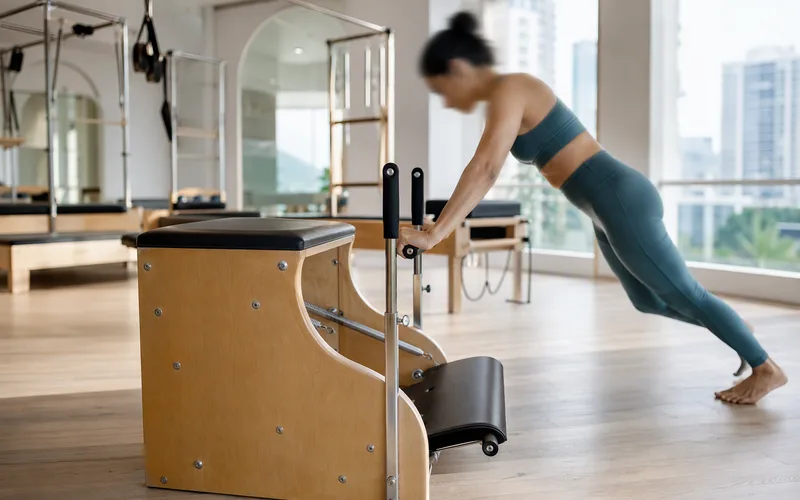
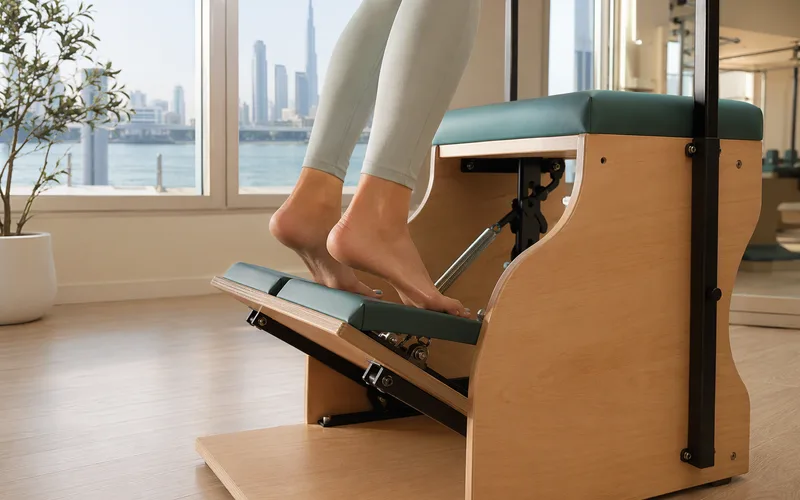
Next is the Wunda Chair, where you push down on pedals for spine stretch, as explored in What to Expect in Your First Wunda Chair Class. The Fuse Ladder Barrel concludes apparatus with push ups and roll overs for inversion strength. Each step reinforces the previous one's foundations.
You finish with any missed Mat variations. This comprehensive flow takes about 50 to 60 minutes, leaving time for feedback.
Why focus on anatomy in these classes?
Instructors explain how muscles like the transverse abdominis stabilise during Reformer footwork. You learn to differentiate between superficial and deep core engagement, which refines your form. This knowledge carries over to daily movement.
Without anatomical cues, you might rely on momentum. Here, you practise intentional activation, such as engaging the pelvic floor in Cadillac leg springs. Small groups allow instructors to observe and correct these details personally.
Over weeks, this builds body awareness. You start feeling imbalances correct themselves through precise execution.
How does small group size enhance the experience?
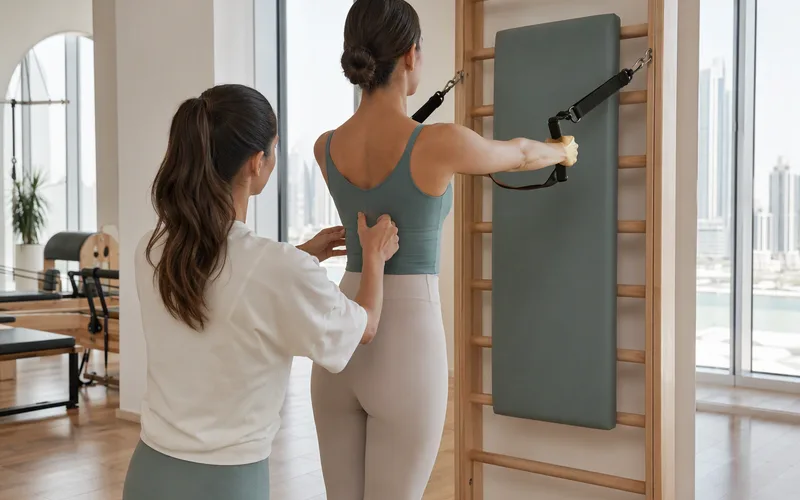
Capped at five, classes offer near private attention. You get hands on adjustments during Fuse Ladder roll backs, similar to Fuse Ladder Barrel workouts for strength. Instructors can pause the group to demonstrate a tricky transition.
This size prevents overcrowding on apparatus, unlike larger studios. You complete the full order without rushing, fostering steady progress. Read more on why max 5 group classes provide personalised attention.
New clients often notice quicker familiarity with the sequence due to this intimacy.
What should you prepare for your first full order class?
Arrive 10 minutes early to settle in. Wear fitted clothing to see your alignment, and bring a water bottle. Start with the three class introductory package for AED 300 including VAT to experience the sequence.
Expect moderate intensity; modifications are available. Focus on breath: inhale to prepare, exhale to exert. If new to apparatus, review basics like the roll up from our Roll Up Pilates guide.
Post class, note how your body feels. Consistency, as in how many Pilates classes per week for beginners, unlocks the order's benefits.
Common questions
Do I need prior Pilates experience?
No, beginners start with modifications in the full order. Instructors break down each exercise, explaining setup on Reformer or Cadillac. After three classes, you handle the sequence comfortably. Small groups ensure support.
How long is a full order class?
Sessions last 50 to 60 minutes, covering all apparatus. You rotate efficiently with five participants. Opening hours allow evening slots for Motor City professionals.
Can I book a single full order class?
Yes, through Glofox after your intro package. Monthly options provide better value for regular attendance. Check schedules fitting your area like Dubai Hills.
Is the full order suitable after work?
Yes, with classes up to 10 PM weekdays. It refreshes you systematically. See optimised schedules for Motor City professionals.
What if I miss part of the sequence?
Instructors prioritise key exercises and revisit in future classes. Progress builds over time. Track your metrics as in our progress article.