Reformer Leg Circles Variation for Hip Mobility Alignment
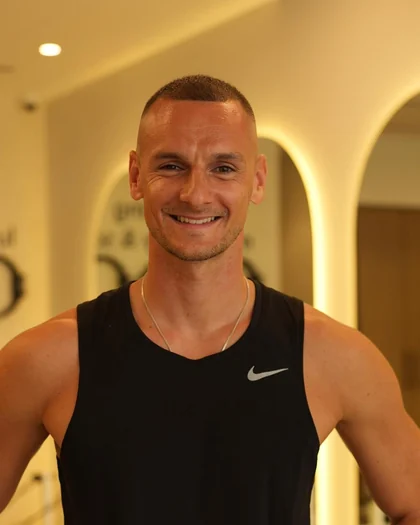 Written by Matt, Reformer and Mat Pilates Instructor, Pilates Academy Arjan
This full-apparatus studio in Arjan offers classical Pilates on Reformer, Cadillac, Chair, Fuse Ladder and Matwork. Unlike nearby reformer-only venues, you access comprehensive equipment with anatomy-focused teaching. Sessions suit areas including Al Barsha South, Dubai Hills, Motor City, Dubai Sports City, JVC and JVT. Opening hours run Monday to Friday 7 AM to 10 PM, weekends 9 AM to 5 PM.
What is the Reformer leg circles variation?
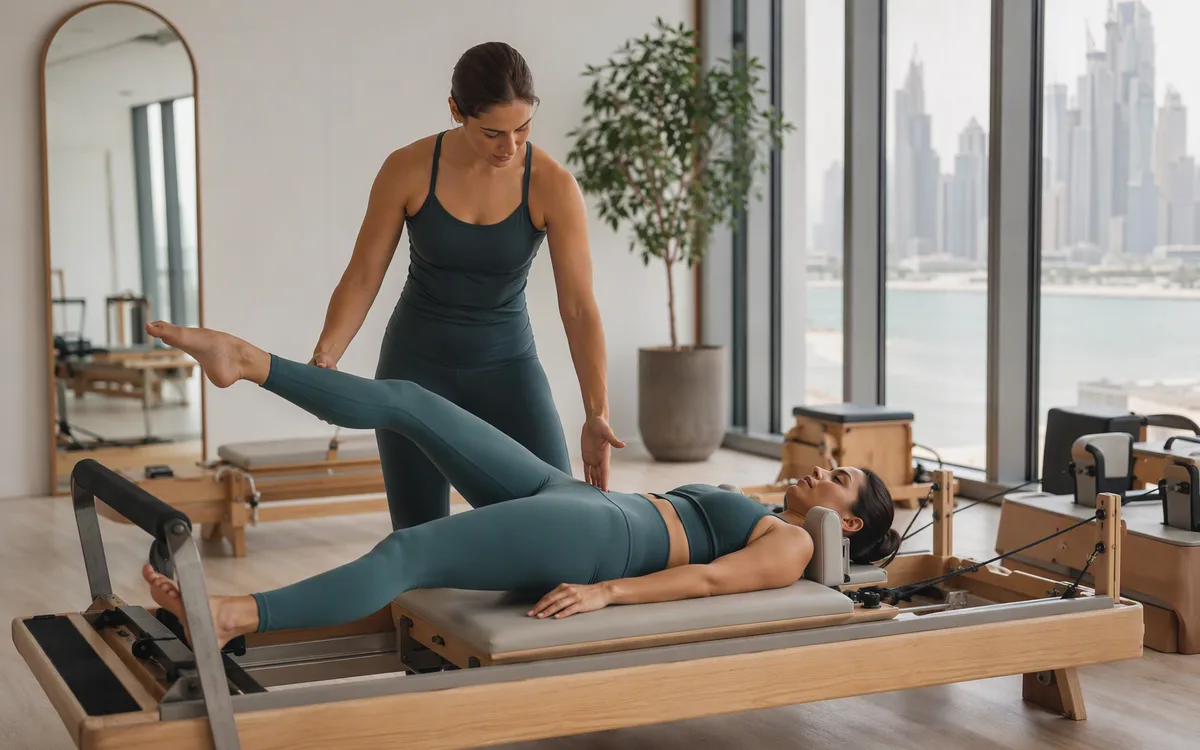
The Reformer leg circles variation builds on classical Pilates single leg circle principles. You start supine with one foot on the footbar and the other leg extended or flexed. Circle the free leg in a controlled path, aiming for hip socket rotation without pelvic shift. Springs provide feedback on stability.
This differs from mat single leg circles by using apparatus resistance. Your pelvis anchors against the carriage, training hip dissociation. Instructors at Arjan guide you to feel the femur head move in the acetabulum, enhancing awareness.
Practice requires 4 to 6 springs for beginners, adjusting for control. Breathe laterally: inhale to prepare, exhale through the circle. Repeat 5 to 8 circles each direction per leg.
How do you set up on the Reformer for this exercise?
Adjust the Reformer to 4 to 6 springs, depending on your strength. Sit facing the footbar, roll supine, and place feet hip-width on the bar with heels centred. Arms extend along sides or hands rest on carriage edges for stability.
Foot position details
Flex feet evenly, pressing balls into the bar. Engage inner thighs to prevent splaying. This setup aligns ankles, knees and hips.
Head and neck alignment
Gaze to ceiling, nod chin slightly for neutral cervical spine. Avoid tucking pelvis prematurely.
Once set, lift one leg to tabletop, knee soft. Begin small circles, growing as control builds. Return carriage to stopper between sides.
What are the key form cues for pelvic stability?
Maintain even sitting bones on the carriage throughout. If pelvis rocks, reduce circle size or springs. Instructors cue imprinting the spine lightly without full posterior tilt.
Shoulders stay broad, ribs knit softly. Coordinate breath to stabilise: exhale resists hip rotation forces. This prevents compensatory lumbar arching.
Need setup guidance? Call the Arjan studio on +971 56 216 8166 or message us on WhatsApp.
Common errors include leg winging or knee locking. Cue femur lengthening from hip socket outward. Progress by pausing at circle top for opposition.
How does this variation improve hip mobility alignment?
The controlled circles lubricate the hip joint, increasing range without strain. Precise anatomy cues ensure rotation stays in the ball-and-socket, not spine. Over time, you gain fluidity in daily movements like walking or squatting.
Unlike Reformer side-lying leg series for inner thigh alignment, this targets frontal plane mobility. It complements rotational work, such as in mat boomerang preparation sequence for rotational control.
Regular practice enhances symmetry, vital for apparatus transitions. Instructors monitor via mirrors, adjusting cues per your form.
What breathing pattern supports the leg circles?
Use lateral breathing: ribs expand sideways on inhale, contract on exhale. Inhale prepares leg lift and first half-circle. Exhale completes circle, drawing navel to spine.
Avoid shallow chest breath, which lifts shoulders. Feel diaphragm engage for core support. This rhythm stabilises against carriage return.
Common breathing pitfalls
Screen breath-holding disrupts flow. Practice supine breathing pre-exercise. Progress to audible exhales for deeper control.
Sync breath with 5 to 8 reps per direction. Advance by holding breath suspension at circle bottom.
What progressions build on basic leg circles?
Start with bent knee circles, straighten as control improves. Add frog press between sets for adductor prep, linking to Reformer frog variation for hamstring and inner thigh coordination.
Intermediate: both legs circle oppositely. Advanced: eyes closed for proprioception. Always prioritise stability over speed.
Integrate into sequences post-footwork. In Arjan classes, instructors tailor progressions in capped groups. Book via Glofox.
Common questions
Who can try Reformer leg circles?
Most fit adults begin after initial assessment. Modify for tighter hips with smaller circles or bent knee. New clients start with three-class package. Instructors adapt for varying levels in small groups.
How often should you practise this variation?
Aim for 2 to 3 sessions weekly. Combine with full Reformer flow. Track progress via circle size and ease. Consistency builds mobility over 4 to 6 weeks.
Can this help with everyday hip tightness?
The exercise promotes hip joint awareness and range. You may notice looser strides or easier stairs. Focus on form prevents overload. Complement with matwork.
What if the carriage moves too much?
Increase springs or shrink circles. Anchor pelvis firmer. Instructors check setup. Practice mat circles first for foundation.
Is prior Pilates experience needed?
Beginners succeed with cues. Start private or small group. Read what to expect in your initial private assessment at Arjan Studio. Book via Glofox.