Reformer Side-Lying Leg Series Technique for Inner Thigh Alignment
 Written by Oxana, Reformer and Mat Pilates Instructor, Pilates Academy Arjan
This series draws from classical Pilates principles, emphasising control and precision on full apparatus. Unlike mat versions, the Reformer's springs add challenge to inner thigh engagement. You develop awareness of how adductors support hip alignment during dynamic work.
What is the Reformer side-lying leg series?
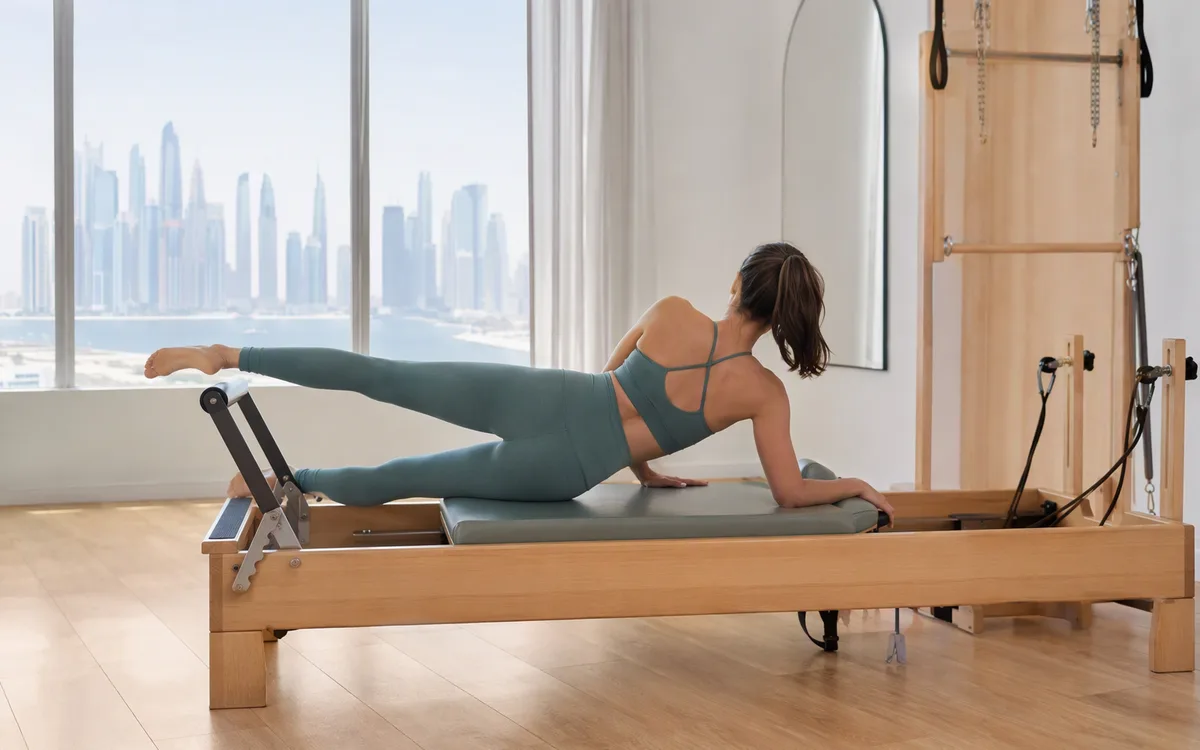
The side-lying leg series involves lying sideways on the Reformer carriage, with your feet placed on the footbar or strap. You execute small, controlled movements like circles, lifts and extensions that target the inner thighs. Springs provide resistance, requiring you to stabilise the pelvis against lateral pull.
This exercise sequence follows side-lying work on other apparatus, such as the Wunda Chair side press progression, but uses the Reformer's gliding carriage for smoother transitions. Instructors cue you to keep the top hip lifted slightly to avoid rolling forward.
Common progressions include adding a circle direction change or increasing spring tension once alignment is consistent. You feel the inner thighs working isometrically to hold the carriage steady.
How do you set up your position correctly?
Lie on your side with the lower leg bent or straight against the carriage, and the top leg extended to the footbar. Place the ball of your top foot on the footbar, toes pointed or flexed as cued. Stack your hips and shoulders directly, with the bottom arm extended forward for balance.
Footbar contact points
Press evenly through the ball of the foot to engage the inner thigh from the start. Avoid gripping with toes, which shifts work to the outer hip. Instructors at Arjan adjust your foot position for optimal adductor line activation.
Need setup help? Call the Arjan studio on +971 56 216 8166 or message us on WhatsApp.
Pelvic alignment check
Place one hand on your top hip to monitor lift. The pelvis stays neutral, neither tucking nor tilting. This prevents compensatory rotation in the lower back.
What breathing pattern supports inner thigh work?
Inhale to prepare, exhale to initiate the leg movement, drawing the inner thigh in against resistance. This coordinates breath with adductor contraction for deeper engagement. Avoid holding breath, which tenses the upper body.
Link breath to carriage return: exhale as you push out, inhale to draw back in. This rhythm mirrors exercises like the Reformer coordination exercise, building fluid control.
Over sessions, you notice smoother breathing aligns with precise inner thigh activation, enhancing overall flow.
Which cues improve inner thigh alignment?
Imagine squeezing a ball between your thighs to activate adductors without over-gripping. Keep the kneecap tracking over the second toe during slides. Instructors explain how the gracilis and adductor magnus fibres align the femur in the hip socket.
Avoiding common shifts
If the carriage rocks, recentre by pressing the sitting bone down. Cue the top inner thigh to 'hug' the midline. This mirrors mat single leg circles stability but with springs.
Monitor rib cage stillness; widening ribs leaks core support. Narrow the front body on exhale.
How does this series fit into a full Reformer class?
It appears midway, after footwork and abdominals, preparing for advanced side work like snake twist prep. In Arjan's small groups of up to five, as noted in our group size benefits article, you receive individual cues.
Follow with mat or chair series for balanced thigh conditioning. Sessions run seven days a week from 7 AM to 10 PM on weekdays.
Classes suit areas like Dubai Hills and Motor City, with new client offers at three classes for AED 300 including VAT.
What benefits come from consistent practice?
Regular work refines hip alignment, supporting everyday movements like walking or running. Inner thighs gain endurance for lateral stability. You carry this control into other apparatus, such as Fuse Ladder footwork.
In group classes, feedback accelerates form refinement. Book via Glofox for your first session.
Common questions
Can beginners attempt this series?
Yes, start with lighter springs and smaller range. Instructors modify by bending the bottom knee for support. Build to full expression over three to five sessions in small Arjan groups.
What if my pelvis shifts during circles?
Pause and reset hips stacked, hand on top hip. Reduce circle size first. Anatomy cues from instructors clarify adductor role in stabilisation.
How many reps per side?
Typically five to eight circles or lifts each direction, based on control. Rest 20 seconds between sides. Progress by adding variations like frog position.
Does it help with leg turnout?
It strengthens inner rotators, balancing turnout muscles. Focus on neutral pelvis prevents over-rotation. Combine with Chair footwork for foot strength.
When can I add resistance?
Once the carriage moves smoothly without hip hike. Instructors assess in class. Aim for two to three months of twice-weekly practice.