Reformer Coordination Exercise Integrating Upper Lower Body Breath Cues
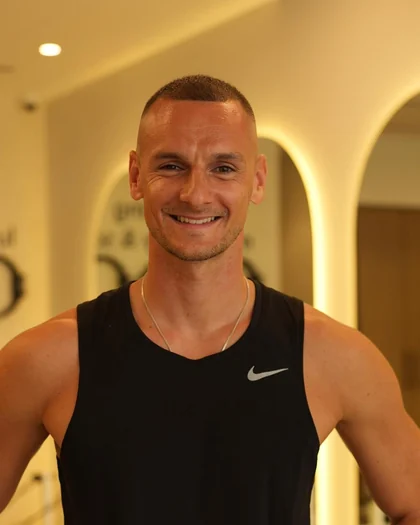 Written by Matt, Reformer and Mat Pilates Instructor, Pilates Academy Arjan
Pilates Academy Arjan in Al Barsha South Third offers full classical apparatus, including the Reformer, unlike many nearby reformer only studios. Instructors teach the anatomical reasons behind each movement, helping you understand how muscles engage. New clients start with three classes for AED 300 including 5% VAT, available Monday to Friday 7 AM to 10 PM, and weekends 9 AM to 5 PM.
What is the Reformer Coordination exercise?
The Reformer Coordination exercise challenges you to synchronise arm, leg, and trunk actions while breathing rhythmically. You begin kneeling tall on the carriage, hands shoulder width on the footbar, toes tucked under against the shoulder blocks. Inhale to lengthen your spine, then exhale as you flex your feet, round your spine forward, bend your elbows, and draw the carriage in towards the footbar.
Return to start by inhaling to extend your spine and legs, pushing the carriage out. Repeat five to eight times, focusing on even breath. This exercise appears midway through the classical Reformer sequence, after you master basics like the Hundred and Footwork.
How do you position yourself correctly?
Start by adjusting the springs to two or three reds and one blue, depending on your level. Kneel with knees hip width, shins parallel to the carriage tracks. Place hands on the footbar at shoulder distance, fingers forward, elbows soft but not locked.
Tuck your toes under firmly against the shoulder blocks to anchor your feet. Lift your chest to align ears over shoulders, engaging your abdominals to support your neutral spine.
Need setup help? Call the Arjan studio on +971 56 216 8166 or message us on WhatsApp.
Keep wrists neutral to avoid strain.What breath cues improve coordination?
Breath drives the movement: inhale for preparation and extension, exhale for flexion and carriage pull in. On the exhale, sip air to deepen abdominal engagement, rounding your lower spine first. This mirrors cues in Reformer Hundred Preparation, building endurance.
Avoid breath holding, which disrupts flow. Instructors at Arjan cue breath to connect diaphragm action with pelvic floor lift, enhancing whole body unity. Practice mirrors breath with movement rhythm for smoother transitions.
How does it integrate upper and lower body?
Your arms pull the carriage via elbow bend and shoulder blade retraction, while legs flex and stabilise through the feet. The spine acts as the bridge, curving to link torso with limbs. This demands upper body strength from lats and triceps alongside lower body control from hamstrings and glutes.
As you advance, maintain pelvic stability amid changing carriage tension. It builds on exercises like Mat Single Leg Circles for leg control, now with apparatus feedback. Feel the power transfer from feet through core to hands.
Why do instructors explain the anatomy?
Arjan instructors describe how the transverse abdominis wraps the torso for stability, and how serratus anterior protracts scapulae during arm work. Understanding rectus abdominis lengthening versus oblique contraction helps you avoid compensatory arching. This mirrors anatomy teaching in Chair classes.
These explanations clarify why breath cues engage the psoas for spinal flexion. You gain body awareness, allowing independent adjustments in group settings capped at five.
What are common form errors to avoid?
Many grip the footbar too tightly, tensing shoulders. Relax into scapular control instead. Another issue: collapsing the lower back on the return, which loses core lift; imprint lightly if needed, but aim for neutral.
Pushing unevenly with arms or legs tips the pelvis. Centre your efforts bilaterally. Rushing the breath shortens the movement; count to four on inhale and exhale for control.
How does this prepare for advanced Reformer work?
Coordination refines the multi limb sync needed for later exercises like Elephant or Control Balance. It strengthens breath body connection for fluid sequencing. In Arjan classes, you progress here after mastering Knee Stretch Round Back.
Regular practice improves carriage control under varying loads. Combine with full apparatus sessions for comprehensive skill building.
Common questions
Is Reformer Coordination suitable for beginners?
You start with lighter springs and fewer reps under guidance. Arjan new client packages introduce it after introductory exercises. Build from there in small groups.
How many springs for Reformer Coordination?
Begin with two full springs, adjusting to one and a half as you strengthen. Instructors tailor based on your form during class. Test for smooth carriage motion without strain.
Can I practise breath cues at home?
Yes, kneel and mimic the spinal curve with breath, no apparatus needed. Use it to prepare for studio sessions. Full benefit comes with Reformer feedback.
How often to include this in routine?
Twice weekly in classes fits most schedules, allowing recovery. Pair with matwork for variety. Track progress in your Glofox bookings.
What if I feel wrist discomfort?
Widen hand placement or use padded grips if available. Strengthen forearms gradually. Speak to instructors for modifications.