Wunda Chair Side Press Progression: Building Lateral Core Strength with Controlled Resistance
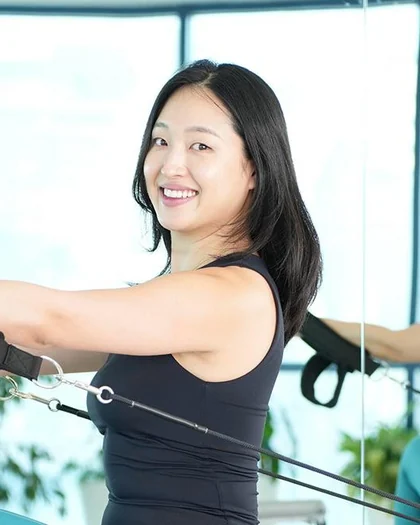 Written by Eun Sol, Pilates Instructor, Prenatal Pilates Certified, Pilates Academy Arjan
Pilates Academy Arjan offers full-apparatus classical Pilates in Al Barsha South Third, distinguishing it from nearby reformer-only studios. Instructors explain the anatomy of each movement, helping you connect breath to action. You book through Glofox for sessions from 7 AM to 10 PM weekdays or 9 AM to 5 PM weekends, serving areas like Arjan, Dubai Hills and Motor City.
What is the Wunda Chair Side Press?
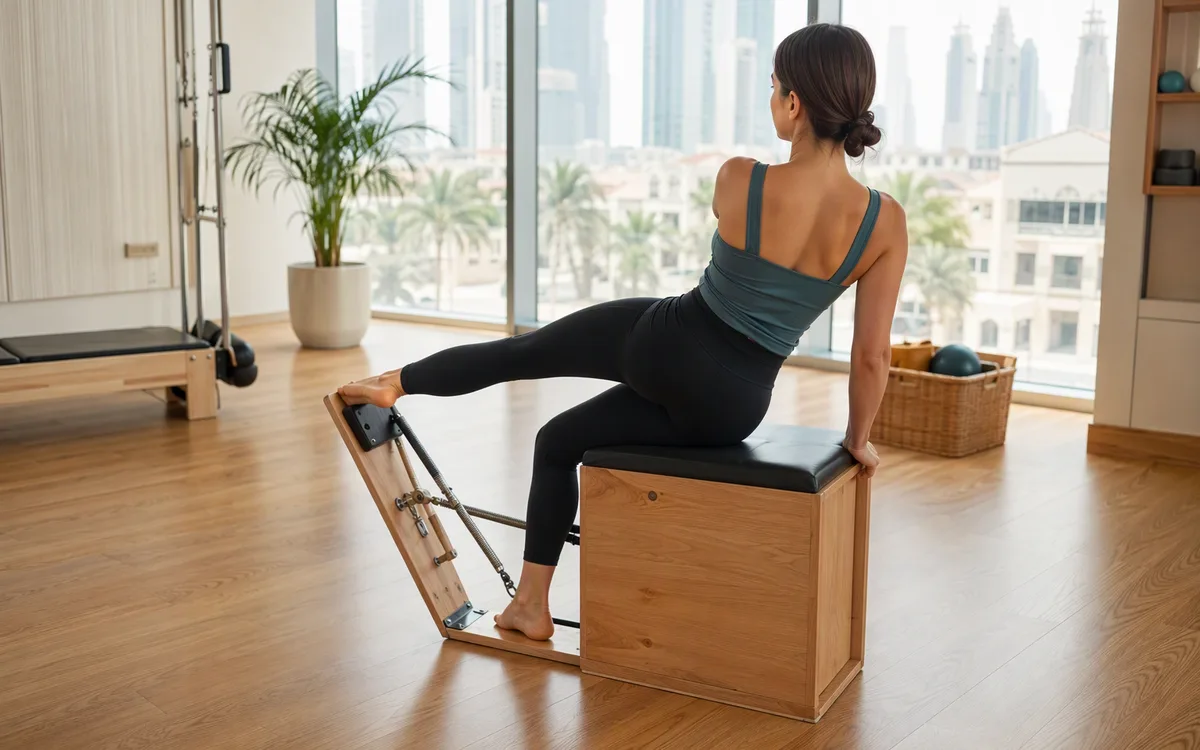
The Wunda Chair is a compact classical Pilates apparatus with a pedal, springs and handles. The Side Press involves you sitting sideways on the chair, foot on the pedal, and pressing it outward or upward against resistance. This targets your obliques, the side abdominal muscles that stabilise your torso during lateral movements.
You engage your core to resist the spring's pull back to centre, building endurance. Instructors at Arjan emphasise neutral spine alignment to avoid compensatory twisting. This exercise fits into sequences after foundational footwork, linking to Wunda Chair Foot Bar Series for lower body preparation.
Classes cap at five, allowing precise feedback on your form as you learn the progression.
How do you set up for the basic Side Press?
Sit sideways on the chair seat with your sitting bone at the front edge. Place the foot closest to the pedal on its outer edge, knee soft. Hold the frame or handle for support, springs adjusted to one or two for beginners.
Initial positioning
Lengthen your spine, shoulders over hips, gaze forward. Inhale to prepare, exhale as you press the pedal sideways and slightly up, feeling your oblique contract. Return slowly with control, resisting the spring fully.
Breath cues
Coordinate breath: exhale on effort, inhale on return. This rhythm supports lateral core activation without strain.
Need guidance?
Wondering about your first Chair session? Call the Arjan studio on +971 56 216 8166 or message us on WhatsApp.
Practice this in Arjan's small groups for real-time adjustments.What are the progression steps?
Begin with the basic single-side press, five to eight reps per side. Advance to pressing with both feet on the pedal for bilateral work, increasing spring tension gradually. Next, incorporate arm reaches opposite the press to challenge balance.
Intermediate variation: stand beside the chair, one hand on frame, pressing pedal with inside foot while lengthening the opposite leg. Advanced: dynamic pulses at the end range, maintaining pelvic stability.
Progress when you hold neutral pelvis without rocking, typically after several sessions. This builds on essential Wunda Chair footwork, ensuring safe advancement.
Which muscles does it target?
Your obliques power the side press, with quadratus lumborum aiding lateral flexion. The gluteus medius and minimus stabilise your hip against the pedal's resistance.
Core and shoulder integration
Deltoids and rotator cuff engage during arm-assisted presses, promoting shoulder stability. Transversus abdominis wraps your midsection for overall control.
This complements twisting moves like Matwork Criss Cross, enhancing full oblique development across apparatus.
What common errors should you avoid?
Avoid leaning away from the working side, which reduces oblique work and strains your back. Keep your shoulders level; do not hike the hip of the pressing leg.
Another mistake: rushing the return, losing resistance control. Slow the eccentric phase to maximise strength gains. In Arjan classes, instructors spot these instantly in small groups.
Check ribcage alignment; collapsing it shortens the torso. Practice mirrors this precision.
How does it fit into a full class sequence?
Side Press follows footwork and leg series on the Chair, transitioning to Teaser progressions. It prepares for side-lying work on other apparatus like the Cadillac.
In a 50-minute Arjan session, allocate three to five minutes, integrating breath cues from Reformer transitions. End with mat cool-down for integration.
New clients start with three classes for AED 300 including VAT, building familiarity with sequences.
Common questions
Is the Side Press suitable for beginners?
Yes, with light springs and instructor guidance. Start seated for stability. Arjan's capped classes ensure you receive cues on alignment before progressing. Build to eight reps per side over initial sessions.
How often should you practise this progression?
Include it two to three times weekly in your routine. Combine with mat obliques for balance. Rest one day between Chair-focused sessions to allow recovery. Track progress via controlled reps.
Can it help with daily activities?
The lateral strength supports carrying loads unevenly, like shopping bags. It improves posture during side bends in sports. Focus on control translates to better stability in life.
What if you feel discomfort during presses?
Reduce springs or reps and check form. Consult instructors for modifications. Discomfort often stems from misalignment, corrected in group feedback.
How does Chair work compare to Reformer side exercises?
Chair offers upright resistance, emphasising standing stability over Reformer's carriage glide. Both build obliques but Chair adds compressive awareness. Alternate for variety in Arjan classes.