Wunda Chair Foot Bar Series: Alignment for Lower Body Strength
 Written by Vivien, Pilates Instructor, Prenatal Pilates Certified, Pilates Academy Arjan
Pilates Academy Arjan offers full-apparatus classical Pilates, including the Wunda Chair, unlike many nearby reformer-only studios. You find the studio at Building 88, Shop 05, Al Barsha South Third in Arjan, serving areas such as Dubai Hills, Motor City and JVC. New clients begin with three classes for AED 300 including 5% VAT, booked via Glofox.
What is the Wunda Chair foot bar series?
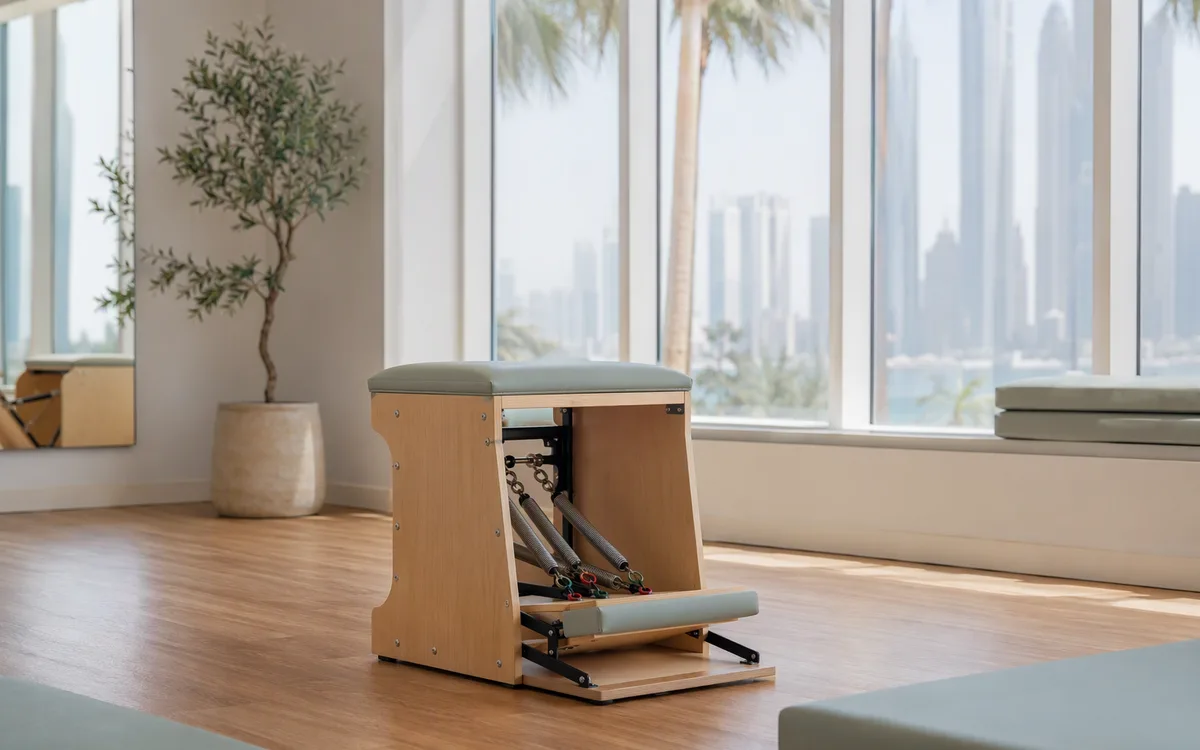
The Wunda Chair is a compact apparatus with a padded seat, pedal and foot bar connected to springs. In the foot bar series, you place your feet on the bar, which sits above the pedal, and press or flex against the resistance. This differs from pedal work where you push the pedal down directly. The series follows classical Pilates order for progressive challenge.
You start seated or supine, depending on the variation, with feet flexed or pointed on the bar. Instructors emphasise neutral pelvis and even weight distribution to avoid compensating with one leg. This builds awareness of lower body alignment before advancing to standing versions.
How do you set up correctly for foot bar work?
Sit on the chair's edge with your sit bones grounded and spine long. Place the balls of your feet on the foot bar, heels together and toes slightly apart for stability. Adjust spring tension so you can control the movement fully without locking joints.
Need setup advice? Call the Arjan studio on +971 56 216 8166 or message us on WhatsApp.
Keep your knees tracking over your toes and ankles dorsiflexed to engage the anterior tibialis. Your hands rest on the chair sides or lap for balance. Breathe steadily to coordinate with the press.
What alignment cues improve lower body strength?
Ankle and foot positioning
Flex your feet so ankles form a right angle, avoiding sickling which strains the Achilles. Press through the metatarsals evenly to activate intrinsic foot muscles. This cue links to Matwork Side Kicks form for leg alignment.
Knee and hip tracking
Track knees in line with second toes, softening them to prevent hyperextension. Engage hip external rotators by imagining squeezing a ball between your thighs. This maintains pelvic neutrality.
Exhale on the press to stabilise your core, drawing navel to spine without tilting.
Why focus on anatomy in foot bar exercises?
Instructors at Pilates Academy Arjan explain how the gastrocnemius and soleus work with hamstrings during plantarflexion. You learn to differentiate glute activation from quad dominance, building balanced strength. Read more in Anatomy of Movement insights.
This knowledge helps you self-correct in small group classes. For example, uneven foot pressure reveals quadratus lumborum tightness, addressed through precise cues.
Over sessions, you notice improved symmetry in daily movements like walking or stairs.
How does this series progress for stronger legs?
Begin with parallel feet presses, 8 to 10 reps, focusing on control. Advance to V-position with heels on bar and toes turned out, engaging inner thighs. Then try single-leg variations for unilateral strength.
Standing foot bar work adds balance challenge, linking to exercises like the essential Wunda Chair footwork. Always return to start position with control, resisting the springs fully.
What common errors should you avoid?
Gripping the chair tightly shifts tension to your upper body, reducing lower body work. Instead, lighten your grip and focus downward. Arching your lower back compensates for weak core; imprint lightly if needed.
Rushing the tempo disrupts alignment. Count to three on press and return for deliberate strength building. Beginners often sickle ankles; practise NHS Pilates for beginners cues at home.
How to integrate foot bar series into your routine?
Attend Wunda Chair classes Monday to Friday 7 AM to 10 PM or weekends 9 AM to 5 PM. Pair with mat or reformer for variety, as in full apparatus uniqueness. Track progress by noting ease in heel lowers over weeks.
Combine with morning warm-ups for Dubai Hills or Motor City residents. Finish with stretches to maintain flexibility.
Common questions
Is the Wunda Chair suitable for beginners?
Yes, with modifications like lighter springs and seated starts. New clients at Arjan begin with three classes including anatomy guidance. Book via Glofox to prepare.
How many reps in a typical foot bar series?
Sets of 8 to 10 per variation, 3 to 5 variations per class. Instructors adjust based on your form. Small classes allow personalised feedback.
Does it help with running in Dubai Sports City?
It strengthens calves and hips for better stride efficiency. Pair with area-specific routines. Classes fit pre-work schedules.
Can I do foot bar work if I have flat feet?
Yes, emphasise even metatarsal pressure. Instructors cue accordingly without medical advice. Consult your doctor first.
What next after mastering foot bar basics?
Progress to pike or step series on the Chair. Explore Wunda Chair pike progression. Classes build sequentially.