Wunda Chair Pike Progression: Shoulder and Core Control During Inversion
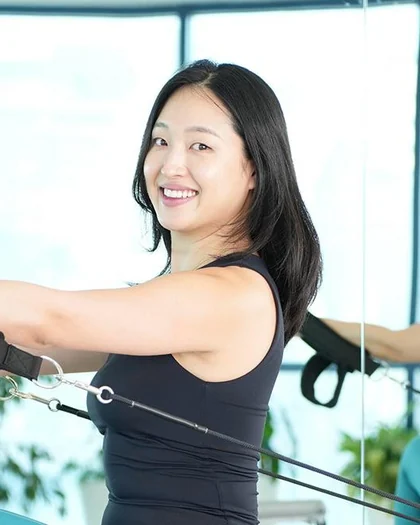 Written by Eun Sol, Pilates Instructor, Prenatal Pilates Certified, Pilates Academy Arjan
Pilates Academy Arjan in Building 88, Al Barsha South Third, offers full-apparatus classical Pilates including the Wunda Chair. Unlike reformer-only studios nearby, you access the complete set of equipment with anatomy-focused teaching. New clients begin with three classes for AED 300 including VAT. Book via Glofox for sessions from 7 AM to 10 PM weekdays.
Need pike cues? Call the Arjan studio on +971 56 216 8166 or message us on WhatsApp.
What is the Wunda Chair pike progression?
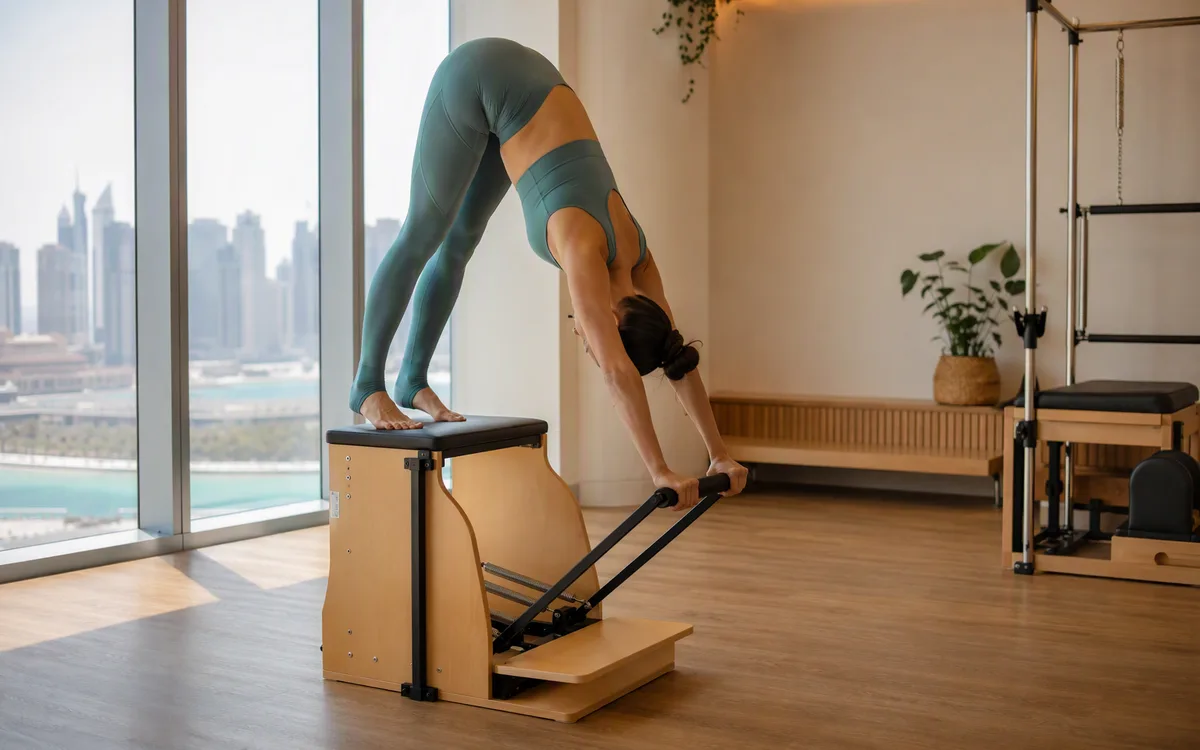
The Wunda Chair pike refers to a series of inversion exercises on the Wunda Chair where you position your hands on the pedal and lift your hips toward a pike shape. This progression starts with preparatory presses and advances to full shoulder stands or handstands against the Chair's frame. Your shoulders remain stable as your core lifts your legs overhead.
In classical Pilates, as taught at Pilates Academy Arjan, the pike builds on foundational Chair exercises. You maintain a long spine and organised shoulders while inverting. Classes emphasise the anatomy: your shoulder girdle depresses fully, and your deep abdominals initiate the lift.
This differs from mat pikes by using the Chair's spring resistance for control. If you have practised Wunda Chair push-up progressions, you will recognise the shoulder cues here.
How do you set up for the basic pike on the Wunda Chair?
Position your hands and feet
Stand facing the Chair with your hands on the pedal, fingers wide and pointing forward. Step your feet onto the seat, heels together and toes apart. Engage your core by drawing your navel to your spine before pressing the pedal down with your arms.
Align your shoulders
Keep your shoulders sliding down away from your ears. Press through your hands evenly to lower the pedal while lifting your chest. Your gaze stays forward to maintain a neutral neck.
At Pilates Academy Arjan, instructors watch your setup closely in small groups. This basic press prepares your shoulders for inversion. Breathe out as you press down, in as you release up.
What are the progression stages to full inversion?
Stage one involves pressing the pedal while keeping your feet on the seat and hips low. Progress to stage two by walking your feet up the frame toward your hands, forming a pike. In stage three, lift one leg overhead while the other stays grounded.
Full progression inverts both legs overhead into a shoulder stand, with your hips stacked over your shoulders. Core control keeps your lower back from arching. Springs provide feedback: too heavy, and your shoulders shrug; too light, and you lose stability.
Practice mirrors Cadillac pull-up bar shoulder stability drills, linking Chair work to other apparatus.
How do you maintain shoulder control during the pike?
Depress your scapulae fully as you invert. Think of wrapping your armpits forward while pressing your hands into the pedal. This organises your shoulder girdle against gravity.
Avoid common faults
Do not let your head jut forward or shoulders hike up. If your elbows bend excessively, lighten the spring. Instructors cue you to feel your lats engaging from armpit to waist.
During inversion, breathe steadily to sustain control. At Arjan, you get hands-on adjustments in classes of five or fewer. This builds endurance for prolonged shoulder stands.
What core cues help during Wunda Chair inversion?
Draw your lower belly inward and upward as if zipping a corset. This activates the transverse abdominis to support your spine. Keep your tailbone tucked to prevent arching.
Exhale on the lift to deepen core engagement. Your pelvic floor lifts with the breath out. Progress feels smoother when core precedes shoulder action.
Link this to exercises like the Hundred on Cadillac for breath-core synergy across apparatus.
When should you attempt advanced pike variations?
Master the basic pike with feet on the seat and stable shoulders first. Advance only when you hold inversion for 10 breaths without strain. Your instructor assesses readiness in class.
Variations include scissor legs overhead or pike pulses. These demand precise control, so small classes at Pilates Academy Arjan allow monitoring. Areas like Dubai Hills and Motor City clients fit these into weekly routines.
Opening hours support progression: early mornings for Dubai Sports City or evenings for JVC. Book via Glofox to track your stages.
How does this fit into Chair classes at Arjan?
Pike progression appears midway in intermediate Chair sessions after pedal work and push-ups. It bridges to advanced inversions on other apparatus. Expect anatomy explanations on shoulder mechanics.
Classes run Monday to Friday 7 AM to 10 PM, weekends 9 AM to 5 PM. Newcomers start with introductory packages. Combine with mat or reformer for balanced practice.
Common questions
Do I need Chair experience for pike progression?
You should know basic Chair exercises like pedal presses first. Beginners build foundations in intro classes. Instructors at Arjan scale cues to your level in small groups. Progression comes after consistent practice.
How many springs for Wunda Chair pike?
Start with one medium spring for control. Advance to two as strength builds. Instructors adjust based on your form during setup. Always test press before inverting fully.
Can pike help with everyday posture?
Pike work strengthens shoulder depressors and core stabilisers used daily. You carry yourself taller with organised shoulders. Practice transfers to standing alignment over weeks of classes.
Is inversion safe on the Wunda Chair?
Yes, when progressed gradually under guidance. Avoid if you have high blood pressure or neck issues; tell your instructor. Small class sizes ensure safe spotting at Arjan.
How often to practice pike progression?
Include it two to three times weekly in Chair classes. Rest days allow recovery. Track via Glofox bookings for steady gains in control.