Wunda Chair Push-Up Progression: Building Leg and Arm Power
 Written by Vivien, Pilates Instructor, Prenatal Pilates Certified, Pilates Academy Arjan
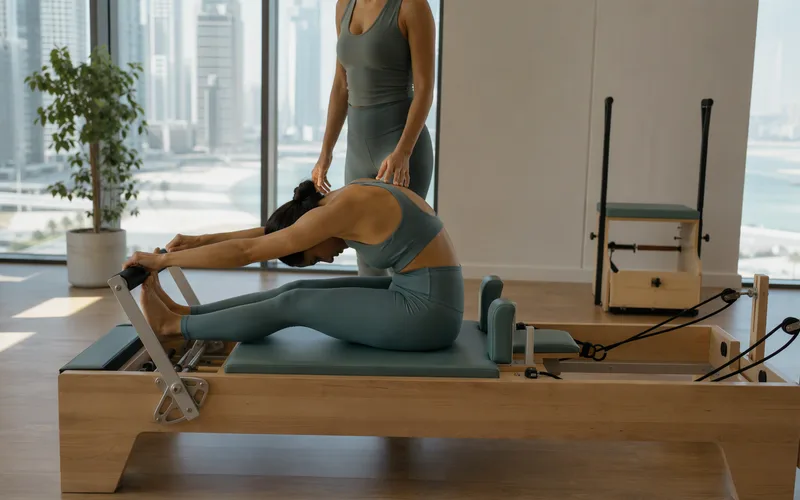
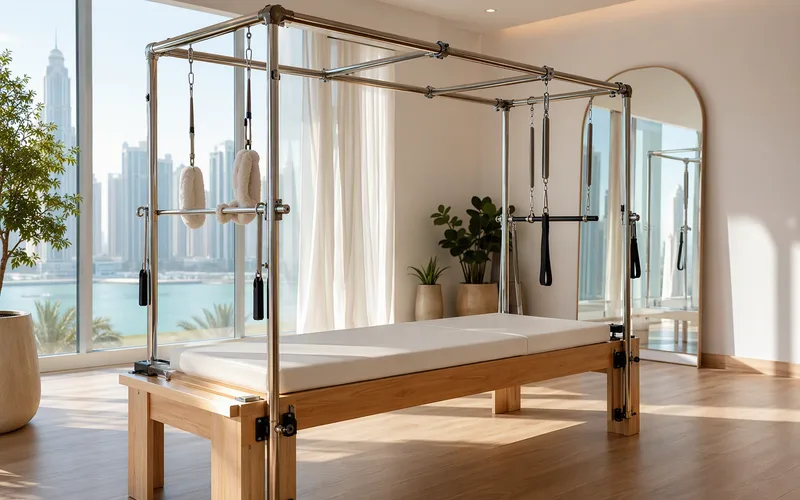
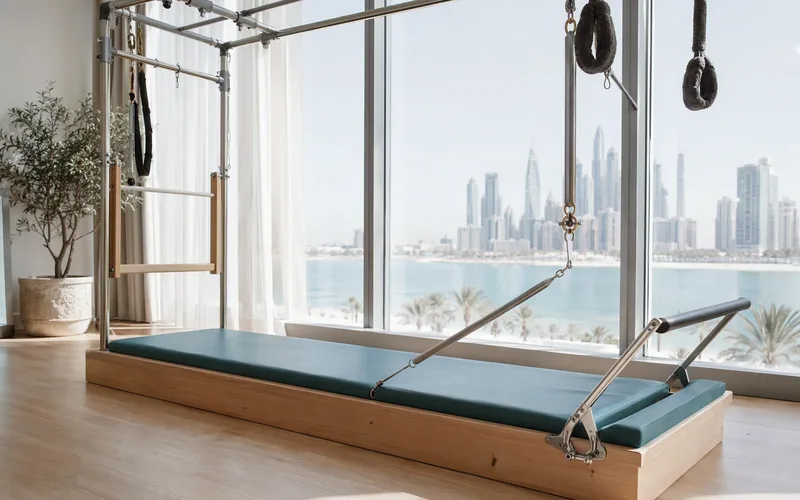
The Wunda Chair is one of the full classical Pilates apparatus available at the studio in Building 88, Shop 05, Al Barsha South Third in Arjan. Unlike reformer-only studios nearby, this setup allows for precise strength building. New clients start with three classes for AED 300 including 5% VAT, booked via Glofox. The progression suits those in Arjan, Al Barsha South, Dubai Hills, Motor City, Dubai Sports City, JVC and JVT.
What is the Wunda Chair push-up progression?
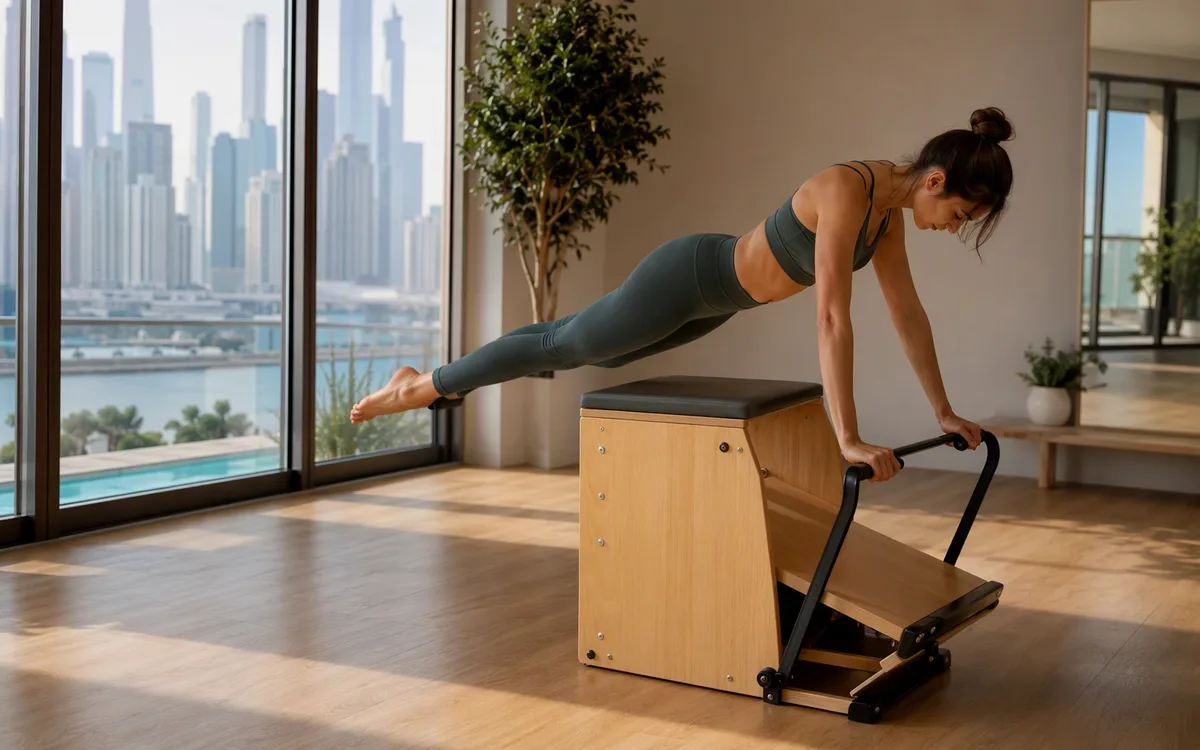
The Wunda Chair push-up progression consists of exercises performed on the compact Wunda Chair, a pedestal apparatus with springs, pedals and handles. You position your body to press against the pedal or use the handles, targeting legs, arms and core simultaneously. Instructors at Arjan break down the anatomy, showing how triceps, quadriceps and stabilisers activate.
You start seated or kneeling, pressing the pedal down with controlled breath. As you advance, you incorporate push-up elements from plank-like positions. This builds power without rushing, fitting into small group classes.
Basic setup
Place your hands on the handles or pedal edge, feet grounded. Keep your spine neutral and shoulders away from ears. Inhale to prepare, exhale to press.
How do you prepare your body for the basic push-up?
Before attempting the push-up, warm up with simpler Chair exercises to activate your legs and arms. Focus on footwork presses to engage quads and calves. Your instructor cues shoulder blade placement to protect the neck.
Maintain a neutral pelvis throughout. Breathe steadily: inhale to lengthen, exhale to strengthen. In Arjan classes, you practise this in sequence with others, building familiarity.
Need form cues? Call the Arjan studio on +971 56 216 8166 or message us on WhatsApp.
Link prior coordination work, as in the coordination drill on Wunda Chair, to sync breath with these presses.
What are the steps for the foundational push-up?
Begin kneeling facing the Chair, hands on handles at shoulder width. Step one foot back, then the other into a modified plank. Exhale as you bend elbows to lower your chest towards the pedal, keeping core firm.
Press back up through arms and legs, inhaling at the top. Repeat 3 to 5 times per side. Instructors adjust spring tension for your level, ensuring legs power the return.
Common alignment cues
Wrists stay neutral, elbows track back not out. Gaze down to maintain neck length. Progress only when you hold form for a full set.
How do you advance to full push-up variations?
Once foundational form is solid, shift to full plank with both feet on the floor or pedal. Lower deeper, engaging glutes for leg power. Add a pedal press: as you push up, extend one leg against resistance.
Alternate legs for balance. This variation intensifies arm strength while building quad endurance. Classes progress you gradually, often after mastering basics like those in side plank on Chair.
Track sessions via your Glofox profile to note improvements over weeks.
Which muscles gain power from this progression?
Arms develop through triceps and deltoids pressing against springs. Legs strengthen via quads, hamstrings and calves stabilising the pedal. Core muscles, including deep abdominals, maintain alignment throughout.
This full-body integration sets it apart from isolated gym moves. You feel power build in compound actions, useful for daily activities or sports.
Anatomy focus
Instructors highlight how pectorals assist the push, while lats stabilise shoulders. Understanding this helps you engage correctly in group settings.
How does it fit into a classical Pilates session?
The push-up progression slots into the Chair portion of a full-apparatus class, after footwork and before advanced balances. It follows principles of control and precision from Joseph Pilates method. Small groups allow real-time feedback.
Combine with Reformer or Cadillac work for comprehensive power. For example, follow with shoulder drills from pull-up bar work on Cadillac to round out upper body sessions.
What tips help you progress safely at Arjan?
Attend consistently, aiming for 2 to 3 classes weekly within opening hours. Listen to body signals; rest if form slips. Use class etiquette from the Pilates class etiquette guidelines to stay focused.
Book via Glofox and arrive early for setup. Instructors modify for your level, ensuring steady gains in leg and arm power.
Common questions
Is prior Pilates experience needed?
No, beginners start with modifications in the three-trial package. Instructors teach basics first. You build to push-ups over sessions.
How often should you practise this progression?
Twice weekly in classes allows recovery and form refinement. Combine with matwork on off days. Track via app notes.
Can men and women do the same progression?
Yes, all levels adapt springs and positions. Group classes mix abilities seamlessly. Everyone progresses at their pace.
What if you feel wrist strain?
Use handles or fists to neutralise wrists. Instructor cues alternatives like forearm support. Build gradually.
How long until you see power gains?
Noticeable strength in 4 to 6 weeks with regular classes. Deeper presses and easier reps indicate progress. Log your sessions.