Short Box Series on Reformer: Form Essentials for Seated Control
 Written by Matt, Reformer and Mat Pilates Instructor, Pilates Academy Arjan
In classical Pilates, the Short Box Series follows earlier Reformer work and prepares you for more advanced apparatus exercises. At Pilates Academy Arjan, instructors explain the anatomy of movement during classes capped at five people. This allows for individual cues on form. The studio in Arjan offers full apparatus, including Reformer, unlike many nearby reformer-only spaces.
What is the Short Box Series on the Reformer?
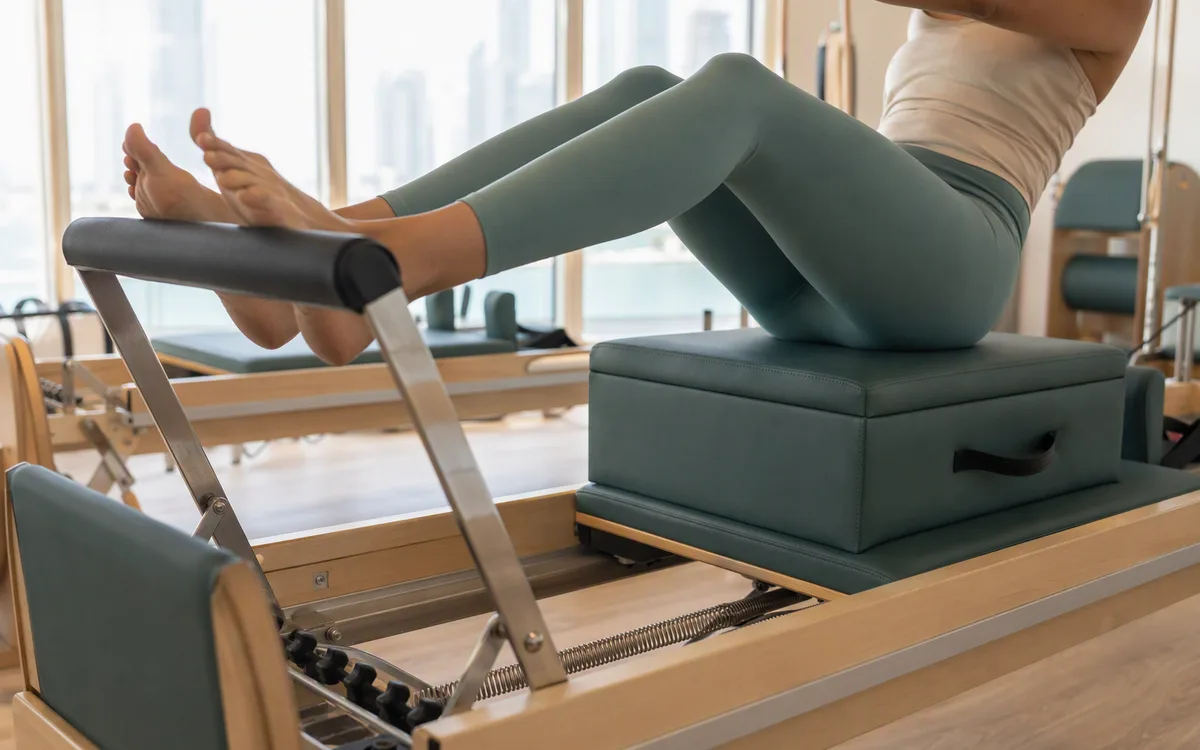
The Short Box Series involves a set of five to six exercises performed while seated on a padded box placed on the Reformer carriage. You position yourself with your sit bones on the front edge of the box, holding the front frame of the Reformer for support. Your feet rest flexed against the footbar, with heels together and toes apart in the V position. Springs are typically set to one red and one blue for moderate resistance, though your instructor adjusts based on your level.
Each exercise in the series targets seated control, requiring you to articulate your spine while keeping your pelvis neutral. The sequence flows continuously, building endurance in your deep abdominal muscles and improving spinal mobility. In group classes at Arjan, you receive guidance on breath coordination to support the movements.
How do you set up correctly for Short Box work?
Begin by placing the Short Box securely on the Reformer carriage. Sit toward the front edge with your tailbone down and hips level. Place your feet on the footbar, heels pressed together, toes open, and ankles flexed. Grip the front frame just above your shoulders, with elbows soft and wide. Lengthen your spine upward as if a string pulls the crown of your head toward the ceiling.
Check that your shoulders stay away from your ears and your chest remains open. Engage your core by drawing your navel to your spine before starting any movement.
Need setup advice? Call the Arjan studio on +971 56 216 8166 or message us on WhatsApp.
Your instructor will confirm your alignment during class.What are the key form points for Round Back?
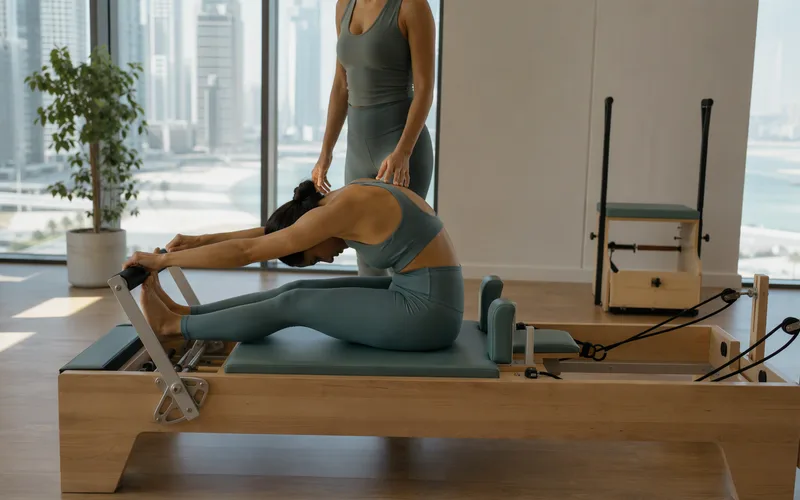
In Round Back, the first exercise, inhale to prepare, then exhale as you curl your spine forward into a C-curve, reaching your hands toward your feet. Keep your chin tucked and eyes on your navel to maintain the curve. Your hips stay square, and feet press evenly into the bar without gripping excessively.
Roll up to sitting on your inhale, stacking one vertebra at a time from tailbone to head. Avoid using momentum; let your breath initiate the movement. This builds awareness of sequential spinal flexion, similar to principles in the Roll Up exercise on the Mat.
Common errors include rounding the shoulders or collapsing the chest. Focus on deepening your abdominals to support the curl.
How do you execute Flat Back with control?
Flat Back follows Round Back. Inhale to lengthen forward over straight legs, keeping your spine extended in one plane. Your hands slide down the frame as you hinge from your hips, maintaining a long waist and neutral pelvis. Gaze forward to avoid tucking your chin.
Exhale to return upright, using your core to lift against the spring resistance. This movement strengthens your back extensors and teaches hip hinging without arching. Practice this to complement back extension work like Swan Prep on the Mat.
Breathing for Flat Back
Coordinate breath precisely: inhale to prepare and hinge, exhale to return. This supports stability and prevents strain.
What form cues help with Side to Side?
Side to Side develops lateral control. From upright, inhale to lengthen one side of your waist, then exhale to reach sideways over your leg, keeping both sit bones down. Your spine stays long without collapsing toward the reaching side. Return through centre on inhale, then repeat to the other side.
Maintain even pressure through both feet on the bar. This exercise enhances oblique strength and torso rotation awareness. Link it to hip stability from Side Kick Series on Cadillac.
Watch for twisting instead of pure side bending; keep your hips stable throughout.
How can you master Twist and Reach?
Twist and Reach adds rotation. Inhale to rotate your ribcage to one side, exhale to reach the rotated arm forward and across, eyes following your hand. Keep your pelvis still and spine tall in the twist. Return centre on inhale, then switch sides.
This refines rotational control and shoulder stability. Use it to progress toward more dynamic twists in apparatus work.
Progressing the Teaser in the series
The final Teaser lifts both legs to tabletop, arms parallel forward. Balance here before rolling back slightly and returning. Build from Teaser fundamentals for precision.
What common mistakes should you avoid?
Avoid overarching your lower back, especially in Flat Back; imprint your lumbar slightly if needed. Do not let your hips lift off the box, which signals weak abdominal engagement. Gripping the footbar too hard tenses your legs unnecessarily.
Another issue is rushing transitions; pause briefly in upright to reset posture. In group classes capped at five, instructors spot these quickly. Consistent practice refines your seated control over time.
Common questions
How many springs for Short Box Series?
Start with one red spring and one blue spring on most Reformers. This provides balanced resistance for control. Your instructor at Pilates Academy Arjan adjusts based on your strength and experience during the session.
Can beginners do the full Short Box Series?
Yes, with modifications. New clients begin with partial range in Round Back and Flat Back. Build to the full series as your core strengthens in small group classes.
How often should you practise Short Box?
Aim for two to three sessions per week. This allows recovery while building control. Track progress in your Arjan classes.
Does Short Box help with posture?
It strengthens the muscles supporting upright alignment. Regular practice improves awareness of spinal positioning in daily activities.
What if I feel strain in my back?
Reduce range and check pelvic neutral. Focus on core engagement. Speak to your instructor for cues.