Wunda Chair Teaser: Core Engagement Cues for Seated Balance
 Written by Matt, Reformer and Mat Pilates Instructor, Pilates Academy Arjan
Pilates Academy Arjan offers full apparatus classical Pilates, including the Wunda Chair, unlike many nearby reformer only studios. Classes run from 7 AM to 10 PM Monday to Friday and 9 AM to 5 PM weekends, serving areas like Arjan, Al Barsha South, and Dubai Hills. New clients begin with three classes for AED 300 including 5% VAT, booked via Glofox.
What is the Wunda Chair Teaser?
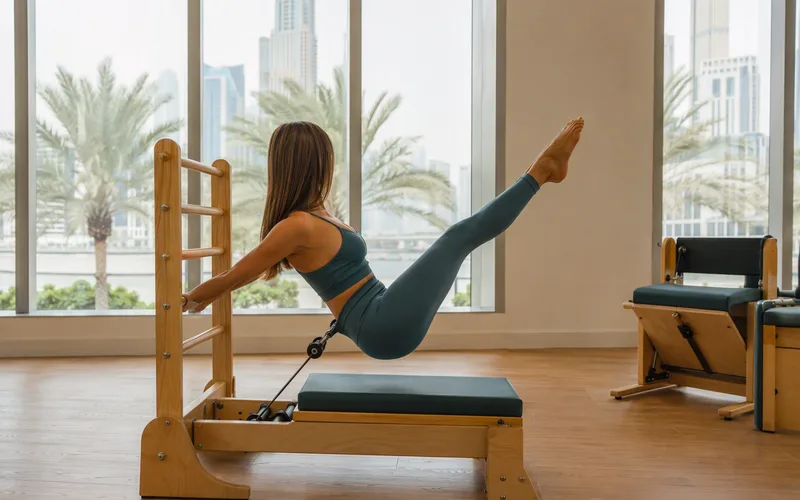
The Wunda Chair Teaser is a seated exercise on the Wunda Chair apparatus. You start by sitting on the pedal with your legs extended forward and feet flexed. Grip the handles at shoulder height, then roll your spine forward slightly before lifting into the teaser position with legs in a V and torso upright.
This movement challenges your balance and core control. Unlike mat teasers, the chair's springs provide adjustable resistance, allowing progression. Instructors emphasise the classical sequence, linking it to prior exercises like footwork. For a foundation, read about essential footwork for new Wunda Chair clients.
Engage your deep abdominals from the start to support the lift. Breathe in to prepare, exhale to lift, maintaining length in your spine. This builds endurance for seated balance.
How do you set up correctly for the Teaser?
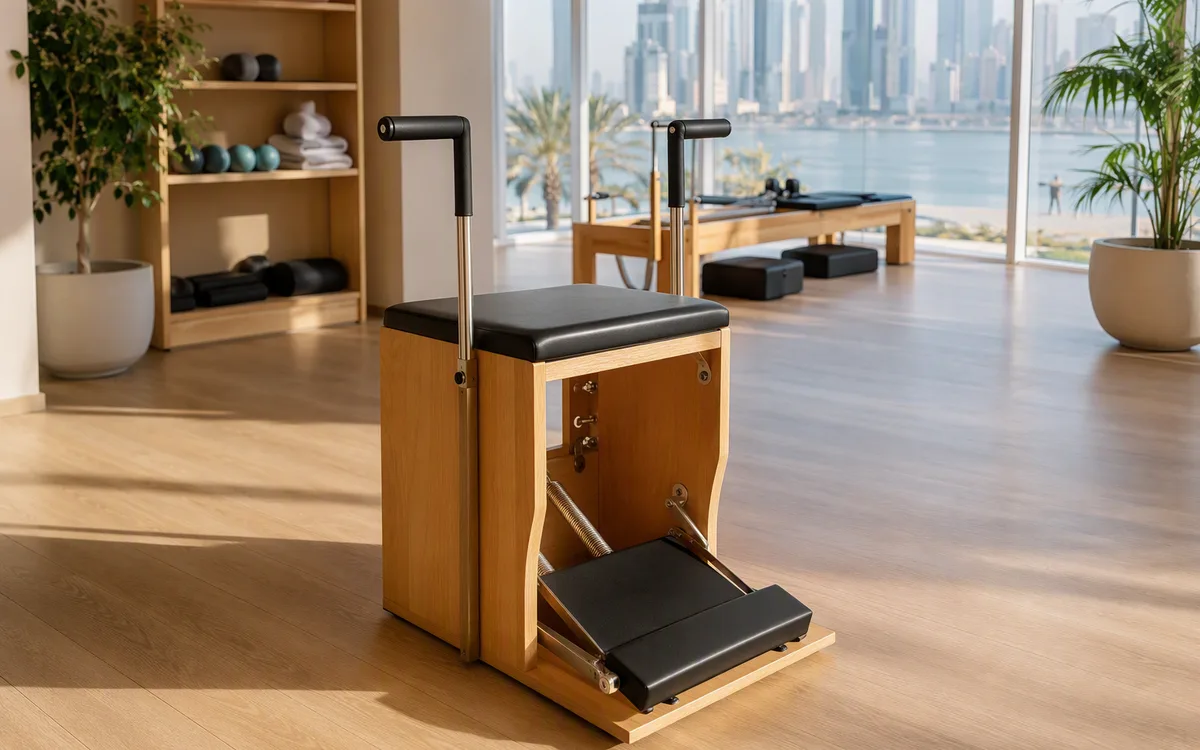
Position the chair with the pedal under your sit bones, springs set to medium resistance for beginners. Sit tall with legs parallel and together, feet flexed at hip distance. Place hands on the upright handles, palms forward, elbows soft.
Foot and leg alignment
Keep heels together and toes apart for stability. Press lightly into the pedal to anchor your pelvis. Avoid gripping with your toes; let energy flow through flexed feet.
Torso preparation
Draw shoulder blades down your back. Lengthen your waist without arching.
Need setup advice? Call the Arjan studio on +971 56 216 8166 or message us on WhatsApp.
This cue prevents slumping during the lift.Check your reflection if available, or ask for instructor feedback. Proper setup supports the full apparatus approach detailed in what makes full apparatus Pilates unique at Pilates Academy Arjan.
What are the key core engagement cues?
Draw your lower belly to your spine on exhale to activate the transverse abdominis. Imagine wrapping your obliques around your waist for 360 degree support. Keep your pubic bone lifting away from the pedal to avoid tucking excessively.
Broaden across your collarbones while lifting. This counters the forward pull of the springs. Instructors explain how these muscles stabilise the pelvis, drawing from classical anatomy insights.
Progress by holding the V position longer, then add pulses. If new to core work, link to Reformer Elephant progression for core power.
How does breathing support your balance?
Inhale to lengthen your spine, exhale to deepen core engagement and lift legs. Coordinate breath with movement to sustain the teaser without strain. Short, controlled exhales prevent breath holding.
Visualise your ribcage expanding sideways on inhale, narrowing on exhale. This diaphragmatic pattern enhances stability. Practice relates to Cadillac breathing drills.
Avoid shallow chest breathing, which destabilises your torso. Steady rhythm builds endurance over repetitions.
What common errors should you avoid?
Pulling on handles with shoulders instead of core leads to tension. Keep arms extended without shrugging. Another error is rounding the lower back; maintain neutral curve through abdominal support.
Leg control mistakes
Do not let knees bend or feet sickle outward. Press evenly through both feet for balance. If one hip lifts, recentre with oblique cues.
Gaze forward to align head over torso. Beginners often rush the lift; slow it down for control. Instructors correct these in real time during classes.
How do you progress the Wunda Chair Teaser?
Start with bent knees if straight legs challenge balance. Advance to straight legs, then open into a wider V. Increase spring tension gradually for more resistance.
Add arm variations, like pressing handles overhead. Hold at the top for counts of five to ten, building isometric strength. Sequence it after footwork and push downs, as in classical order.
Track improvements in hold time and form precision. Combine with chair pike progressions for advanced core work.
Common questions
Is the Wunda Chair Teaser suitable for beginners?
New clients at Pilates Academy Arjan start with introductory levels. Instructors modify by bending knees or using lighter springs. Build from basics like footwork before advancing to teaser. Book your three class package via Glofox.
How often should you practise this exercise?
Include it two to three times weekly in classes. Consistency improves balance over four to six weeks. Pair with mat roll backs for complementary core work.
Can the Teaser help with everyday posture?
Regular practice strengthens seated stability muscles. You carry this awareness into daily sitting. Instructors note anatomical connections to upright posture.
What if you feel shaky during the lift?
Shakiness indicates core fatigue; shorten holds initially. Focus on breath and navel cue. Strengthen with preparatory exercises like pedal pushes.
Does this link to other Chair exercises?
Yes, it follows push down series and precedes pike. Classical order builds progressively. See related shoulder stability cues in Chair exercises.