Reformer Elephant Progression: Enhancing Core Power with Foot Placement
 Written by Eun Sol, Pilates Instructor, Prenatal Pilates Certified, Pilates Academy Arjan
Pilates Academy Arjan in Al Barsha South Third offers full classical apparatus including the Reformer. Unlike reformer-only studios nearby, you access Cadillac, Chair, Fuse Ladder and Matwork here. New clients start with three classes for AED 300 including 5% VAT. Book through Glofox for sessions from 7 AM to 10 PM weekdays.
Need advice on footbar setup? Call the Arjan studio on +971 56 216 8166 or message us on WhatsApp.
What is the Reformer Elephant exercise?
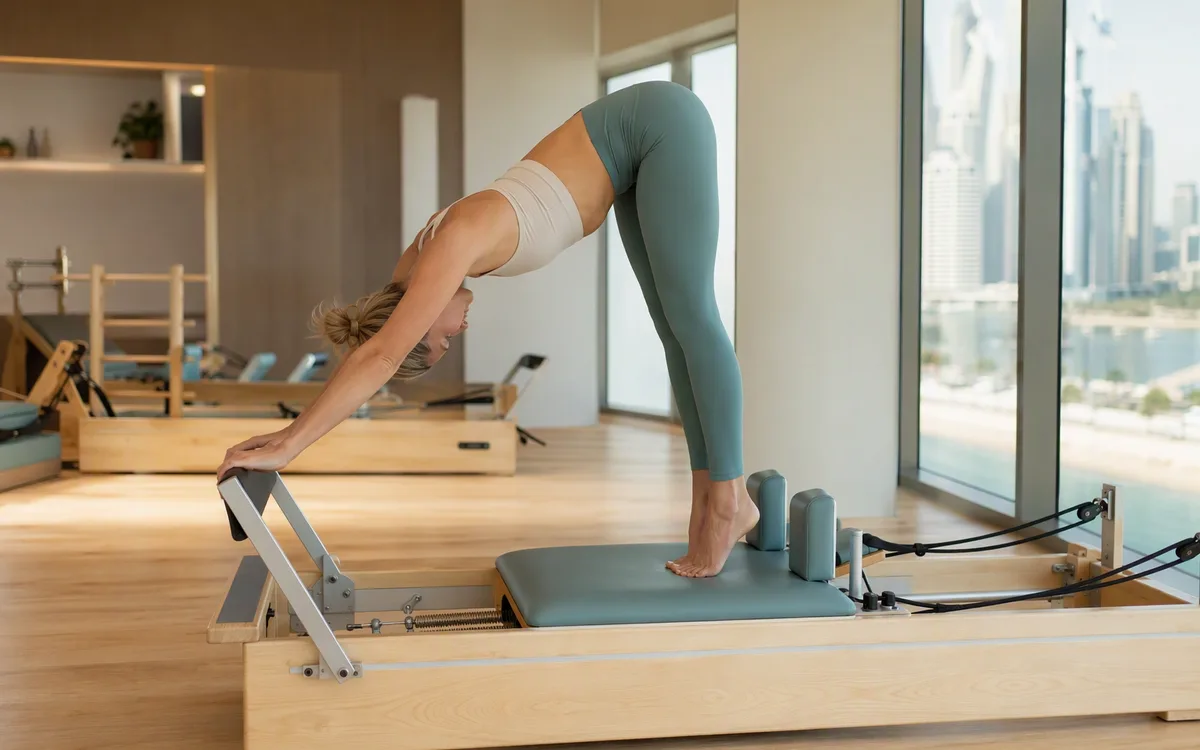
The Elephant starts with you standing on the Reformer carriage facing the footbar. Place your hands shoulder width on the footbar and step your feet onto the carriage with heels together and toes apart. Lift your hips into an inverted V shape, keeping your legs straight. Press the carriage out by hinging forward from your hips while engaging your core to prevent your back from sagging.
Your shoulders stay over your wrists throughout. Inhale to prepare and exhale to press out, drawing your belly to your spine. Return the carriage by using your core to hinge back upright. This sequence targets the powerhouses, the deep abdominal muscles that stabilise your torso.
Classes at Pilates Academy Arjan follow classical order. Instructors cue the anatomical cues, such as keeping the shoulder blades wide. This builds awareness of how foot placement affects core engagement. For more on classical sequence, see Anatomy of Movement: Classical Order Insights from Arjan Instructors.
How does foot placement affect core power?
Foot placement on the carriage determines the leverage and stability in Elephant. Begin with feet wide on the carriage edge for a stable base. This allows you to focus on hinging without the carriage moving prematurely. As you progress, narrow the foot stance to heels together, which shortens your base and demands more from your core to control the springs.
Wide stance for beginners
With feet wide, your weight spreads across the carriage. This reduces wobble, letting you practise the hip hinge. Keep toes turned out slightly to engage inner thighs.
Narrow stance progression
Narrow feet increase instability, forcing your abdominals to fire harder. Heels touch while toes splay, mimicking a Pilates stance. You gain power as your core adapts to the demand.
Precise placement enhances power by aligning your centre of gravity over the carriage. Instructors demonstrate this in small groups, ensuring you feel the difference.
What are the progression stages?
Progress Elephant in three stages: basic hinge, added leg lift and dynamic press. Stage one is the static hold with wide feet, pressing out and back five times. Move to stage two by lifting one foot off briefly, alternating sides to challenge balance.
Stage three introduces a jump or hop element, where you press out explosively while keeping hips level. Throughout, maintain a neutral spine and active shoulders. Breathe steadily: exhale on effort, inhale on return.
These stages layer intensity without compromising form. For similar progressions on other apparatus, read about Cadillac Side Kick Series Progression: Layering Intensity for Leg Control.
How do you maintain proper form during Elephant?
Form cues keep your body aligned. Press evenly through all parts of your feet to avoid rocking. Tuck your pelvis slightly to lengthen your lower back, preventing arching. Gaze down between your hands to keep your neck neutral.
Shoulder and arm positioning
Wrap your shoulders down away from ears. Extend arms fully without locking elbows. This engages your lats and supports core work.
Common errors include bending knees or dropping hips. Correct by imagining a string pulling your tailbone up. In Arjan classes, mirrors and instructor feedback help refine this.
Integrate a morning warm up beforehand, as in Morning Warm-Up Routine Before Arjan Pilates Sessions, to prepare your hips.
What common mistakes should you avoid?
Avoid rounding your back, which shifts work from core to spine. Instead, hinge purely from hips. Do not grip the footbar tightly; relax your hands while firming arms.
Another error is uneven foot pressure, causing the carriage to drift. Centre your weight and check alignment in the mirror. Rushing the movement reduces control; slow it down to build power.
Breathing irregularly fatigues you faster. Sync breath with movement for endurance. Instructors correct these live in capped classes.
How does Elephant fit into a full Reformer class?
Elephant appears midway in the classical Reformer sequence, after Footwork and Hundred. It follows Hundred to further wake your core, transitioning to leg work like Leg Circles. End with side work like Mermaid, as detailed in Reformer Mermaid Exercise Side Bending Form for Rib Cage Mobility.
In a 55 minute class, you repeat it two to three times with variations. This builds endurance across the session. Small groups allow personalised cues on foot placement.
Common questions
Can beginners try Elephant?
Yes, start with light springs and wide feet. New clients at Arjan begin with an introductory package. Instructors modify for your level, building to full progression over sessions.
How many springs for Elephant?
Typically one to two red springs for medium resistance. Adjust based on your strength; lighter for control. Ask in class for setup guidance.
Does Elephant help with posture?
It strengthens the core and posterior chain, supporting upright alignment. Regular practice improves awareness of spinal position during daily activities.
How often to practise Elephant?
Include it two to three times weekly in classes. Combine with mat work for balanced development. Track progress through your Glofox bookings.
What if I feel shoulder strain?
Check shoulder position and lighten springs. Focus on core initiation. Consult instructors for cues, similar to those in Chair exercises.