Cadillac Side Kick Series Progression: Layering Intensity for Leg Control
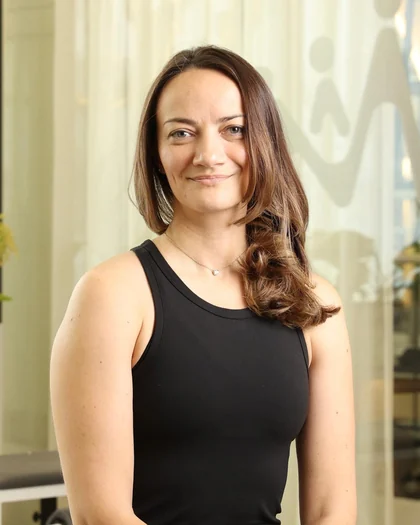 Written by Oxana, Reformer and Mat Pilates Instructor, Pilates Academy Arjan
Pilates Academy Arjan in Building 88, Shop 05, Al Barsha South Third, offers full classical apparatus including the Cadillac. Classes run Monday to Friday from 7 AM to 10 PM and weekends from 9 AM to 5 PM. New clients receive three classes for AED 300 including 5% VAT, booked via Glofox.
What is the Cadillac Side Kick series?
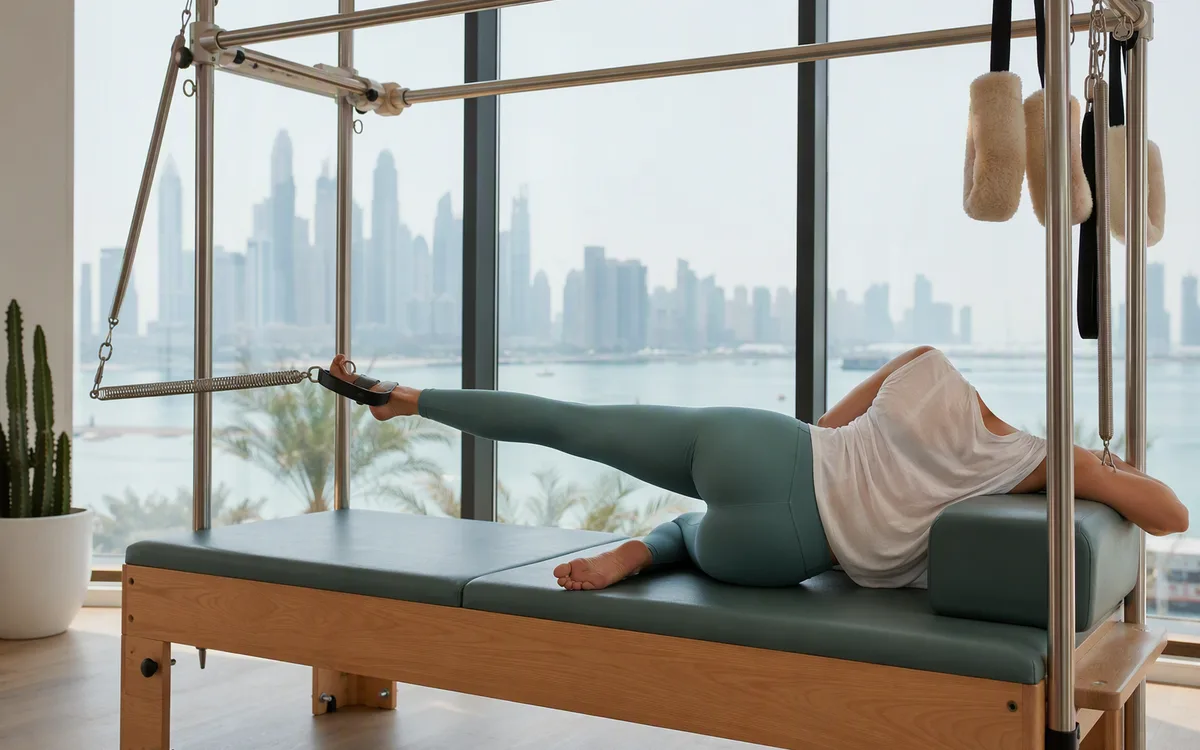
The Side Kick series targets your outer hip and leg muscles using the Cadillac's leg springs. You position yourself on your side, head resting on your bottom arm, with your top leg slipped into the spring. Your bottom leg extends straight, pressing against the frame for stability.
Basic form involves lifting the top leg forward and back in a controlled arc, keeping your hips stacked. Instructors emphasise anatomy, explaining how the movement engages your gluteus medius without rotating the pelvis. This builds awareness of leg alignment from the start.
As you progress, you add circles or pulses, always returning to neutral. Classes at Arjan keep groups small, allowing personal cues on form.
How do you set up correctly for Side Kicks?
Begin by lying on your side facing the leg spring side of the Cadillac. Bend your bottom elbow to support your head, and place your top hand on the mat ahead of your shoulder. Slip your top foot's inner arch into the spring loop, keeping your heel low.
Extend both legs forward at hip height, toes pointed. Engage your core by drawing your navel to spine, and align your hips vertically. Your instructor will check your setup to ensure the spring tension suits your level.
Need setup help? Call the Arjan studio on +971 56 216 8166 or message us on WhatsApp.
What are the basic front and back kicks?
Start with front kicks: exhale to lift your top leg forward to hip height, then inhale to lower it just above the bottom leg. Keep the movement slow, about two counts up and down. Focus on hinging from the hip, not swinging from the knee.
Transition to back kicks: inhale to lift the leg backward, squeezing your glute, then exhale to return forward. Maintain pelvic neutrality to avoid arching your back. Repeat 5 to 8 times per side.
These basics build endurance. Link this control to Reformer Leg Circles for pelvic stability.
How do you progress to side-to-side kicks?
Once front and back feel stable, add side kicks. From neutral, exhale to lift your leg sideways to a gentle arc, then inhale to lower without touching. Keep your top hip lifted to prevent rolling backward.
Adding pulses
Layer intensity with small pulses at the top: two to three quick lifts before lowering. This challenges endurance while demanding core stabilisation. Breathe steadily to stay connected.
Progress to larger ranges, circling front to back without pausing. Instructors cue anatomy to refine your hip socket awareness. Compare to Reformer Side Splits for hip alignment.
What common errors derail leg control?
A frequent issue is pelvic rotation, where your top hip drops back during lifts. Counter this by pressing your bottom hip forward and engaging your waist. Watch for knee bending; keep the leg straight to target the correct muscles.
Another error is rushing the tempo. Slow breaths ensure control over momentum. If your back arches, reduce spring tension or range until stable.
Practice reveals tension spots. Build on this with Cadillac pull-throughs for arm-core integration.
How does breath support progression?
Breath anchors the series: exhale on effort, like the lift or pulse, inhale on return. This rhythm stabilises your core, preventing compensatory strain. Deeper abdominal engagement follows naturally.
In advanced layers, sync breath with circles: exhale front to side, inhale back. This maintains fluidity. Instructors at Arjan demonstrate in small groups.
Consistent breathing advances your control across apparatus.
How to integrate Side Kicks into your routine?
Place Side Kicks midway in leg spring work, after footwork. Alternate sides evenly, resting briefly if needed. Track progress by noting range and reps over sessions.
Combine with matwork like Spine Twist for rotational control. Book via Glofox for Arjan's 7 AM to 10 PM weekday slots.
Common questions
How many reps per variation?
Aim for 6 to 10 reps per direction per side in basics. Increase to 8 to 12 with pulses as you advance. Rest one breath between sides, adjusting based on your energy.
Which spring tension suits beginners?
Start with one light spring, often red. Progress to two as control improves. Your instructor selects based on your alignment and strength.
Can Side Kicks help with daily movement?
They enhance hip stability for walking and stairs. Regular practice improves balance and reduces wobble in lateral steps. Focus on form for carryover.
What if I feel strain in my back?
Check pelvic neutral and reduce range. Strengthen core first with exercises like Hundred. Consult your instructor for cues.
How often to practise this series?
Include it two to three times weekly in classes. Combine with other legwork for balance. Track via Glofox bookings.