Reformer Leg Circles Progression: Maintaining Pelvic Stability During Circular Leg Motions
 Written by Sajida, Pilates Instructor, Pilates Academy Arjan
Pilates Academy Arjan offers full classical apparatus including the reformer in group classes capped at five. You learn techniques like leg circles with focus on anatomy behind the movement. New clients begin with three classes for AED 300 including VAT.
Need help with pelvic stability? Call the Arjan studio on +971 56 216 8166 or message us on WhatsApp.
What is the reformer leg circles exercise?
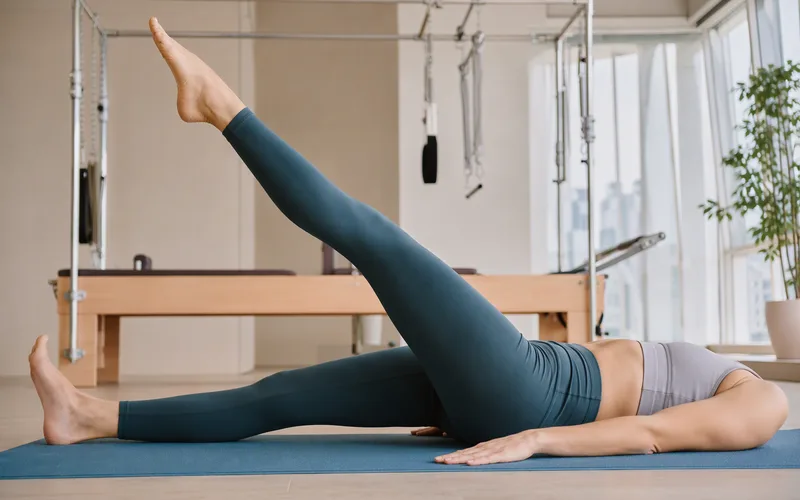
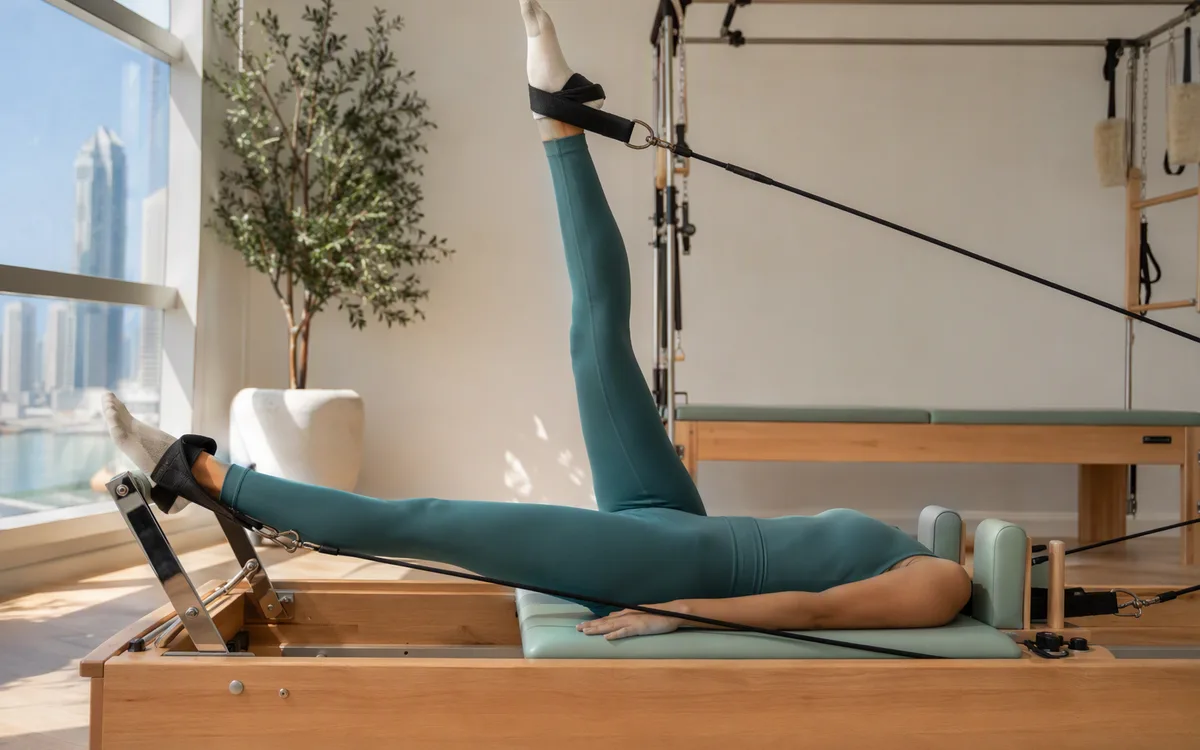
The reformer leg circles involve lying supine on the reformer carriage with your head resting on the headrest, shoulders relaxed and feet flexed on the footbar or straps. You extend one leg to a 45 degree angle while the other remains grounded, then circle the working leg around in a controlled path. The springs provide resistance to challenge your stability.
Your pelvis stays imprinted or neutral throughout, preventing rocking. Instructors cue you to imagine your pelvis as a bowl of water that must not spill. This exercise follows footwork and precedes short spine massage in the classical order, linking to other leg spring variations.
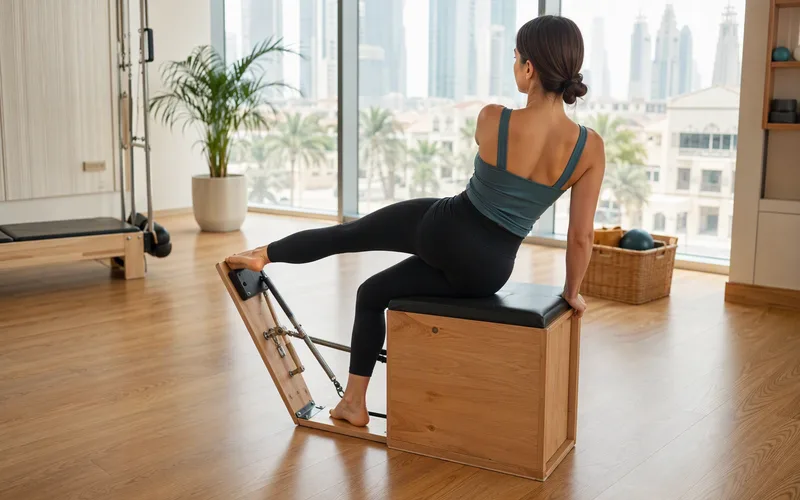
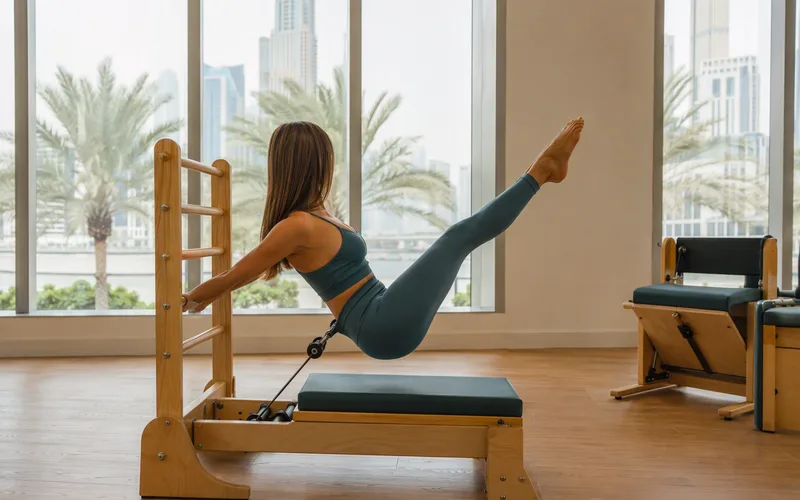
Classes at our studio in Arjan progress you safely, relating this to seated control work on the short box.
Why does pelvic stability matter in leg circles?
Pelvic stability prevents compensatory movement in the hips or lower back during the circular motion. When your pelvis tilts or shifts, you lose the pure isolation of the working leg and hip rotators. Stable positioning engages the deep core stabilisers effectively.
Role of the core muscles
You activate the pelvic floor and transverse abdominis to support the lumbar spine. This creates an intra-abdominal pressure that braces the pelvis against the circling leg's pull. Instructors demonstrate how to feel this engagement before starting circles.
Connection to full body alignment
A stable pelvis aligns your spine and shoulders, enhancing overall form. It prepares you for advanced exercises like the roll over on mat. Practice here builds foundation for multi-planar movements.
How do you set up correctly on the reformer?
Lie on your back with heels on the footbar in neutral pelvis position, knees soft. Place one foot in the strap or directly for circles, hands on the handles or rising bar for support. Adjust springs to medium resistance, typically two full springs for beginners.
Press the carriage out slightly to stabilise, then lift the working leg to tabletop before extending. Keep the non-working leg bent or extended long along the carriage. Breathe steadily to maintain connection.
Our small classes ensure personalised setup cues, helping you from day one.
What are the steps for basic leg circles?
Begin with five small circles clockwise, then counterclockwise, keeping the circle no wider than your hip width. Exhale on the upswing, inhale as the leg passes midline. Focus on even resistance throughout the arc.
Progressing to medium circles
Once small circles feel stable, increase to medium size, still within shoulder width. Slow the tempo to one circle per breath cycle. Check mirrors for pelvic tilt and adjust by deepening abdominal scoop.
Large circles introduction
Advance to large circles reaching towards the corners of the room only after 10 sessions of mastery. Alternate legs each set, resting briefly. This builds endurance alongside stability.
How can you engage your core for better stability?
Draw your navel to spine without tilting the pelvis, visualising a corset tightening around your midsection. Coordinate this with a gentle pelvic floor lift on each exhale. Avoid gripping glutes excessively; let them support without dominating.
Practice preparatory drills like the hundred or footwork beforehand to wake up the core. In class, instructors palpate lightly to confirm activation. Link this awareness to exercises like elephant for lower body alignment.
Regular matwork complements this, reinforcing pelvic neutrality.
What common errors derail pelvic stability?
Allowing the pelvis to hike or twist as the leg circles, often from insufficient core engagement. Rushing the tempo leads to momentum over control, spilling the imaginary bowl. Gripping the neck or shoulders steals focus from the pelvis.
Hip hiking fix
Counter hip lift by pressing the opposite sit bone down firmly. Reduce circle size until stable, then rebuild. Breathe to reset awareness.
Over-arching lower back
Imprint lightly if needed, but aim for neutral. Strengthen with prior core prep like knee stretches. Instructors spot this early in groups.
Common questions
How many sets of leg circles per class?
You typically do two to three sets per leg in a reformer sequence. Start with three circles each direction, building to eight as stability improves. Rest 20 seconds between sets to reassess form. Classes progress this naturally over weeks.
Can beginners attempt leg circles?
Yes, with modifications like bent knee circles or wall support off apparatus. Instructors regress to match your level in our introductory package. Build to full extension gradually. Pair with mat class previews for beginners.
What springs suit leg circles progression?
Begin on one full and one half spring for control, progressing to two full springs. Heavier resistance demands more stability, suiting advanced levels. Instructors adjust based on your feedback during class.
How does this link to other reformer work?
Leg circles follow footwork and precede frog or side splits in leg springs series. It enhances control for later moves like short spine. Understanding stability here improves overall reformer flow.
When will I progress to large circles?
After consistent pelvic neutrality in medium circles for two to three classes. Instructors assess and cue advancement. Patience ensures safe progression without compensation.