Cadillac Breathing Techniques for Rib Expansion in Small Groups
 Written by Oxana, Reformer and Mat Pilates Instructor, Pilates Academy Arjan
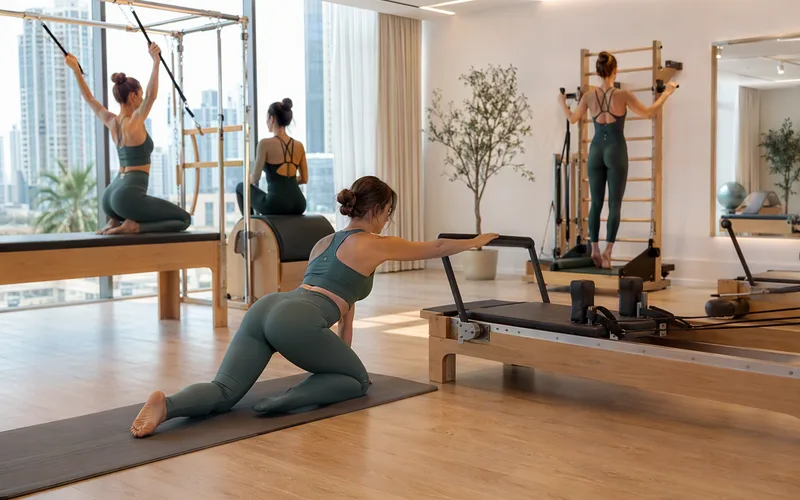
The studio at Building 88, Shop 05, Al Barsha South Third in Arjan offers full classical Pilates apparatus, unlike many nearby reformer-only spaces. Classes run Monday to Friday from 7 AM to 10 PM and weekends from 9 AM to 5 PM. Areas served include Arjan, Al Barsha South, Dubai Hills, Motor City, Dubai Sports City, JVC and JVT. Booking occurs through Glofox.
What is rib expansion in Pilates breathing?
Rib expansion refers to directing your breath sideways into the lower ribs, rather than just into the chest or belly. On the Cadillac, you position yourself to feel the bars or loops support this action. This builds awareness of how breath connects to core stability.
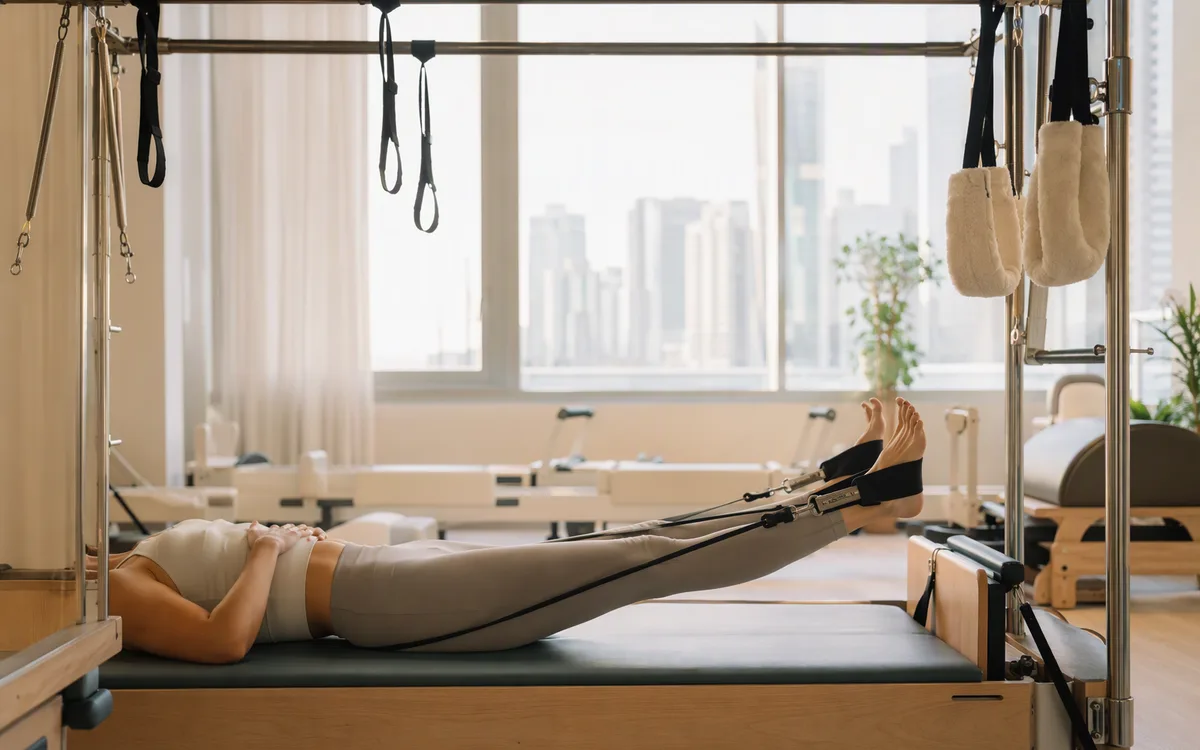
In small groups, your instructor observes your form and offers cues tied to anatomy. You start supine with feet in the loops, arms relaxed by your sides. Inhale to expand the ribs outward, as if filling the sides of a barrel from the bottom up. Feel the lower ribs move away from the pelvis on each side. Exhale to draw them gently inward without collapsing the chest or tensing the neck. Over repetitions, you notice a fuller sensation in the rib cage.
This technique appears early in classes, setting the tone for controlled movement throughout the session. You practise it lying on the padded mat under the Cadillac frame, with the studio's clean setup allowing clear visibility for the instructor.
How does the Cadillac support breathing exercises?
The Cadillac frame provides bars at head and foot ends, plus adjustable loops and springs. These elements create resistance and feedback for precise breath work. For rib expansion, you often lie with legs in footbar loops, allowing gentle traction that encourages even side-to-side breath.
Basic supine setup
Place your feet hip-width in the loops at medium spring tension. Arms rest by your sides or palms up. Inhale through the nose to widen the ribs laterally, feeling space between ribs and hips. Hold for a moment to sense the expansion, then exhale slowly. This setup suits beginners in group classes, as the loops keep legs stable while you focus solely on breath.
Progressing to seated breath
Once comfortable, sit against the upright bar with feet on the mat. Place hands on lower ribs to monitor expansion. Breathe against light hand pressure to refine control. Inhale deeply, pressing ribs into palms evenly on both sides. Groups practise this together for shared feedback, with the instructor walking around to check each person's form.
Cadillac roll-down exercises often follow to link breath with spinal movement. You feel how the rib expansion supports smoother articulation as you roll up and down.
Need guidance on Cadillac setup? Call the Arjan studio on +971 56 216 8166 or message us on WhatsApp.
What are the steps for a basic Cadillac rib expansion exercise?
Begin lying supine on the mat under the Cadillac. Secure feet in loops at ankle height, adjusting for your leg length so knees stay soft. Relax shoulders away from ears and lengthen the neck. Inhale for four counts through the nose, directing breath to lower ribs on both sides equally. Picture air flowing into the back ribs as well.
Exhale for four counts through the mouth or nose, narrowing ribs without hunching the shoulders or pressing the lower back into the mat. Repeat eight to ten times. Instructors adjust loops for your height and offer cues like "fill the sides first." Small groups allow personal feedback on breath depth and symmetry.
Progress by adding arm reaches overhead on inhale, keeping rib openness as arms extend toward the top bar. Feel the stretch through the sides of the torso. This step integrates upper body awareness, preparing you for more dynamic Cadillac work. In a class, you complete this sequence before moving to the next exercise.
How do small groups improve your breathing technique?
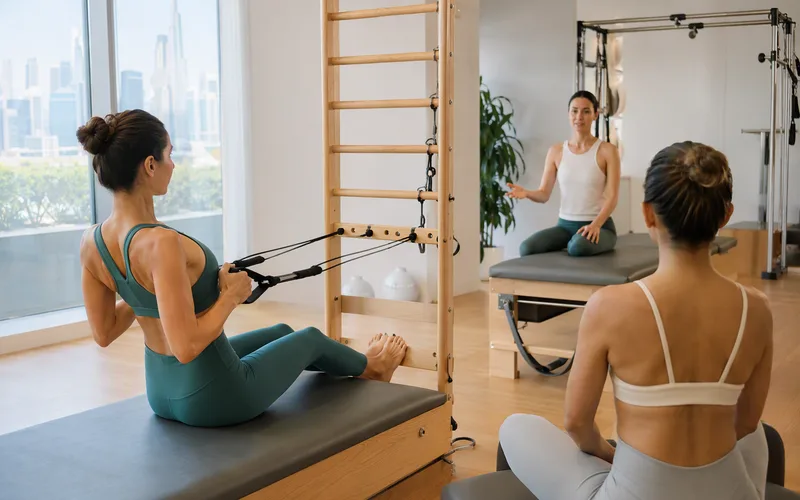
With classes capped at five, instructors give immediate feedback on rib movement, noting if one side expands more than the other. You see variations in group members' form, such as a peer lifting shoulders, which helps you self-correct. This setting fosters breath rhythm without overcrowding, keeping the studio space calm and focused.
Practice mirrors peers' efforts, building consistency across the group. Instructors teach anatomical cues, like intercostal muscle engagement, for all to hear and apply. Sessions progress from basic supine breath to seated variations, with everyone moving together.
Group flow benefits
One member demonstrates the foot placement and first breath, then all follow at the same pace. Adjustments happen fluidly as the instructor circulates. You hear cues given to others, like "soften the front ribs on exhale," reinforcing your own practice. This mirrors real class dynamics at Arjan, where the small size ensures no one feels lost.
Link to studio flow from mat to apparatus for seamless progression. Breath work transitions smoothly into these flows.
Which anatomical cues help with rib expansion?
Focus on the lower ribs floating outward on inhale, away from the hip crests. Visualise ribs as buckets filling sideways from the base. Avoid lifting shoulders or flaring upper ribs excessively; keep collarbones level. Inhale to create width between the bottom ribs and pelvis.
Instructors point out diaphragm descent, which expands the rib base evenly. Exhale engages transverse abdominis to stabilise without restricting breath. Practice these cues mentally during each cycle: inhale to widen, exhale to hug inward softly. Feel the subtle lift in the rib cage without strain.
Over sessions, notice even expansion left and right; unevenness corrects through mirrored group work where you observe peers. Consistent cues build reliable technique you carry into other exercises. In the Cadillac setup, the loops provide a anchor point, making cues easier to apply.
How to integrate this into a full Cadillac session?
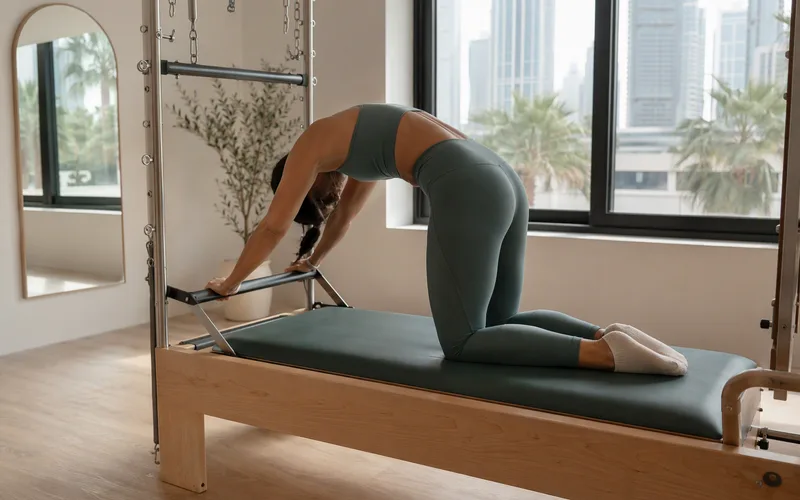
Start sessions with five minutes of rib breathing to centre your breath and establish rhythm. Follow with roll-downs or cat stretches for spinal integration. Cadillac cat stretch variations use similar breath patterns, rounding and extending the spine while maintaining side rib awareness.
Mid-session, return to breath checks between exercises like leg springs or arm work. Pause supine, feet in loops, for two breaths to reset rib expansion. End supine to release tension and note how breath feels after the full workout. Small groups allow tailoring, with the instructor suggesting personal progressions.
This builds endurance for longer holds in apparatus work, such as sustained springs. You feel more connected through the session, with breath supporting each transition fluidly.
Common questions
Can beginners join Cadillac breathing classes?
Yes, new clients start with three classes for AED 300 including VAT. Instructors modify for your level in small groups of five, starting with basic supine positions. Focus remains on breath fundamentals before advancing to seated or dynamic variations. You build confidence quickly with individual attention.
What if I struggle with lateral breath?
Instructors use hands-on cues or props like soft balls placed under the sides of the ribs to enhance sensation. Practice daily at home with five minutes supine reinforces studio work. Progress comes steadily in capped classes, as peers' examples provide additional motivation.
How often should I practise rib expansion?
Aim for two to three sessions weekly at the studio during opening hours. Short home mat breath work, lying with hands on ribs, maintains gains between classes. Consistency in small groups accelerates skill development over time.
Is this suitable after other Pilates exercises?
It pairs well post-matwork or reformer sessions to reset breath control. Use it as a transition between apparatus pieces. See studio sequences for integration ideas that fit group class flow.
Do I need prior breath training?
No preparatory work required. Classes build from neutral spine basics, like in Reformer Hundred preparation. Start anytime with the new client package, and instructors guide you step by step.