Fuse Ladder Rowing Series Form for Back Muscle Engagement
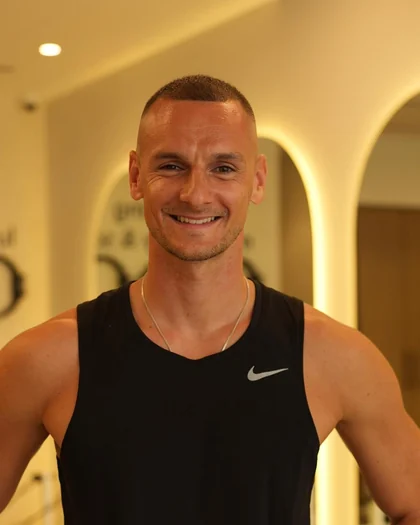 Written by Matt, Reformer and Mat Pilates Instructor, Pilates Academy Arjan
Pilates Academy Arjan offers full-apparatus classical Pilates in Al Barsha South Third, Dubai. Unlike reformer-only studios nearby, it includes the Fuse Ladder for exercises like the rowing series. You book through Glofox for sessions from 7 AM to 10 PM on weekdays.
What is the Fuse Ladder rowing series?
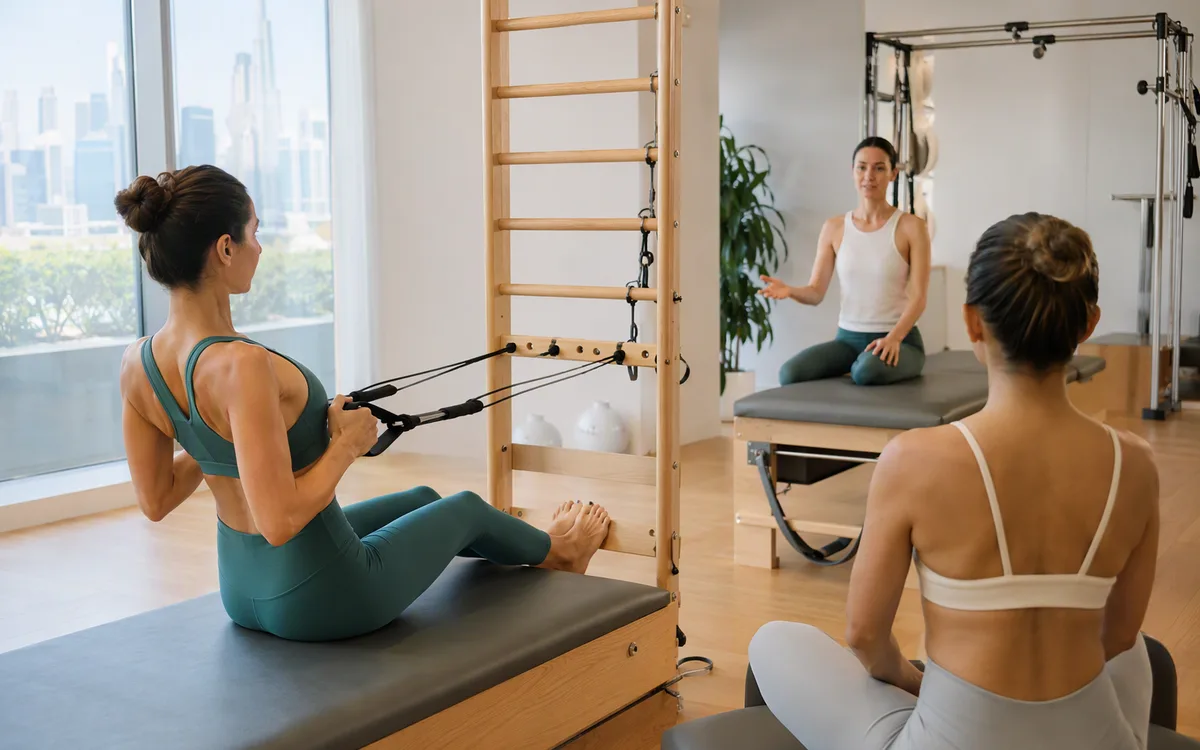
The rowing series consists of nine exercises performed seated on the Fuse Ladder, a vertical frame with adjustable bars and straps. You secure your feet on the footbar and hold leather straps attached to springs. Each rowing variation targets back engagement differently, starting with basic pulls and progressing to twists. You feel the straps' smooth resistance as you draw them back, with the ladder's sturdy rungs providing a stable anchor for your spine.
This classical sequence originates from Joseph Pilates' method, emphasising full trunk integration. Your instructor explains how the lats stabilise the shoulders and rhomboids draw the scapulae together. Practice in small groups at Arjan ensures individual feedback on form. In a class, you see others maintaining upright posture, and your instructor circulates to adjust hand positions or foot placement for optimal alignment.
As you progress through the series, the movements challenge your ability to keep the pelvis neutral, integrating core support with back activation throughout.
How do you set up for rowing on the Fuse Ladder?
Sit facing the ladder with your tailbone against the first rung and feet flexed on the footbar, heels together and toes apart. Hold the straps with palms facing in, arms extended forward at shoulder height. Lengthen your spine from the crown of your head to your sits bones. You notice the leather straps' texture in your grip and the slight tension from the springs even before starting.
Adjust spring tension to medium resistance, typically one or two springs. Breathe in to prepare, exhale to pull.
Need setup advice? Call the Arjan studio on +971 56 216 8166 or message us on WhatsApp.
Keep wrists neutral and elbows soft to avoid strain. In the studio, the instructor demonstrates this position first, walking you through sliding your sits bones back against the rung while lifting through the chest.This setup positions your shoulder girdle for efficient pulling, where you feel the initial stretch across your upper back as arms extend fully forward.
What form cues improve back engagement in rowing 1 to 3?
Rowing 1: Forward pull
Exhale and pull straps to your lower ribs, elbows wide and back. Draw shoulder blades down and together without hunching. Inhale to return arms forward, maintaining a long neck. You sense the lats wrapping around your sides as they contract, creating a broad feeling of support under the arms.
Rowing 2 and 3: Diagonal pulls
For rowing 2, pull one strap low across the body while the other angles high. Rowing 3 mirrors on the opposite side. Focus on lat activation by imagining squeezing a ball between your scapulae. In class, the instructor cues you to keep the rotating trunk grounded, preventing the hips from shifting.
These cues ensure even back muscle work. Link this to Fuse Ladder arm series technique for shoulder endurance for complementary upper body practice. You observe how precise elbow tracking keeps the pull centred on the back rather than the shoulders.
How does breath coordinate with back muscle pulls?
Exhale fully during each pull to engage the transverse abdominis and support the spine. This stabilises your core, allowing back muscles to work without arching. Inhale deeply as you extend arms, expanding the rib cage laterally. The breath creates a rhythm you feel in your torso, where the exhale hollows the belly slightly to anchor the movement.
Avoid breath holding, which tenses the neck. Precise breath links to movement, as in the mat roll up technique from supine to seated with precise breath. In Arjan sessions, instructors cue breath to deepen back engagement. You hear reminders like 'exhale to hollow and pull' repeated softly across the small group.
Practice reveals how exhalation powers the rhomboids, enhancing scapular retraction. Over reps, this coordination builds endurance, as your back muscles learn to fire cleanly without compensatory tension elsewhere.
What common errors reduce back muscle activation?
Many round the upper back instead of lengthening the spine, shifting work to arms. Keep chest open and gaze forward. Another error is yanking straps quickly; move smoothly within 3 to 5 seconds per rep. You might feel a pull in the biceps instead of the back if speed takes over, but slowing down recentres the effort.
Elbows flaring too wide bypasses the lats. Tuck them slightly towards ribs on pulls. If new to apparatus, review studio etiquette for group classes at Arjan Pilates Academy before joining. Instructors spot this early, gently pressing your shoulder blades down to restore length.
Leaning back excessively also dilutes activation; stay forward over the hips to load the back properly throughout the series.
How does the rowing series progress in a session?
Begin with rowing 1 to 3 for basic pulls, then 4 to 6 introduce rotations for obliques alongside back work. Rowing 7 to 9 add extensions and side bends. Perform 3 to 5 reps per side, resting 10 to 15 seconds between. You transition smoothly, feeling how rotations build on the foundational pulls by adding controlled twists from the waist.
In group classes at Arjan, flow from mat to Fuse Ladder mirrors studio flow from mat to apparatus transitions in Arjan group sessions. End with matwork to integrate gains. The instructor times rests to let you reset breath and form, ensuring fatigue does not compromise later exercises.
This progression layers complexity, where advanced rows demand sustained back engagement amid changing angles and planes of motion.
Common questions
Is prior experience needed for Fuse Ladder rowing?
No, beginners start with new client offer of three classes for AED 300 including VAT. Instructors modify for your level. Book via Glofox for Arjan, Dubai Hills or Motor City areas. Small groups allow close observation of your form from the first session.
How often should you practise the rowing series?
Twice weekly in small group sessions fits most schedules. Combine with matwork for balance. Evening slots suit Al Barsha South, from 9 AM to 5 PM weekends. Recovery days in between help consolidate back strength gains.
Can rowing help with daily posture?
Yes, it strengthens mid-back muscles for upright alignment during work or commutes. Consistent practice in capped classes builds awareness. Areas like JVC benefit from proximity. You carry the sensation of scapular engagement into everyday sitting or standing.
What if the straps feel too heavy?
Reduce to one spring and focus on control. Instructors assess during your first session. This ensures safe back engagement without fatigue. Slow reps with lighter load still target the muscles effectively.
How does Fuse Ladder fit evening schedules?
Sessions run to 10 PM weekdays. See evening Fuse Ladder sessions fitting Al Barsha South schedules for options. Late availability accommodates post-work routines in Dubai Sports City or JVT.