Studio Flow from Mat to Apparatus Transitions in Arjan Group Sessions
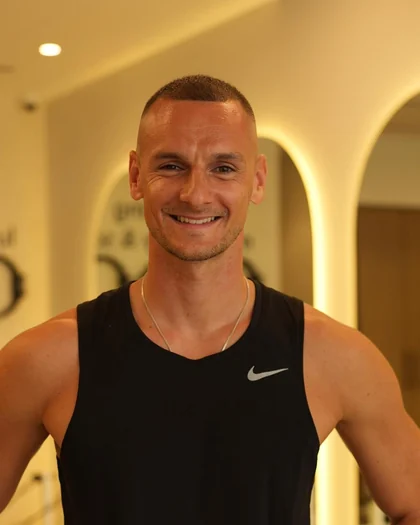 Written by Matt, Reformer and Mat Pilates Instructor, Pilates Academy Arjan
Pilates Academy Arjan, at Building 88, Shop 05, Al Barsha South Third in Arjan, is a full-apparatus classical Pilates studio operated by Atelier Core Body Building Club L.L.C. Unlike many nearby studios that focus solely on Reformers, this one offers a complete progression from mat to all classical equipment in small groups during extended hours: Monday to Friday 7 AM to 10 PM, weekends 9 AM to 5 PM.
What is studio flow in group sessions?
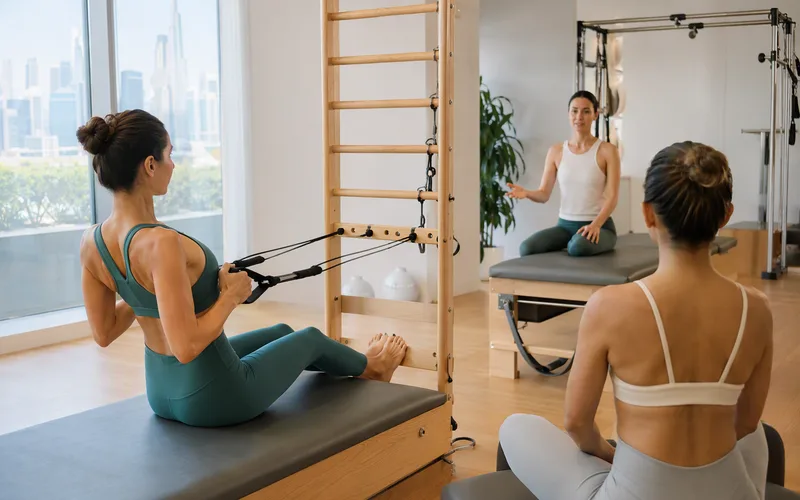
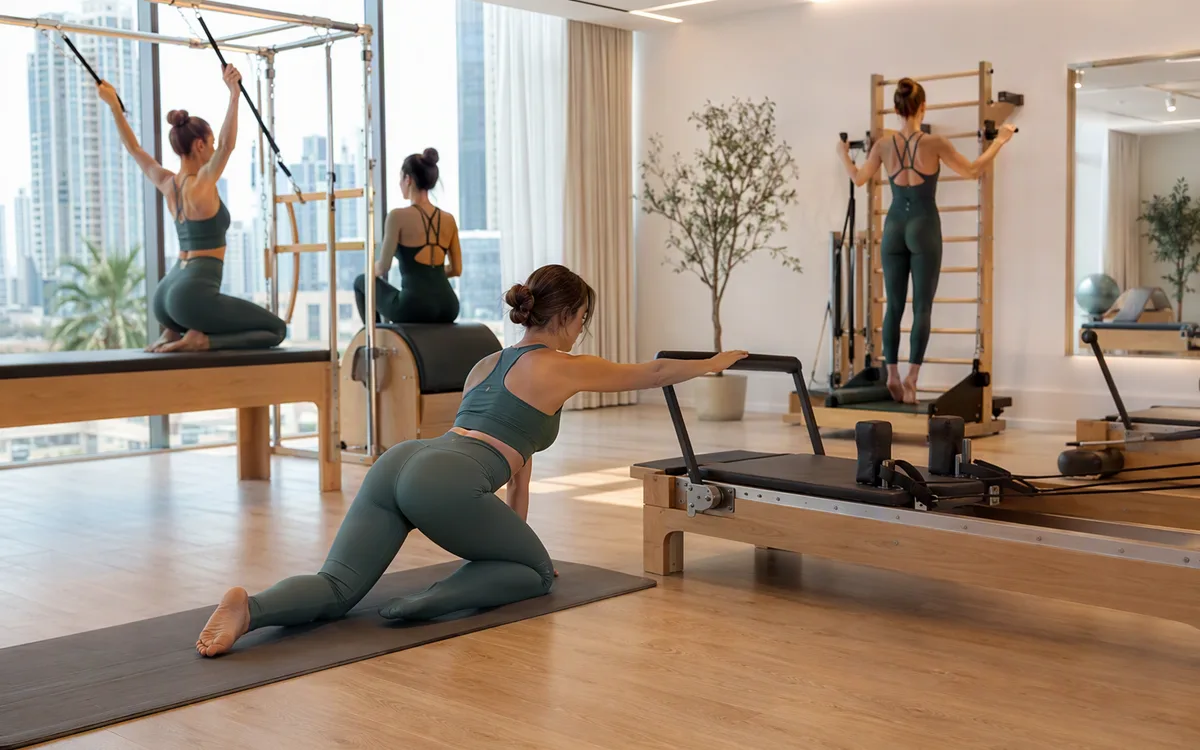
Studio flow in group sessions at Pilates Academy Arjan refers to the deliberate, structured sequence that links matwork with apparatus work, creating a continuous thread of movement principles. You start on the mat with foundational exercises such as the hundred for breath and core activation or the series of five for coordinated limb control and spinal articulation. These build your awareness of centre engagement and precise initiation of movement from the core.
As the session progresses, the instructor cues the transition to the first apparatus, typically the Reformer, where you apply the same principles against spring resistance. The flow maintains a steady rhythm, with each segment building on the last, ensuring you carry the precision from mat to equipment without losing momentum. In a small group of up to five, the instructor can watch your form during these shifts and offer adjustments, such as reminding you to maintain neutral pelvis or even breath rhythm.
This classical structure, rooted in the original order of exercises, adapts seamlessly to group dynamics, allowing everyone to move together while respecting individual pacing. You feel the continuity in how each exercise echoes the one before, deepening your embodiment of Pilates fundamentals.
How do you prepare for mat to apparatus transitions?
Arrive five to ten minutes early to settle into the studio space at Building 88, Shop 05, Al Barsha South Third. Wear fitted, comfortable clothing that supports free movement without restriction, such as leggings and a tank top, and bring a water bottle to stay hydrated. Familiarise yourself with basic studio etiquette, like arriving ready and respecting the shared space, to ensure smooth group dynamics.
Once the class begins on the mat, listen closely to the instructor's cues about the upcoming apparatus work. They might demonstrate a Reformer footwork setup while you're still on the mat, helping you visualise how your leg circles or teaser prep translates to the moving carriage. During the mat segment, note how your body feels in each exercise: the steady breath, the lift through the waist, the even weight distribution. This mental mapping eases the physical shift.
Curious about the flow? Call the Arjan studio on +971 56 216 8166 or message us on WhatsApp.
Keep your mat within arm's reach initially; when cued, roll it up quickly and set it aside. These transitions last 30 seconds to one minute, keeping energy high without rushing your setup on the apparatus.
What happens in a typical mat to Reformer transition?
Mat warm-up phase
On the mat, you work through initial exercises like single leg circle to stabilise the pelvis and mobilise the hip socket, or rolling like a ball to articulate the spine segment by segment. These build the control and fluidity you'll carry forward, with the instructor circulating to check your alignment, perhaps adjusting your leg lift or reminding you to scoop the belly to the spine.
Transition cue
The instructor signals the shift, often saying something like 'roll up to standing, find your Reformer and adjust the footbar to hip height'. You stand, select an available Reformer (with five machines for the group), and quickly set the springs based on the instructor's guidance for your level, such as two full springs for beginners. Link to Reformer fundamentals for Arjan beginners for detailed setup tips if you're new.
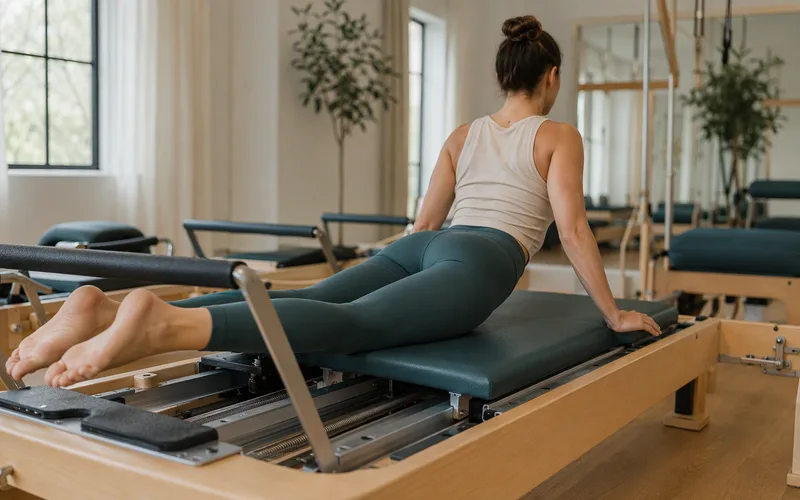
On the Reformer, you slide into footwork, pressing the carriage out with heels on the footbar, feeling how the resistance mirrors the controlled resistance of your mat leg slides. The instructor walks you through the connection: 'Same initiation from the powerhouse as your mat circles'. The group staggers slightly if needed, but the small size keeps everyone moving fluidly.
How does the flow move from Reformer to Cadillac?
After completing the Reformer sequence, such as long stretch series for upper body strength or coordination for full-body integration, the instructor cues the move to the Cadillac. You finish your last rep, step off the carriage, give it a quick wipe with the provided spray and cloth, then walk to one of the available Cadillac frames in the studio.
The Cadillac offers vertical support for exercises like roll-back bar work, where you sit tall and roll down against the bar's resistance, echoing the spinal control from Reformer's elephant or short spine. Instructors highlight anatomical links, pointing out how your rib cage stays lifted just as in the mat teaser prep. With only a few people, there's space to explore variations, like adding a leg lift if you're ready.
Breath stays key: deep inhale to prepare and lengthen, exhale to initiate the roll, keeping the flow seamless. See Cadillac side body series form for rib cage mobility for cues on side-lying work that follows, linking back to earlier mat side stretches. The transition feels natural, building progression without disruption.
What role does the Chair play in the flow?
Placement in sequence
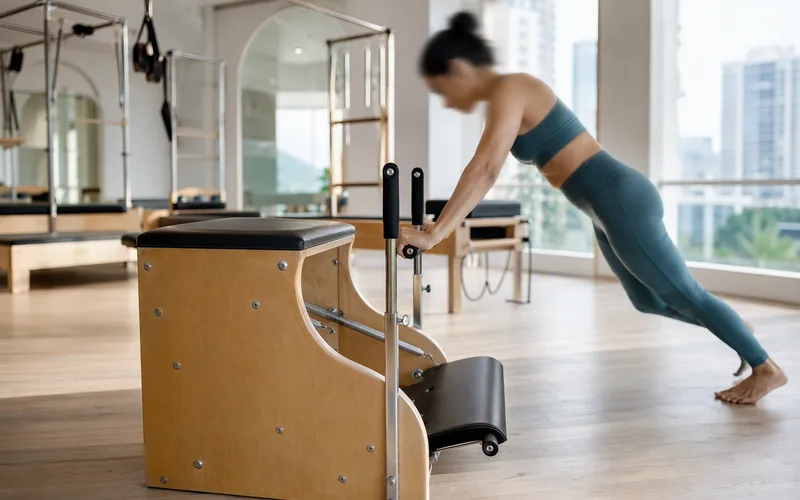
The Wunda Chair typically slots in after Cadillac, shifting focus to upright, weight-bearing exercises that challenge balance and power from a standing or seated position on the small, stable apparatus.
Key transitions
From Cadillac's suspended work, you step down, wipe the bar if used, and move to a Chair. The instructor cues you to step onto the pedal for mountain climb or pike, pressing down with one foot while balancing on the other. This builds directly on Cadillac's push-through for hamstring stretch and core stability, but now with gravity's full assist.
Instructors use precise anatomical cues like 'keep the sitting bones even on the pedal' or 'organise the shoulder blades down the back', helping you connect to the mat's pelvic stability work from the start. In a group of five, rotations happen quickly, with one or two on Chairs at a time, allowing the rest to watch and prepare mentally.
The compact size demands focus, mirroring the precision of earlier segments and preparing you for the final ladder work.
Where does Fuse Ladder fit in group flows?
The Fuse Ladder comes later in the session, often after Chair, for standing and inverted work that integrates everything before it. Transition by stepping off the Chair pedal, wiping it down, and walking to the ladder barrel setup, where you'll grip the ladder for exercises like pull-ups or leg circles in a supported handstand position.
This apparatus demands full-body coordination, building on mat roll-ups, Reformer's carriage control, Cadillac's suspension and Chair's push, now vertical. The instructor guides grip width to match your shoulder stability from earlier side work, and cues breath to support the upside-down moments, like exhaling on the lift.
In small groups, the shared Ladders allow paired spotting if needed, keeping the energy building towards closure. You end with a brief mat cool-down, like spine stretch forward, circling back to where you began and reinforcing the session's flow.
Common questions
How long are transitions in group sessions?
Each transition, from mat to apparatus or between machines, takes 30 seconds to one minute. Instructors time these efficiently, using verbal cues while you wipe and move, ensuring the group stays engaged without long waits. The small class size prevents backups.
Do I need prior experience for these flows?
No prior experience is required; new clients start with the three-class package where instructors scale exercises to your level, starting simple on mat before assisted apparatus work. Modifications keep everyone included.
What if I finish an exercise early?
If you complete a set ahead, hold the final position with control, like pausing in Reformer hundred prep, or repeat the last rep mindfully. Wait for the group cue to transition, maintaining your alignment.
Can I book via Glofox for these sessions?
Yes, book through the Glofox app or website for group classes during opening hours. New clients get three classes for AED 300 including 5% VAT to try the full flow.
How does group size affect transitions?
With a cap of five, transitions stay quick and personal; instructors give individual cues as you move, and there's no crowding around equipment. You learn by observing others' adjustments too.