Chair Mountain Climber Progression for Dynamic Core Stability
 Written by Matt, Reformer and Mat Pilates Instructor, Pilates Academy Arjan
The Wunda Chair at Pilates Academy Arjan, located at Building 88, Shop 05, Al Barsha South Third (Arjan), supports classical Pilates exercises like mountain climbers. Unlike reformer-only studios nearby, this full-apparatus studio includes the Chair, Cadillac, Fuse Ladder, Reformer and Matwork. Classes run Monday to Friday 7 AM to 10 PM, and weekends 9 AM to 5 PM, serving areas such as Arjan, Al Barsha South, Dubai Hills, Motor City, Dubai Sports City, JVC and JVT. Booking uses Glofox.
What is the chair mountain climber exercise?
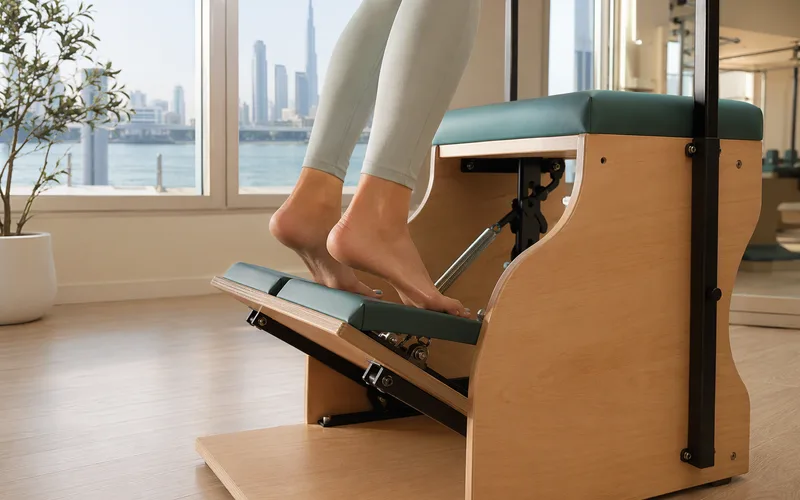
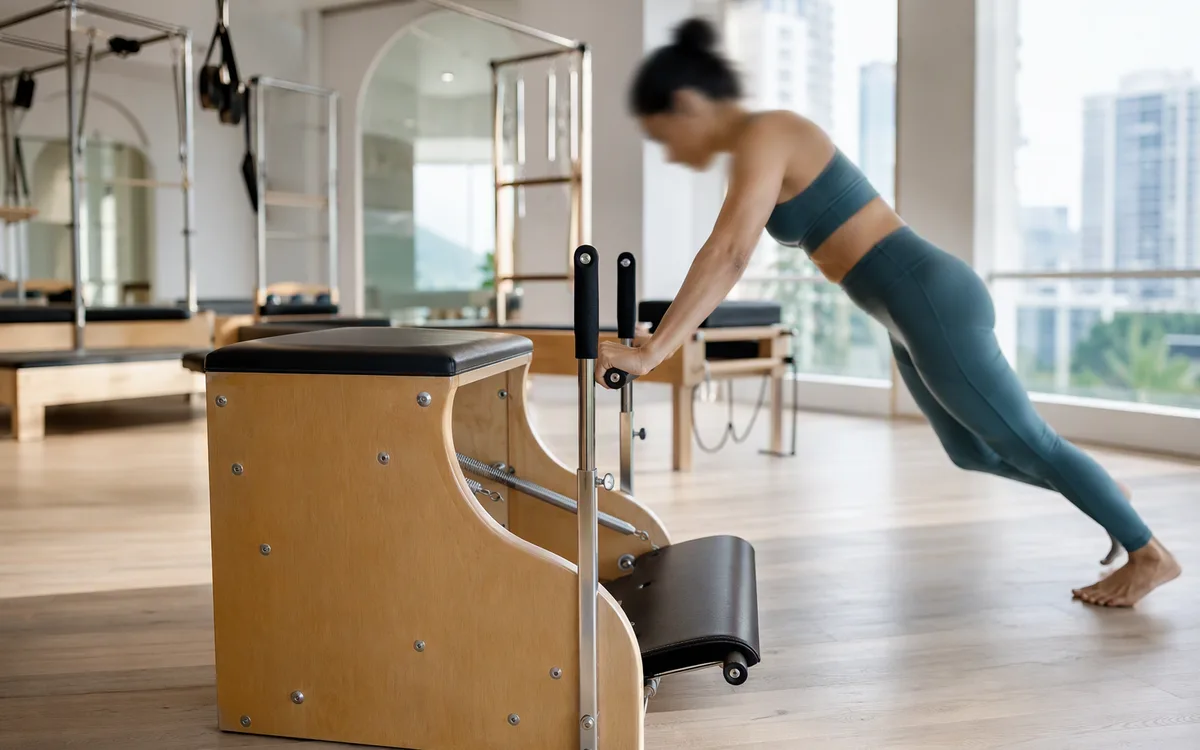
The chair mountain climber is a dynamic progression on the Wunda Chair that builds core endurance. You sit or kneel facing the pedal, hands on the handles, and draw one knee towards your chest while extending the other leg. This mimics a climbing motion, demanding constant abdominal engagement to stabilise the trunk.
In classical Pilates, it follows foundational footwork, as detailed in Chair footwork variations for ankle and foot strength. The exercise targets the transverse abdominis and obliques through alternating leg movement. Instructors at Arjan explain how the psoas and rectus abdominis stabilise the pelvis against the springs' resistance.
Classes cap at five participants, allowing personalised feedback. This setup helps you master the rhythm without rushing.
How do you set up for chair mountain climbers?
Position the Wunda Chair pedal at mid-height with one or two springs for moderate resistance. Sit tall facing the chair, feet on the pedal edge, hands gripping the handles at shoulder width. Engage your core by drawing the navel to spine before starting.
Need setup advice? Call the Arjan studio on +971 56 216 8166 or message us on WhatsApp.
Align your spine neutral, shoulders over hips. Inhale to prepare, exhale to initiate the first knee tuck. This mirrors progressions like the Wunda Chair single leg press for pelvic control.
What are the beginner steps in the progression?
Seated knee tucks
Start seated with both feet on the pedal. Exhale to lift one knee slightly towards your chest, keeping the pelvis still. Inhale to lower, then repeat on the other side. Do 6 to 8 reps per side slowly.
Alternating leg lifts
Progress to extending one leg long while tucking the other knee higher. Maintain an even hip height. Focus on breath: exhale on tuck, inhale on extend. Build to 10 reps per side.
These steps teach pelvic stability before speed, much like mat single leg circles for pelvic stability.
How do you advance to intermediate mountain climbers?
From seated, increase speed: exhale to pull one knee in as the opposite leg extends fully under the chair. Switch sides rhythmically, like climbing. Keep the trunk steady, avoiding arching or rounding.
Shift to kneeling position for more challenge. Kneel with shins on the floor, hands forward on handles. Tuck and extend legs faster, aiming for 20 to 30 seconds continuous. Instructors cue the anatomical role of the multifidus in spinal stability.
Small group dynamics, as in how group dynamics boost motivation in small Arjan Pilates classes, keep you accountable.
What cues improve dynamic core stability?
Anchor your ribcage down and tailbone tucked to prevent lumbar sway. Imagine your core as a corset wrapping evenly around the torso. Exhale fully on each knee pull to deepen engagement.
Common errors to avoid
Do not let hips hike; level them throughout. Breathe continuously, not holding breath. If shoulders rise, reset and reduce speed.
Arjan instructors use anatomy explanations, similar to those in how instructor anatomy explanations help Arjan Chair classes, to refine these cues.
How do you progress to advanced variations?
In kneeling mountain climbers, add a twist: rotate the trunk slightly towards the tucked knee. Or elevate feet on a small block for greater range. Aim for 45 to 60 seconds without form breakdown.
Integrate into sequences after footwork or before teasers. Track progress by increasing spring tension gradually. Combine with unilateral work like single leg press for balanced strength.
Practice in capped classes ensures safe advancement.
Common questions
How often should you practise chair mountain climbers?
Include them 2 to 3 times weekly in your routine, within full apparatus sessions. Allow recovery days for core muscles. Combine with matwork or reformer series for variety. Track improvements in endurance over weeks.
Can beginners skip straight to full climbers?
No, master seated tucks first for control. Rushing leads to poor form and strain. Instructors assess readiness in small groups. New clients start with introductory packages.
What if you feel back strain during the exercise?
Lighten springs or slow tempo. Check pelvic tuck and rib alignment. Consult instructors for modifications. Persistent discomfort means revisiting basics.
How does it link to other Chair exercises?
Mountain climbers build on footwork and precede side presses. It enhances stability for progressions like teasers. Full sessions integrate it seamlessly.
Is it suitable after a long day in Dubai Hills?
Yes, evening classes fit commuters. The dynamic work revives energy without overload. Book via Glofox for slots.