Chair Footwork Variations: Alignment Cues for Ankle and Foot Strength
 Written by Vivien, Pilates Instructor, Prenatal Pilates Certified, Pilates Academy Arjan
Pilates Academy Arjan in Al Barsha South Third offers full classical apparatus, including the Wunda Chair, unlike many reformer-only studios nearby. You start with three classes for AED 300 including 5% VAT. Sessions run Monday to Friday 7 AM to 10 PM, and weekends 9 AM to 5 PM, serving areas like Arjan, Dubai Hills and Motor City.
Need help with foot positioning? Call the Arjan studio on +971 56 216 8166 or message us on WhatsApp.
What is Chair footwork?
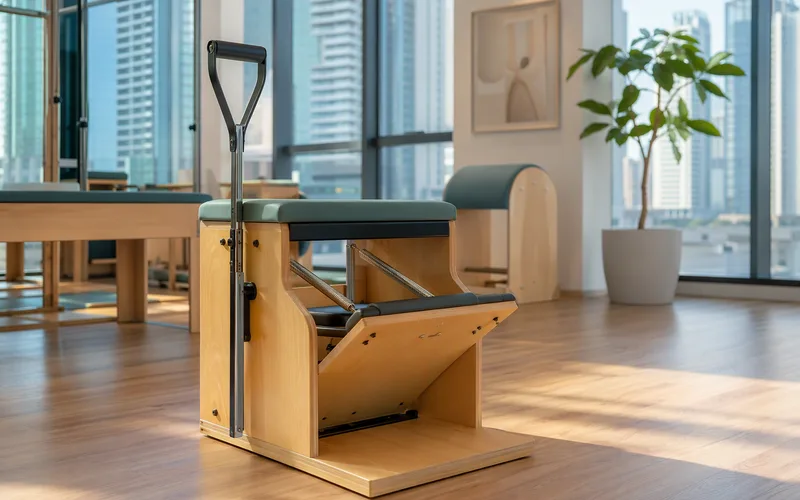
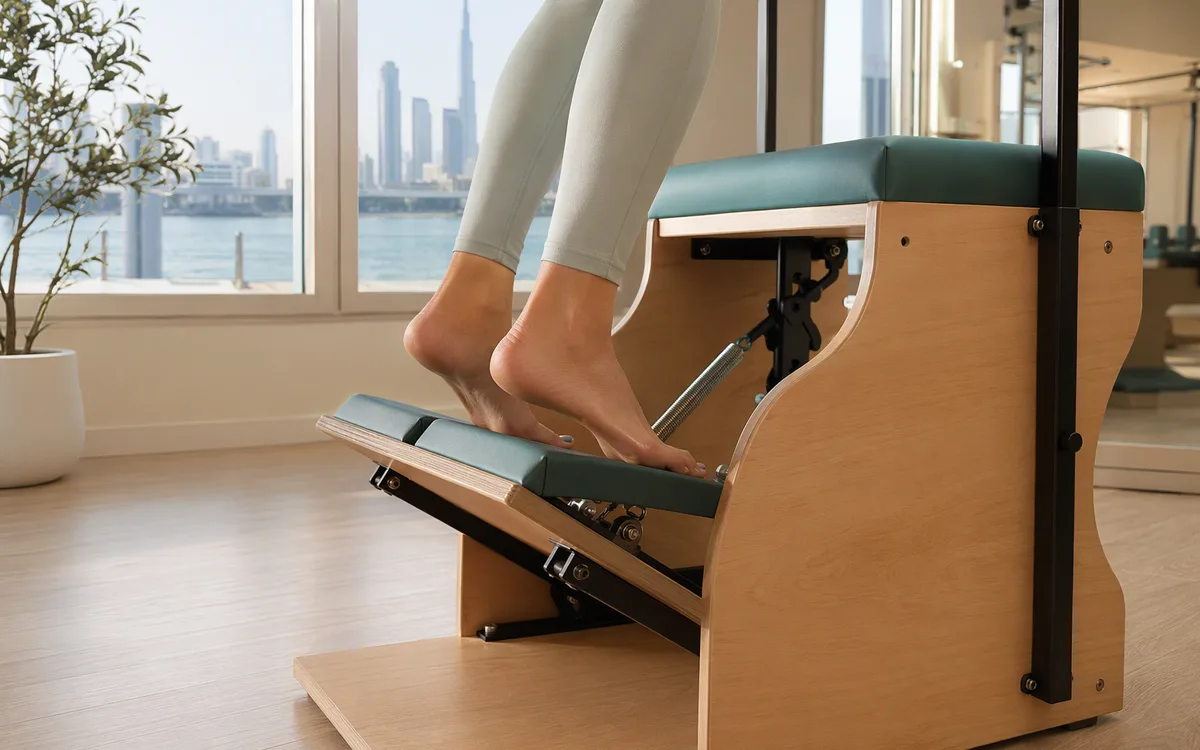
The Wunda Chair footwork series involves pressing and releasing the pedal with your feet while seated or standing. You begin with both feet parallel on the pedal, heels aligned and toes pointing forward. Springs provide resistance to challenge your lower body control.
Each variation targets ankle dorsiflexion, plantarflexion and inversion or eversion subtly. Instructors cue you to keep the big toe mound and pinky toe side evenly weighted. This builds awareness of foot arches and prevents common collapses inward or outward.
At Arjan, you practise these in small groups. Instructors explain how foot alignment affects the kinetic chain up to your hips. For more on Chair exercises, see Wunda Chair Single Leg Press.
How do you set up for Chair footwork?
Sit on the Chair with your sit bones rooted and spine elongated. Place feet hip width on the pedal, ankles neutral and knees soft. Adjust spring tension to two or three for control, lighter for beginners.
Foot positions to try
Heels first: heels on pedal edge, balls of feet lifted. Toes: balls on pedal, heels raised. Arches: full foot contact with active dome.
Exhale to press pedal down fully, inhale to float it up without locking knees. Keep pelvis stable, no rocking. This setup ensures safe progression.
Arjan instructors watch your form closely due to small class sizes.
What alignment cues improve ankle strength?
Imagine pressing through all five toes evenly to activate ankle stabilisers. Cue your ankles to stack directly over heels, avoiding sickling or pronation. Engage the muscles around the ankle joint for resilience.
Track knees over second toe to align the lower leg. If ankles wobble, reduce spring and focus on control. Over time, this strengthens peroneals and tibialis for better foot intrinsic strength.
Combine with breath: exhale on effort, inhale on return. Instructors relate this to anatomy, as in how instructor anatomy explanations help Arjan Chair classes.
Which foot variations target foot strength?
Parallel footwork builds overall pedal control. V position narrows heels out, toes in, engaging inner arches. Single foot work, one foot at a time, demands more ankle stability.
Progressions for control
Start parallel, advance to frog or wide positions. For foot strength, try heel only presses to challenge plantarflexors.
Each variation cues even weight distribution. You feel the pedal feedback directly through your feet. This series complements Wunda Chair Foot Bar Series for lower body work.
Maintain 10 to 12 reps per variation, focusing quality.
How does Chair footwork link to full body alignment?
Foot position influences knee, hip and pelvic placement. Neutral ankles promote neutral pelvis, reducing lower back strain. You learn to draw the pelvic floor up as you press.
Cues like lengthening tailbone down anchor the movement. Shoulders stay wide, head balanced over spine. This integrated approach enhances whole body coordination.
In group classes, mirrors help you check alignment. Progress to standing footwork for balance once seated variations feel solid.
What common errors should you avoid in footwork?
Gripping toes or curling them shortens the foot, weakening arches. Instead, spread toes wide. Avoid pushing only through big toe; distribute pressure.
Knees splaying out signals weak inner thighs; cue them softly together. Locking knees at bottom hyperextends; keep microbend. Breathe steadily to stay centred.
Arjan instructors correct these real time. Beginners benefit from watching peers.
Common questions
How often should you practise Chair footwork?
Include it two to three times weekly in your routine. Start with introductory classes at Arjan. Build to full series as control improves. Consistency strengthens ankles over four to six weeks.
Is Chair footwork suitable for beginners?
Yes, with lighter springs and instructor guidance. New clients at Arjan start private or small group. Focus on alignment before adding speed. Book via Glofox.
Can footwork help with flat feet?
It builds arch awareness through cues. Strengthen intrinsics without clinical claims. Consult professionals for specific issues. Arjan classes emphasise even loading.
What next after mastering footwork variations?
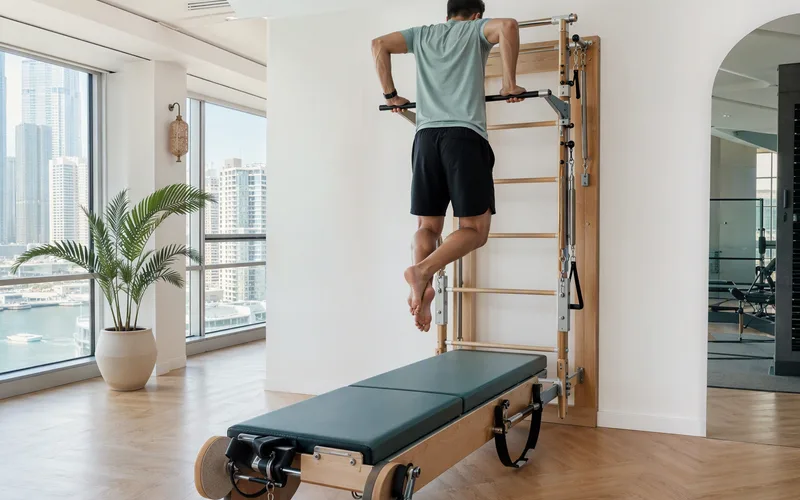
Progress to single leg presses or side series on Chair. Explore other apparatus like Fuse Ladder. See class options for your area.
How do Arjan classes support footwork learning?
Small groups allow detailed feedback. Instructors teach anatomy cues. Try three intro classes for AED 300.