Mat Roll Up Technique from Supine to Seated with Precise Breath
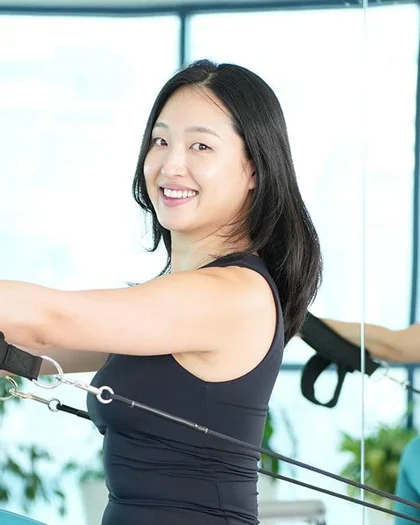 Written by Eun Sol, Pilates Instructor, Prenatal Pilates Certified, Pilates Academy Arjan
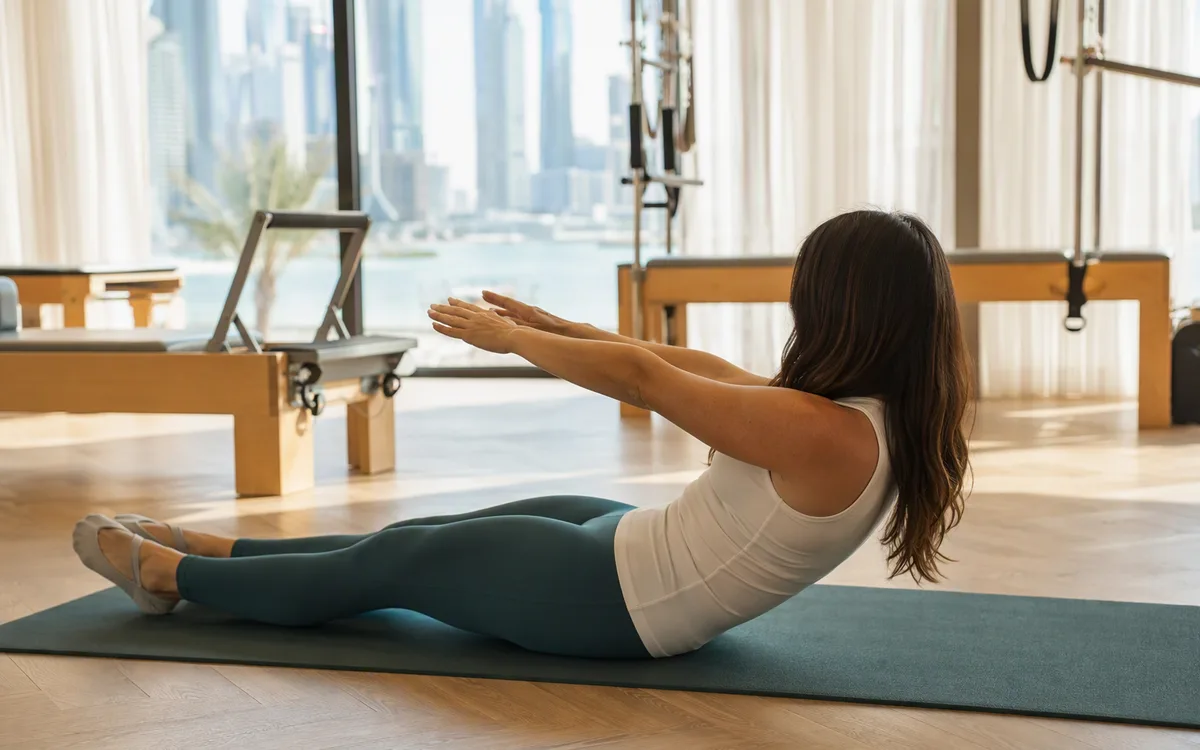
You perform the Mat Roll Up by starting supine on your mat, arms extended overhead, and rolling up to seated using precise breath coordination. Inhale to prepare, then exhale as you initiate the curl from your head through the spine, peeling vertebra by vertebra off the mat. Reach forward toward your feet in a C-curve before reversing to lower back down. This classical exercise strengthens abdominals and improves spinal mobility in small group classes.
Pilates Academy Arjan offers full-apparatus classical Pilates in Al Barsha South Third, including matwork sessions capped at five participants. Instructors explain the anatomy of movement, helping you connect breath to action. New clients receive three classes for AED 300 including VAT, bookable via Glofox.
What is the starting position for Mat Roll Up?
Lie on your back with legs extended and feet flexed, hip-width apart. Reach your arms overhead toward the wall behind you, palms facing up. Lengthen your neck and relax your shoulders away from your ears. Your head rests lightly on the mat.
Engage your lower abdominals gently to stabilise the pelvis in neutral. Avoid arching your lower back by pressing it lightly into the mat. This setup prepares you for the precise articulation ahead. In group matwork at Arjan, instructors check your alignment before you begin.
How do you coordinate breath during the roll up?
Inhale deeply through your nose to lengthen your spine, filling the sides of your ribcage. As you exhale through your mouth, initiate the movement by tucking your chin to your chest. Continue exhaling steadily as you roll up, segmenting the spine one vertebra at a time.
The breath acts as your guide: it supports the curl and prevents strain. Do not hold your breath or rush the exhale. Precise timing builds control.
Need form feedback? Call the Arjan studio on +971 56 216 8166 or message us on WhatsApp.
Practice this in sessions like those described in what to expect in group matwork classes at the studio.
What common faults occur in the ascending phase?
Many lift the head too early, straining the neck instead of curling from the core. Keep your chin tucked until the upper back lifts. Another issue is using momentum: rely on abdominal engagement, not a jerky swing from the arms.
Head and neck alignment
Maintain a soft gaze at your navel as you curl up. This keeps the cervical spine safe. Avoid crunching forward with tension.
Arm and shoulder position
Reach arms forward parallel to the floor once seated, without shrugging shoulders. This promotes scapular stability.
Address these in your weekly routine, as in building a weekly matwork routine for local residents.
How do you reverse to lower back down?
From the seated C-curve, inhale to lengthen the spine slightly. Exhale as you roll back down, starting from the lower spine and imprinting each vertebra sequentially. Circle your arms overhead as your head lowers last.
Control the descent to avoid flopping. Imagine zipping your spine back to the mat. This phase reinforces eccentric strength in the core.
Link it to other mat sequences like mat side kicks progression for balanced sessions.
Why focus on precise breath in this exercise?
Breath facilitates spinal flexion by creating intra-abdominal pressure. It anchors the movement in the powerhouse, the core region. Without it, you compensate with hip flexors or momentum.
In classical Pilates, breath patterns differentiate exercises. Here, the exhale powers the effort phase. Over time, this enhances endurance and precision. Instructors at Arjan demonstrate how breath connects to anatomy.
How does Mat Roll Up fit into a matwork class?
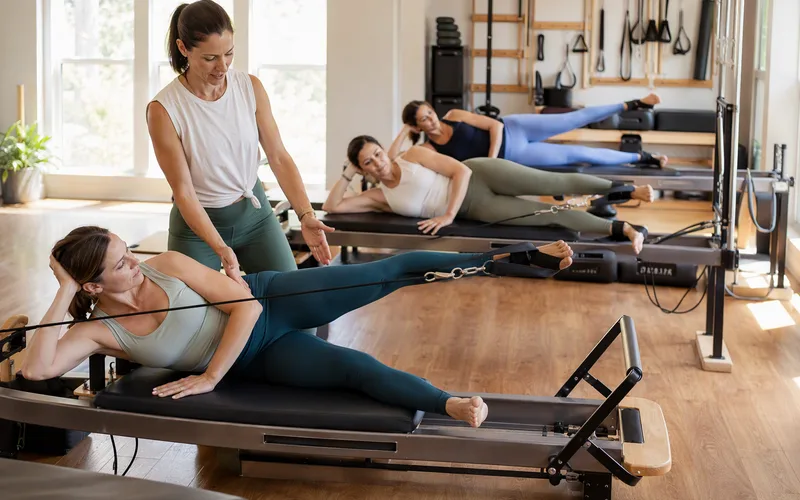
It opens many mat sessions, warming the spine after footwork. Progress to full Roll Up after mastering Hundred or Roll Over prep. In small groups of up to five, receive cues on breath and form.
Follow with exercises like Series of Five for trunk integration. See first-time matwork introduction for class flow. Book via Glofox for Arjan, Dubai Hills or Motor City.
What progression tips improve Mat Roll Up?
Small ball assist
Place a small ball between knees to engage inner thighs and stabilise pelvis. This refines alignment for beginners.
Block under hands
In seated position, hold a block between hands to deepen the C-curve safely.
Practice daily at home, then refine in studio classes Monday to Friday 7 AM to 10 PM. Advance to apparatus work like Reformer long stretch series.
Common questions
Can beginners attempt full Mat Roll Up?
Start with partial roll ups, lifting to mid-back only. Build strength over weeks in group classes. Instructors modify for your level, ensuring safe progression without strain.
How often should you practise Roll Up?
Incorporate it two to three times weekly in mat sessions. Combine with other fundamentals for balance. Studio classes provide feedback to accelerate improvement.
Does Roll Up help with posture?
It encourages spinal awareness and articulation. Regular practice supports upright alignment through core strength. Pair with studio matwork for consistent gains.
What if I cannot roll up fully?
Use bent knees or hands behind thighs for assist. Focus on quality segmentation over full range. Group classes at Arjan offer these options.
Is breath audible in Mat Roll Up?
Exhale audibly through the mouth for emphasis, but keep it natural. This reinforces control without forcing. Instructors guide volume in small groups.