Getting Started with Chair Footwork for Dubai Hills Beginners
 Written by Eun Sol, Pilates Instructor, Prenatal Pilates Certified, Pilates Academy Arjan
Pilates Academy Arjan, at Building 88, Shop 05, Al Barsha South Third, provides full classical apparatus including the Wunda Chair. Unlike reformer-only studios nearby, this setup allows varied exercises like footwork to develop control and strength. Sessions suit Dubai Hills schedules from 7 AM to 10 PM weekdays.
What is Chair footwork in Pilates?
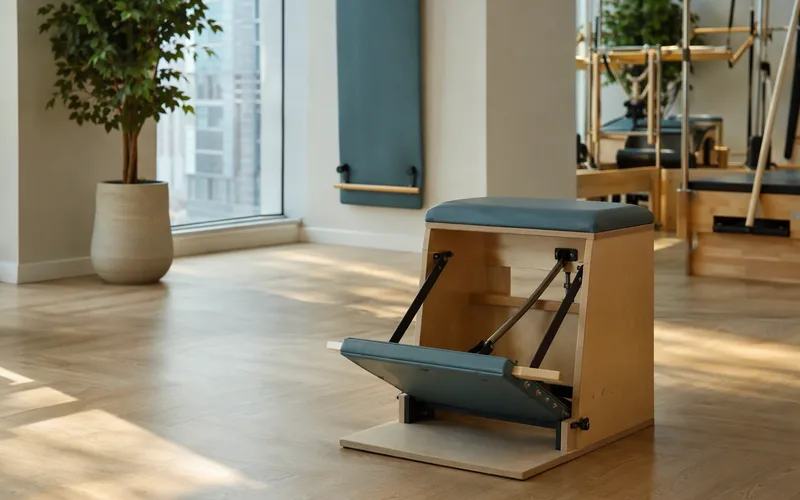
Chair footwork uses the Wunda Chair, a compact apparatus with a sprung pedal and handles. You press the pedal with your feet against spring resistance, focusing on smooth transitions between heel, arch, and toe positions. This mirrors footwork on other apparatus but demands greater stability due to the Chair's upright design. In a class at Arjan, you sit on the padded seat facing the pedal, which sits close to the floor, and feel the immediate feedback as your feet connect with the textured surface.
The exercise sequence strengthens your legs while stabilising your pelvis and spine. Instructors at Arjan emphasise imprinting your lower back lightly into the Chair seat to protect neutral alignment. Beginners start with lighter springs to master the flow before adding challenge. You notice how the pedal's limited range requires precise control, unlike larger reformer beds, helping you sense your body's alignment from the start.
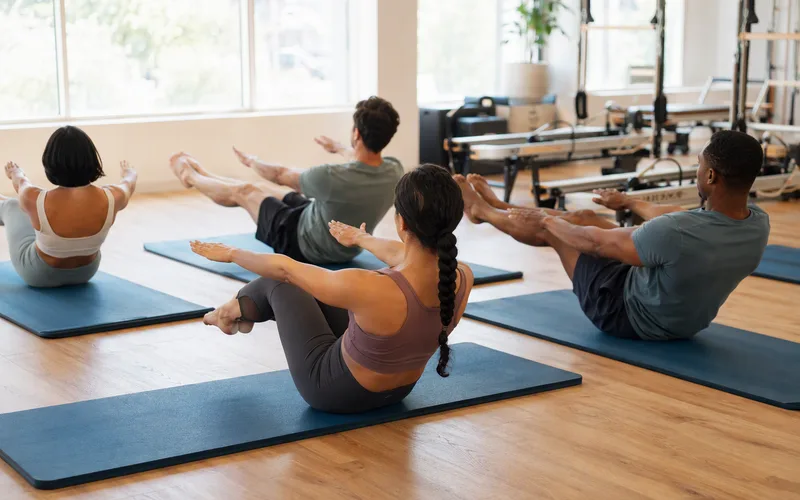
During sessions, the group dynamic allows you to observe others while receiving cues tailored to your form, building awareness of how your breath supports the movement.
How do you set up for Chair footwork as a beginner?
Sit tall on the Chair seat with your pelvis neutral and spine lengthened. Place the balls of your feet on the pedal edge, heels together and toes apart in parallel position. Grip the front handles lightly to anchor your torso without pulling. In the studio, you see the clean wooden frame and adjustable springs, and feel the seat's firmness supporting your sits bones evenly.
Wondering about your first class? Call the Arjan studio on +971 56 216 8166 or message us on WhatsApp.
Adjust springs to one or two tensions based on your strength; instructors guide this in group sessions. Breathe in to prepare, exhale to press the pedal down fully, then inhale to return with control. Keep your ribcage stacked over hips throughout. As you press, you feel the springs yield smoothly, teaching you to distribute effort between legs and core without overarching your back.
This setup positions you to experience the Chair's compact efficiency, where every small adjustment refines your stability for the sequences ahead.
What are the basic foot positions for Chair footwork?
Parallel heels
Begin with heels on the pedal, toes pointed up. Press out by flexing ankles and extending knees evenly. Your inner thighs activate to keep heels together. You feel a gentle stretch through your calves as the pedal descends, with the springs providing consistent tension back up.
Arched feet
Shift to the arches midway down the pedal. Maintain even pressure across both feet to avoid rolling ankles outward. This position builds intrinsic foot strength. In class, instructors cue you to spread your toes slightly for better grip, enhancing the connection from feet to hips.
Toes
Finish with toes pressing the pedal, heels lifted. Extend fully without locking knees, then float the pedal up using hamstrings. Repeat 6 to 8 times per position. The transition feels fluid once mastered, with your breath guiding the rhythm.
Progress to single leg variations once bilateral control feels steady. See our introductory Wunda Chair sequence for first-time Arjan participants for full context. In Arjan groups, you practise these positions methodically, feeling how each builds on the last for balanced leg engagement.
How does Chair footwork benefit your body?
This exercise coordinates your legs, core, and breath for overall stability. You develop even strength in hip flexors, hamstrings, and glutes while learning to resist lumbar sway. The small pedal surface heightens feedback on alignment. During a session, you sense your pelvis remaining steady as legs move, a cue instructors reinforce with anatomy explanations.
Regular practice enhances foot-to-hip connection, useful for daily movement. In Arjan classes, you transition smoothly to mat or reformer work, as detailed in our studio flow from mat to apparatus transitions. The capped class size means you receive cues like 'lengthen through the crown of your head' to maintain posture.
Group settings cap at five, allowing personal feedback on form. Over time, you notice improved control in standing activities, as the Chair's demands carry over to everyday stability.
You also build endurance through controlled reps, preparing for longer sequences in classical Pilates.
What common form errors occur in Chair footwork?
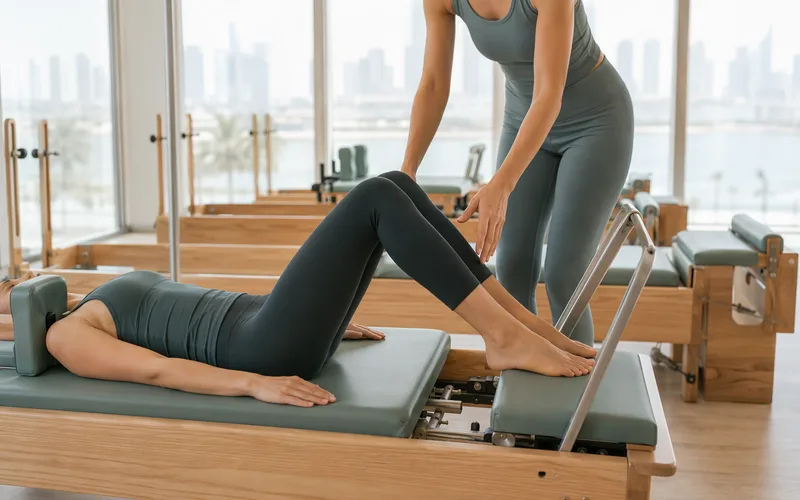
A frequent issue is arching the back when pressing out. Counter this by drawing your lower belly in on exhale and visualising your spine lengthening upward. Avoid gripping handles tightly, which tenses shoulders. Instructors at Arjan watch for this and prompt you to soften your grip, feeling the difference in torso freedom.
Another error involves uneven leg pressure, causing one hip to hike. Focus on pressing both sits bones evenly into the seat. If knees splay, engage inner thighs more deliberately. You might feel one side working harder initially, but cues like 'hug the midline' even it out over reps.
Instructors correct these in real time during Dubai Hills sessions. For related Chair tips, review Chair pike progression technique. Common fixes include pausing at the top to reset alignment, helping you internalise the feel of neutral pelvis.
How do you progress Chair footwork at Arjan?
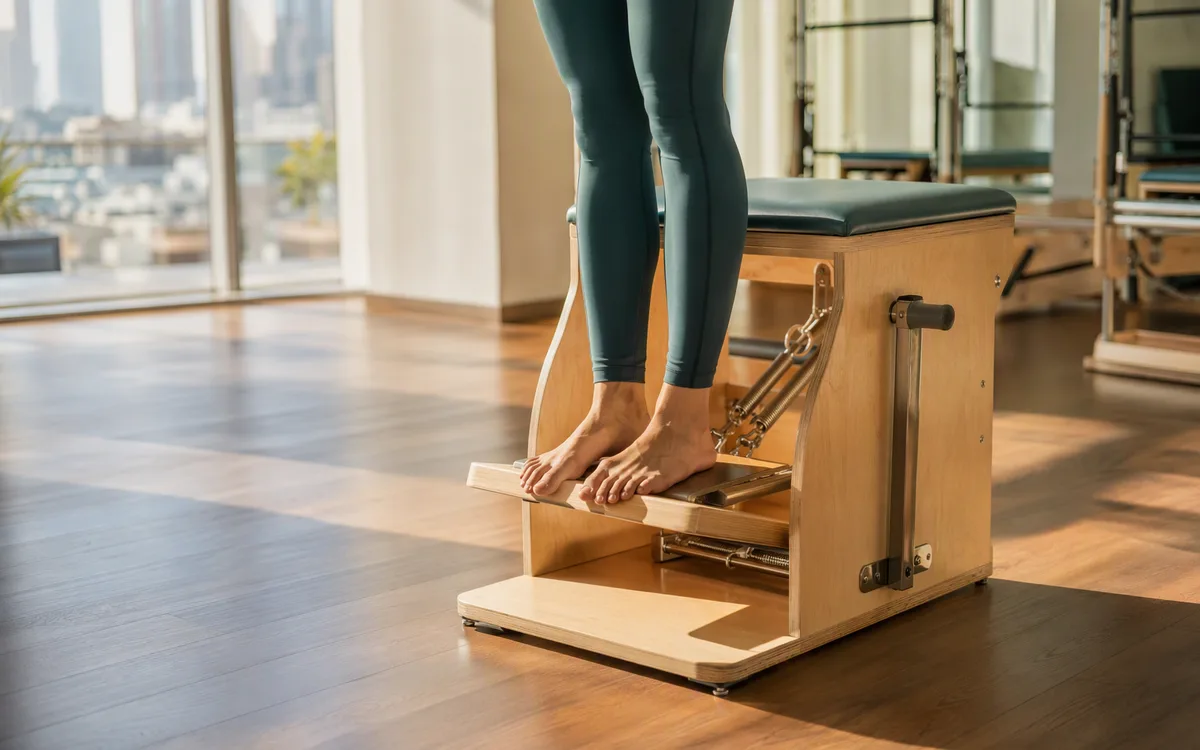
Once basics feel secure, add variations like feet turned out in first position. Increase reps to 10 or use heavier springs for resistance. Stand for footwork to challenge balance further. Standing, you grip handles for support and feel your core engage more intensely as the pedal moves under precise foot placement.
Integrate breath patterns: inhale four counts return, exhale four counts press. Book via Glofox for group classes serving Dubai Hills and nearby areas. Instructors layer these progressions gradually, ensuring you master seated versions before standing.
Combine with mat roll ups for fuller prep, as in our mat roll up technique article. You experience how progression builds confidence, with the small group allowing questions like 'how does this link to Cadillac work?' during class.
Common questions
Do I need prior Pilates experience for Chair footwork?
No, beginners start here at Pilates Academy Arjan. Instructors teach from fundamentals in small groups. New client packages ease you in with three classes for AED 300 including VAT. You follow along at your pace, with cues adapted to your level.
How often should Dubai Hills beginners practise Chair footwork?
Aim for two to three sessions weekly. Combine with matwork for balance. Studio hours fit your schedule from 9 AM weekends to 10 PM weekdays. Rest days allow recovery while you notice carryover to daily activities.
What should I wear for Chair classes?
Choose fitted clothing to see alignment. Grippy socks or bare feet work on the pedal. Arrive hydrated, following studio etiquette. This setup lets instructors spot form issues easily.
Can Chair footwork follow reformer sessions?
Yes, it complements reformer fundamentals. Use it to refine control post-reformer. Check our reformer fundamentals guide. The Chair's precision sharpens skills from larger apparatus.
Is booking required for Chair footwork?
Yes, use Glofox app for Arjan classes. Spots fill quickly in small groups. Dubai Hills clients book easily online. Early booking secures your preferred time slot.