Chair Push-Down Series: Maintaining Shoulder Stability During Leg Extensions
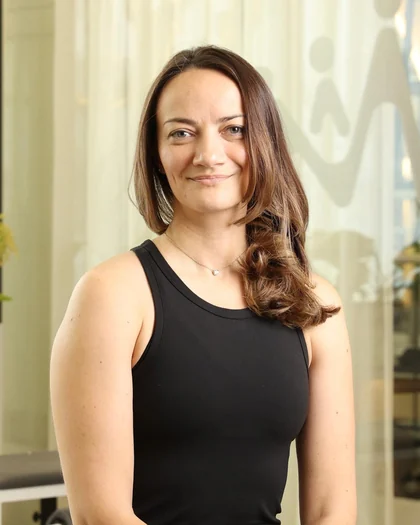 Written by Oxana, Reformer and Mat Pilates Instructor, Pilates Academy Arjan
The Wunda Chair offers compact resistance training rooted in classical Pilates. Unlike reformer-only studios nearby, Pilates Academy Arjan provides full apparatus including the Chair for targeted strength. You build control through small, precise movements that demand focus on anatomy and alignment.
What is the Chair Push-Down Series?
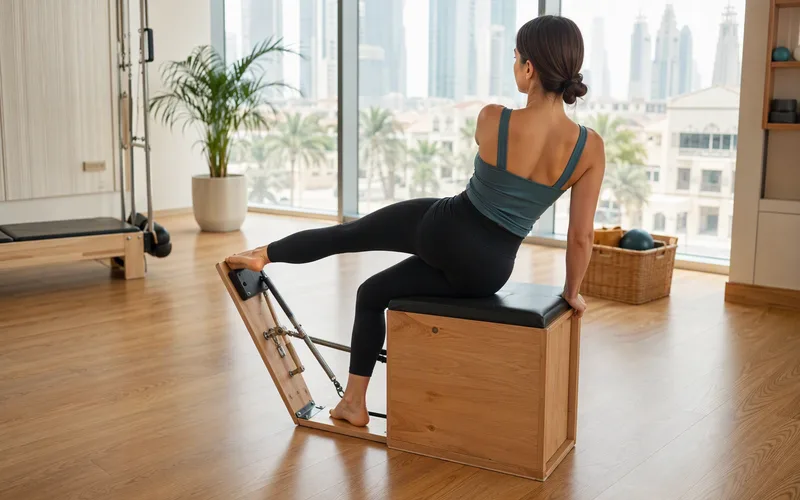
The Chair Push-Down Series involves pressing the pedal down with your hands while extending one or both legs. You start seated with feet on the pedal edge, spine neutral and core engaged. As you push down, extend the working leg straight, keeping the hips level. Return with control, resisting the springs.
This series develops leg strength and hip stability. Instructors at Arjan explain how the pedal's resistance mirrors everyday pushing motions, enhancing functional power. Breath coordinates with movement: inhale to prepare, exhale on extension.
Classes follow the classical order, as covered in our Anatomy of Movement article. Small groups ensure you receive cues tailored to your form.
Why does shoulder stability matter here?
During leg extensions, unstable shoulders can lead to hunching or shrugging, which shifts effort away from the legs and core. Stable shoulders maintain scapular position, allowing the serratus anterior to protract smoothly without winging. This keeps the movement efficient and reduces strain.
Engaging the shoulders correctly supports the entire kinetic chain. You feel the work in your glutes and hamstrings rather than your neck. Instructors cue this anatomy to help you sense the difference.
How do you set up correctly on the Chair?
Sit forward on the Chair seat with sit bones rooted and spine elongated. Place hands shoulder-width on the pedal, fingers wrapped underneath. Feet rest on the pedal's front edge, knees soft.
Adjusting springs
Begin with one or two springs based on your strength; lighter for control, heavier for power. Test by pressing down: the pedal should resist without overpowering your form. Arjan instructors adjust this during class.
Neutral pelvis cue
Tuck your tailbone slightly to avoid arching the lower back. Imagine a string pulling the crown of your head up. This sets the foundation for stable shoulders.
Need setup advice? Call the Arjan studio on +971 56 216 8166 or message us on WhatsApp.
What cues maintain shoulder stability?
Draw your shoulder blades down and around your rib cage, creating a subtle wrap. Avoid pushing your shoulders up; think of pressing them away from your ears. As you extend the leg, maintain this position without collapsing forward.
Visualise your scapulae gliding on your back ribs. Exhale to stabilise, feeling the lower traps activate. If shoulders drift, pause and reset before continuing.
This mirrors cues in related exercises like the Wunda Chair Pike Progression, building consistent upper body control.
How does breath support shoulder position?
Breath anchors stability: inhale deeply into the sides of the ribs to expand laterally, exhale fully to engage the core and shoulders. Shallow chest breathing lifts the shoulders; diaphragmatic breath keeps them grounded.
Practice links to the Cadillac Breathing Drill. In Chair work, time your exhale with the push-down and extension for integrated control.
Over 10 to 15 breaths per side reinforces the pattern. Instructors monitor this in small classes.
What common errors affect shoulders?
Gripping the pedal too tightly tenses the neck and elevates shoulders. Instead, hold firmly but softly, allowing wrists to stay neutral. Leaning forward during extension pulls scapulae out of place; stay upright.
Over-arching the back
If your lumbar spine arches, shoulders compensate by protracting excessively. Engage the abdominals to maintain neutral pelvis, as in Mat Roll Back form.
Locking elbows hyperextends shoulders; keep a micro-bend. Arjan classes correct these in real time, unlike larger studios.
How does this series progress?
Start with single-leg extensions, 6 to 8 reps per side. Advance to double-leg push-downs, then add pulses at full extension. Maintain shoulder cues throughout to build endurance.
Integrate into full Chair sequences after mastering basics. Combine with footwork, as in our Chair Side Kick article. Track progress over weeks in regular classes.
Common questions
How many springs for beginners?
Newcomers use one light spring to prioritise form over resistance. This allows focus on shoulder stability without fatigue. Instructors at Arjan assess and adjust in your first session, part of the three-class introductory offer.
Can I do this if new to Chair?
Yes, start with the introductory sequence after your initial classes. Small groups provide hands-on guidance. Book via Glofox for Chair-inclusive sessions.
What if my shoulders feel tight?
A pre-class warm-up helps, such as the Morning Warm-Up Routine. Focus on scapular depression cues. Consistency reduces tension over time.
How often should I practise this?
Aim for two to three Chair classes weekly, within studio hours. Combine with other apparatus for balance. Residents from Motor City to Dubai Hills find weekend slots convenient.
Does it link to other Chair exercises?
Shoulder stability carries over to Pike and Step progressions. Full sequences build progressively. Explore in classical order classes at Arjan.