Chair Side Kick Exercise: Footwork Alignment for Hip Strength
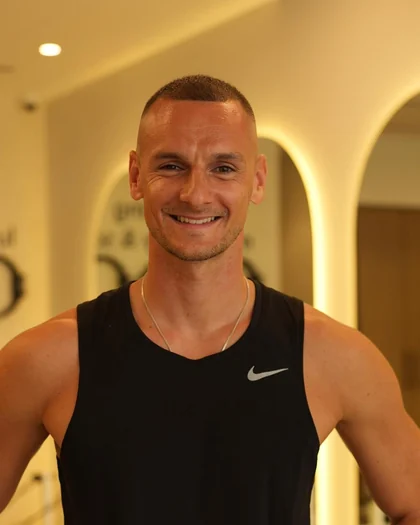 Written by Matt, Reformer and Mat Pilates Instructor, Pilates Academy Arjan
At Pilates Academy Arjan, a full-apparatus studio in Al Barsha South Third, you access the Wunda Chair alongside Reformer, Cadillac, Fuse Ladder and Matwork. Classes are limited to five participants, allowing instructors to teach the anatomy of each movement. Sessions run from 7 AM to 10 PM on weekdays and 9 AM to 5 PM on weekends, serving areas including Arjan, Dubai Hills and Motor City.
What is the Chair Side Kick exercise?
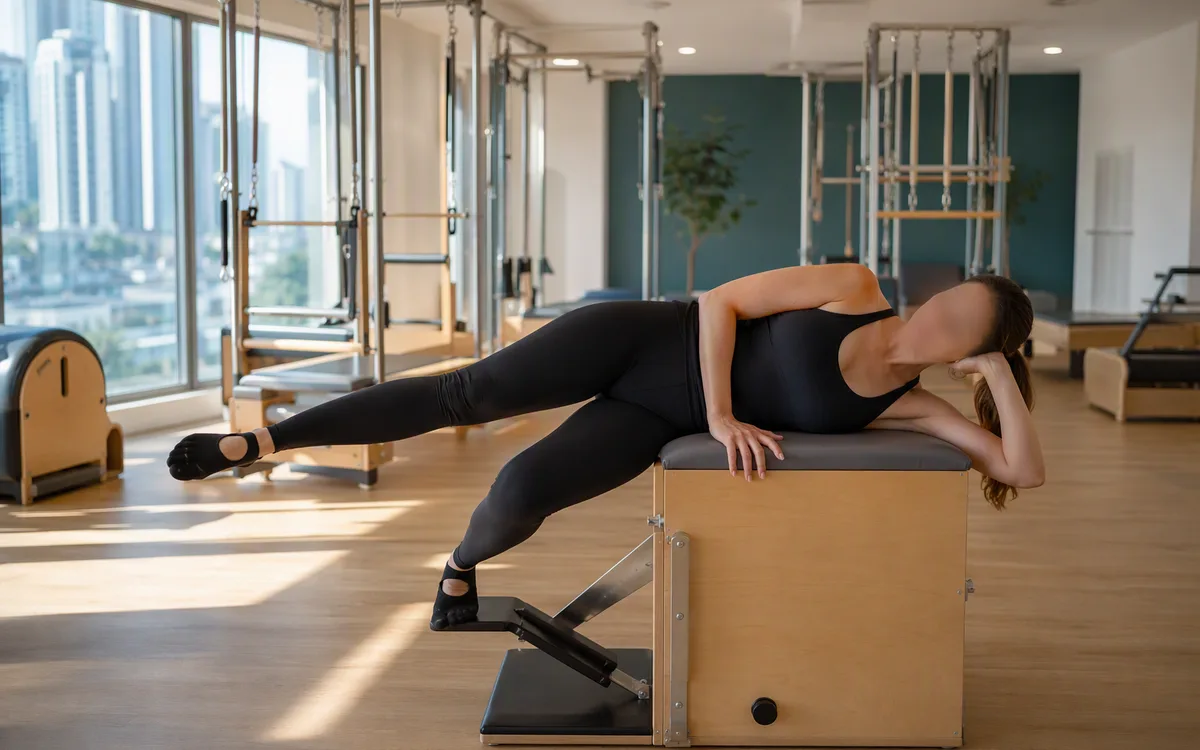
The Chair Side Kick is a classical Pilates movement performed on the Wunda Chair. You position yourself lying sideways, with your bottom foot placed firmly on the floor or chair base for support. Your top leg extends to place the foot on the pedal, which you press down and lift in a kicking motion.
This exercise isolates the hips, promoting strength in the outer and inner hip muscles. Instructors guide you to align your foot parallel to the pedal edge, avoiding sickling or gripping with the toes. The movement follows Joseph Pilates' principles of control and precision.
At Pilates Academy Arjan, you experience this in small groups where form receives close attention. It complements other Chair work, such as the Wunda Chair Push-Up Progression for leg and arm power.
How do you set up footwork alignment for this exercise?
Begin by lying on your side with your hips and shoulders stacked perpendicular to the floor. Place your bottom foot flat on the chair base or floor, toes pointing forward. Your top foot rests on the pedal with the ball of the foot centred and heel slightly raised.
Key alignment cues
Keep your foot flexed and parallel, engaging the arch without curling the toes. Align your ankle directly over the pedal's midpoint to distribute pressure evenly. Your knee remains soft, tracking in line with the toes during the kick.
This setup prevents compensatory twisting in the pelvis. In class, instructors adjust your position to ensure the hips stay level. Practice reinforces the anatomical connections between foot, ankle and hip.
Need setup clarification? Call the Arjan studio on +971 56 216 8166 or message us on WhatsApp.
What alignment maintains hip stability during the kick?
During the downward press, keep your pelvis neutral by drawing the lower abdomen in. Avoid letting the top hip hike up; imagine a glass of water balanced on your top hip bone. Your gaze stays forward, supporting spinal alignment.
As you lift the pedal, control the release with the hip muscles, not momentum. The bottom leg remains active, pressing into the floor to stabilise the entire structure. Breathe out on the effort of the kick and inhale to return.
This alignment targets the gluteus medius for hip abduction strength. It builds endurance for daily movements like walking or climbing stairs. Link it to Chair Pedal Work foot placement cues for foundational balance.
How does footwork alignment build hip strength?
Precise foot placement engages the intrinsic foot muscles, which connect through the kinetic chain to the hips. Flexing the foot activates the anterior tibialis, stabilising the leg as you kick. This transfers force efficiently to the hip abductors.
Over repetitions, the controlled resistance of the pedal spring strengthens the glutes and tensor fasciae latae. You develop power symmetrically, reducing imbalances. Instructors explain how alignment prevents undue stress on the lower back.
Regular practice enhances proprioception, your sense of joint position. This supports progress in advanced Chair exercises like step progressions.
What common errors affect alignment in Chair Side Kick?
A frequent issue is rotating the foot inward, which shifts work to the inner thigh instead of the outer hip. Correct this by visualising the pinky toe edge pressing evenly. Another error is arching the back; counter it by lengthening the spine from tailbone to crown.
Avoiding pelvic tilt
Tilting the pelvis forward or back disrupts stability. Anchor the bottom hip down and reach the top leg long. If the pedal feels uneven, check that your foot is not sliding forward.
In group classes at Pilates Academy Arjan, instructors spot these cues early. Awareness builds better habits over time.
How to progress the Chair Side Kick for more challenge?
Once alignment feels solid, add a small circle at the top of the kick, maintaining pelvic stillness, similar to Reformer Leg Circles pelvic stability. Increase spring tension gradually for greater resistance. Slow the tempo to heighten control.
Advance to holding the pedal down briefly before lifting, building isometric strength. Always prioritise form over speed. Instructors tailor progressions to your level in capped classes.
Where does Chair Side Kick fit in a class sequence?
This exercise often appears mid-sequence after footwork and pedal series, preparing the hips for side-lying work. It transitions smoothly into mat side kicks or Reformer side splits. Follow with supine exercises to balance the body.
In a full classical session, it integrates with Chair pedal work and push-ups. At Pilates Academy Arjan, small class sizes ensure seamless flow. Book via Glofox to join from 7 AM slots.
Common questions
Can beginners try Chair Side Kick?
Yes, with instructor guidance on basic alignment. Start with fewer repetitions and lighter springs. Focus on stacking hips before adding movement. Progress comes from consistent practice in small groups.
How many reps per side?
Aim for 6 to 8 kicks per side, 2 to 3 sets. Adjust based on your endurance. Instructors modify during class to suit your needs. Breathe steadily throughout.
Does it help with running?
It strengthens hip stabilisers used in running stride. Better alignment improves efficiency and reduces injury risk from imbalances. Combine with other lower body exercises in your routine.
What if I feel it in my back?
Check pelvic neutrality and foot position. Engage the core to support the spine. Inform your instructor for adjustments. Proper form shifts work to the hips.
Is special footwear needed?
Wear non-slip socks or grippy Pilates socks. Bare feet work if the chair surface suits. Avoid shoes to feel the pedal feedback directly.