Chair Side Splits Progression: Hip Control in Small Groups
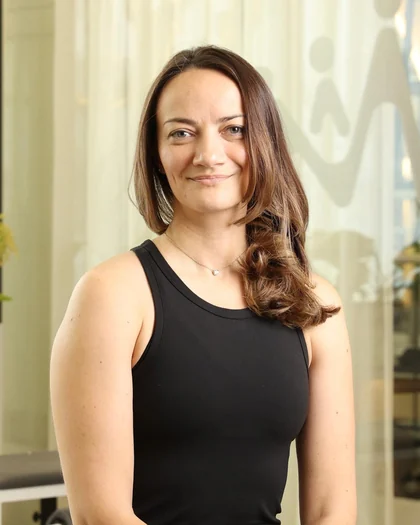 Written by Oxana, Reformer and Mat Pilates Instructor, Pilates Academy Arjan
At Pilates Academy Arjan, Chair Side Splits progression helps you develop hip control through controlled lateral movements on the Wunda Chair. In small groups capped at five, instructors guide you from basic foot placement to full splits while teaching the hip anatomy involved. This classical exercise strengthens the outer hip muscles and improves stability for everyday activities. You start with three classes for AED 300 including 5% VAT to build a solid foundation.
Pilates Academy Arjan in Building 88, Shop 05, Al Barsha South Third (Arjan), offers full-apparatus classical Pilates including the Wunda Chair. Classes run Monday to Friday from 7 AM to 10 PM and weekends from 9 AM to 5 PM, serving areas like Arjan, Al Barsha South, Dubai Hills, Motor City, Dubai Sports City, JVC and JVT. Booking is through Glofox.
What is Chair Side Splits on the Wunda Chair?
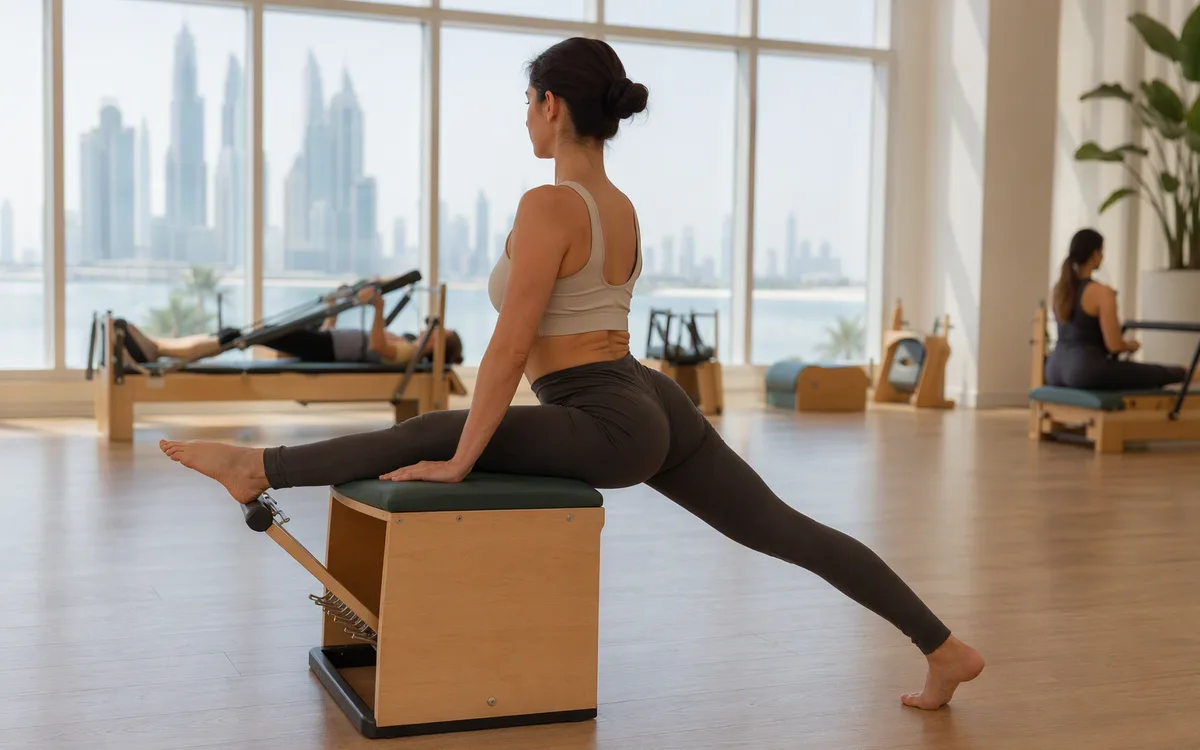
The Wunda Chair is a compact apparatus with pedals and springs that challenge your strength and control. Chair Side Splits involves standing beside the chair, placing one foot on the pedal, and opening the leg laterally against spring resistance. This progression builds hip stability by targeting the abductors, the muscles that move your leg away from the midline.
In small groups at Pilates Academy Arjan, you receive individual cues to keep your pelvis level. Instructors emphasise the role of the gluteus medius in preventing hip drop. As you progress, the movement demands more from your core to maintain upright posture.
Why focus on hip anatomy?
Your hips connect your legs to your torso through a ball-and-socket joint. The abductors stabilise this joint during walking or side-stepping. Understanding this helps you engage the right muscles without compensating with your back.
How do you prepare your body for Side Splits?
Begin with a morning warm-up routine to activate your hips and core, as covered in our morning warm-up routine before Arjan Pilates sessions. Stand tall with feet hip-width apart and circle your hips gently to loosen the joint. Then practice small side leg lifts without apparatus to feel the abductors fire.
Need guidance on preparation? Call the Arjan studio on +971 56 216 8166 or message us on WhatsApp.
In class, start seated on the chair for footwork to align your legs, similar to getting started with Wunda Chair essential footwork. This ensures your ankles, knees and hips track properly before standing.
What are the stages of the Side Splits progression?
Stage one: Place your foot lightly on the pedal with minimal spring tension. Press down just enough to feel hip engagement, keeping your standing leg straight and core drawn in. Hold for three breaths, then switch sides.
Stage two: Increase spring resistance and lower the pedal further, opening to a 45-degree angle. Keep your torso upright and gaze forward to avoid twisting. Your instructor will check that your hips remain square.
Stage three: Full progression
Here, you lower into a near-split position, with the pedal fully depressed. Maintain control on the return by resisting the springs slowly. This stage builds endurance in the hip stabilisers.
How does breath support hip control in Side Splits?
Coordinate your inhale to prepare and exhale to press the pedal down, as in breath coordination during Reformer transitions. This rhythm stabilises your core, allowing hips to work independently. Avoid holding your breath, which tenses the body.
Exhale fully to engage the transverse abdominis, supporting pelvic neutrality. In small groups, instructors cue breath timing to match the movement's demands. Practice this to make the exercise feel fluid.
What common faults affect hip alignment?
A frequent issue is allowing the pelvis to hike on the working side, which strains the lower back. Counter this by pressing your standing hip down firmly. Another fault is knee collapse; keep it pointing to the ceiling by firing the outer thigh.
Leaning the torso compensates for weak hips. Stay centred over your base. Instructors at Pilates Academy Arjan spot these in real time during group sessions.
Fixing turnout errors
Excessive foot turnout shifts work away from the hip abductors. Position your foot parallel to maintain pure side movement. This aligns with cues from Matwork Side Kicks form.
How does Chair Side Splits benefit your daily movement?
This exercise trains hips to control lateral forces, useful when carrying loads or changing direction. It enhances stability for activities like tennis or hiking in Dubai's parks. Over time, you notice better balance in uneven terrain.
In full apparatus classes, it complements other hip work like full apparatus Pilates uniqueness at Arjan. Small group sizes ensure progression suits your level.
Common questions
Can beginners try Chair Side Splits?
Yes, start with light springs and partial range. Instructors modify for your fitness level in small groups. Book your first three classes to learn safely through Glofox.
How often should you practise this progression?
Aim for two to three sessions weekly, allowing recovery. Combine with matwork for balanced development. Progress depends on consistent attendance at Pilates Academy Arjan.
What if you feel hip tightness during the exercise?
Breathe deeply and use lighter resistance. Warm up thoroughly beforehand. Instructors guide adjustments without pushing limits.
Does this work inner hips too?
Side Splits primarily targets outer hips, but the control builds overall stability. Pair with adductor exercises on other apparatus for balance.
Is prior Chair experience required?
No, new clients start with introductory classes. Small groups allow personalised teaching from session one. See our full apparatus details for context.