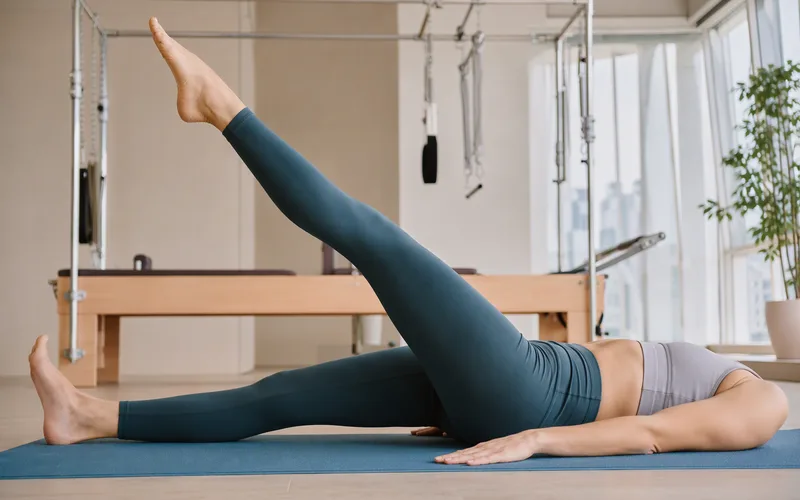
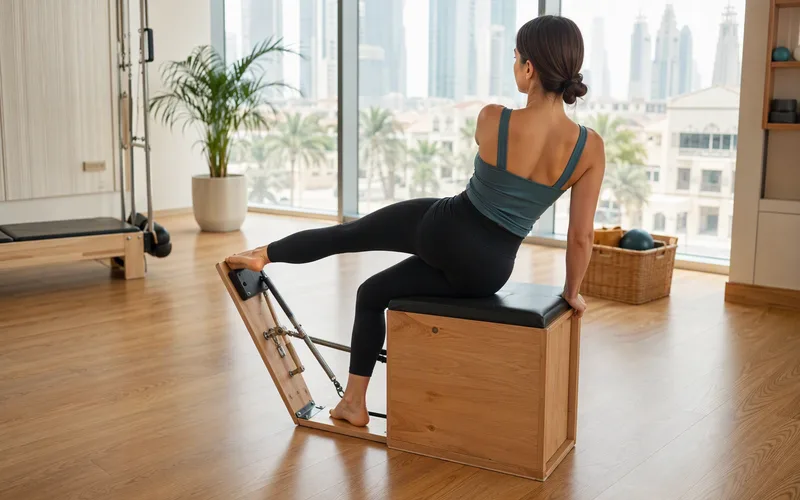
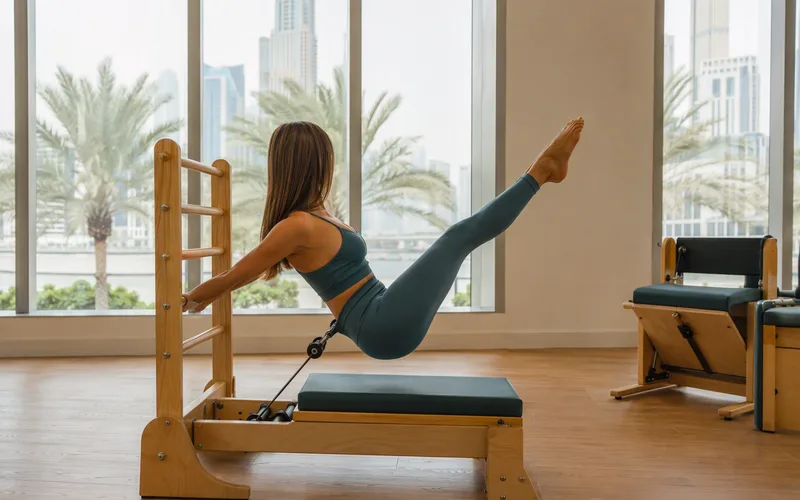
Fuse Ladder Side Splits Technique: Controlling Hip Openers in Small Dubai Groups
 Written by Sajida, Pilates Instructor, Pilates Academy Arjan
Pilates Academy Arjan offers full classical apparatus including the Fuse Ladder in classes capped at five people. Located at Building 88, Shop 05, Al Barsha South Third in Arjan, the studio serves nearby areas such as Dubai Hills and Motor City. Instructors explain the anatomy behind each exercise to help you understand how to move effectively.
What is Fuse Ladder Side Splits?
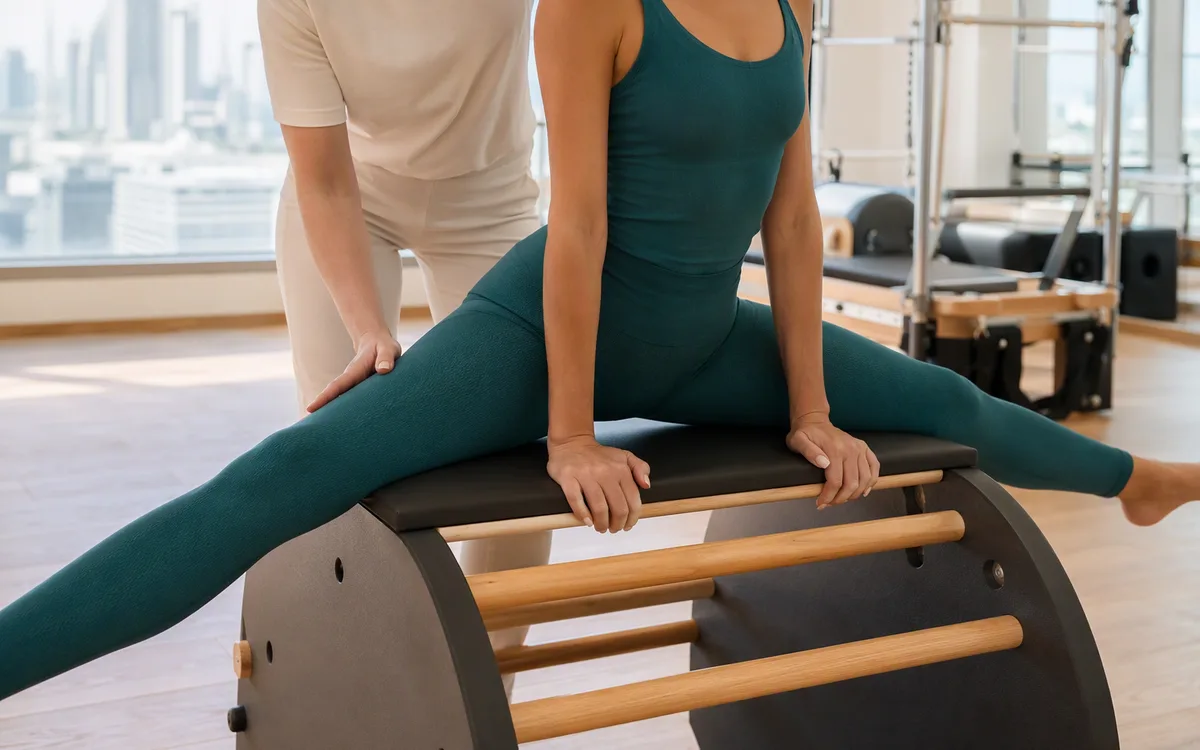
The Fuse Ladder Side Splits exercise targets hip flexibility and adductor strength using the Fuse Ladder apparatus. You lie sideways with your body aligned parallel to the ladder, one foot hooked under the bar and the other placed on a rung. As you exhale, lower the free leg towards the floor while resisting the spring tension.
This movement demands control to prevent the pelvis from tilting. Your top hip stays stacked over the bottom one, and the core remains engaged to stabilise the trunk. In small Dubai groups at Arjan, you receive individual cues to maintain this neutral pelvis position.
Unlike mat variations, the ladder's springs provide resistance that builds strength in the hip adductors. Read more about introductory Fuse Ladder sequences to prepare for this exercise.
How do you set up correctly on the Fuse Ladder?
Begin by adjusting the spring tension to one or two springs, depending on your level. Lie on your side with your hips and shoulders square to the ladder. Place the foot closest to the bar under it, toes pointed, and the opposite foot on a low rung with the knee soft.
Foot placement details
Ensure the bar foot presses evenly through the whole foot to anchor your position. The rung foot grips lightly to assist control without pushing excessively. Keep both legs long to engage the hamstrings.
Need setup guidance? Call the Arjan studio on +971 56 216 8166 or message us on WhatsApp.
Arms extend forward or one hand supports under the head for comfort. This setup promotes even weight distribution and prepares you for controlled lowering.
What cues help control the hip opener?
Focus on drawing your navel to your spine to activate the core throughout the movement. As you lower the leg, imagine squeezing a ball between your thighs to engage the adductors. Inhale to return the leg to start without momentum.
Keep your gaze forward to maintain neck alignment. If the top hip dips, reduce spring tension or bend the knee slightly. Instructors at Arjan emphasise breath coordination, linking to breath techniques in group classes.
Practice five to eight repetitions per side, pausing at the lowest point for two breaths to build endurance.
How does this differ from Chair Side Splits?
Fuse Ladder Side Splits uses the ladder's vertical support for more stability compared to the Wunda Chair's free-standing design. On the Chair, as detailed in our Chair Side Splits progression, you sit upright, demanding greater core activation without back support.
The ladder's bar provides adjustable resistance, allowing progression by changing foot position. Both exercises open the hips, but the Fuse Ladder suits those building foundational control in supine positions.
Progression paths
Advance by straightening the rung leg fully or adding a pulse at the bottom. This builds on side kick variations like Fuse Ladder Side Kicks.
Why focus on pelvic stability in small groups?
In classes limited to five at Pilates Academy Arjan, instructors spot pelvic shifts instantly and provide hands-on adjustments. This ensures you avoid compensatory patterns that strain the lower back. Stable pelvis allows the hip adductors to work purely without lumbar involvement.
Group feedback helps you compare form visually. Understanding adductor anatomy enhances your control, as instructors explain muscle actions during sessions.
Regular practice improves everyday movements like walking or squatting with better hip alignment.
What common errors should you avoid?
A frequent mistake is allowing the top hip to hike upwards, which shortens the obliques instead of opening the hip. Counter this by pressing the bottom hip into the mat. Another issue is rushing the return, losing eccentric control.
Avoid gripping the ladder tightly with hands, as this tenses the shoulders unnecessarily. Breathe steadily to stay relaxed. If balance shifts, widen your stance slightly on the ladder.
How can you progress this exercise safely?
Once basic control is solid, increase springs or lower the rung foot for greater range. Integrate into sequences after preparatory work like Fuse Ladder Swan Prep to warm the back extensors.
Track progress by noting how long you hold the split without shaking. In Arjan's small groups, instructors tailor progressions to your needs during the 7 AM to 10 PM weekday hours.
Common questions
Is Fuse Ladder Side Splits suitable for beginners?
New clients start with the three-class introduction for AED 300 including VAT. Instructors modify by bending the knee or using lighter springs. Build from introductory sequences before full expression.
How often should you practise hip openers?
Include twice weekly in your routine, allowing rest days for recovery. Combine with matwork like Side Kicks for balanced development. Consistency improves control over four to six weeks.
What muscles primarily work in this exercise?
Mainly the hip adductors, with core stabilisers and obliques assisting. Hamstrings and glutes provide support on the return. Instructors explain these during Arjan classes.
Can you do this if you have tight hips?
Yes, start with small ranges and progress gradually. Focus on control over depth. Small group sizes ensure safe guidance.
How does it fit into full apparatus classes?
It follows footwork and leg series in classical order. Links to Cadillac or Reformer hip work seamlessly. Book via Glofox for Arjan sessions.