Fuse Ladder Snake Twist Coordinating Breath with Spinal Rotation
 Written by Oxana, Reformer and Mat Pilates Instructor, Pilates Academy Arjan
Pilates Academy Arjan offers full classical apparatus including the Fuse Ladder in small groups. Instructors explain the anatomy of spinal rotation during these movements. New clients receive three classes for AED 300 including VAT to experience this setup.
What is the Fuse Ladder Snake Twist exercise?
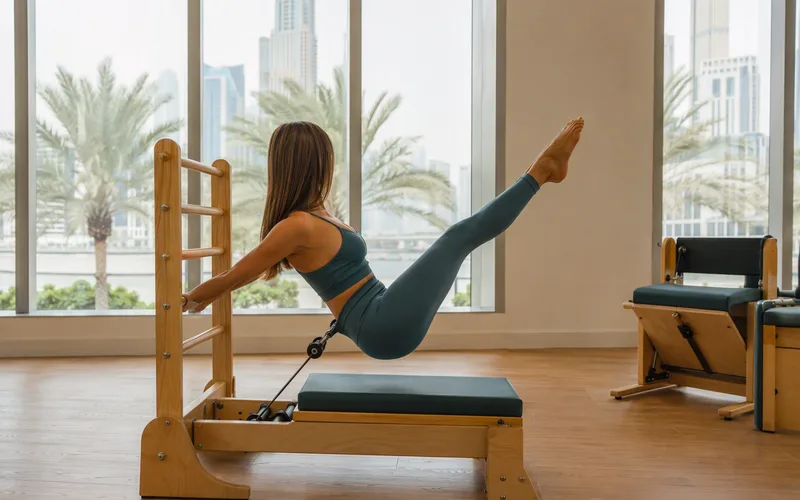
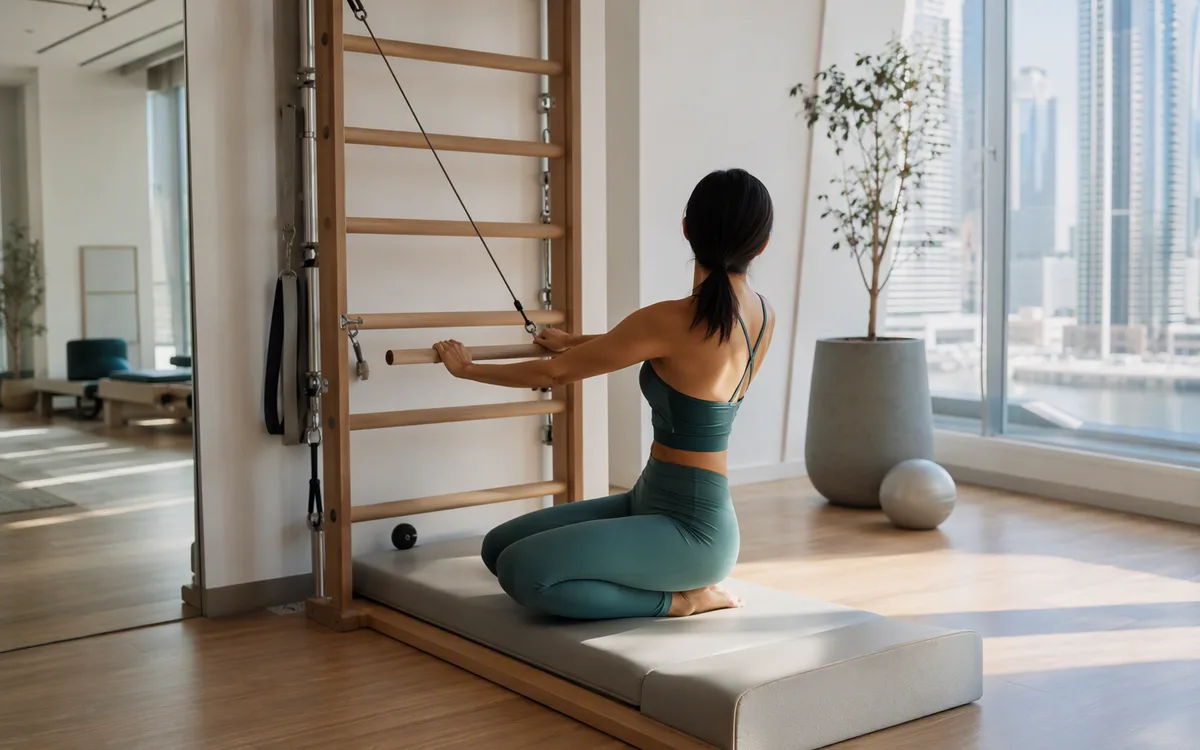
The Snake Twist uses the Fuse Ladder to challenge spinal mobility and core strength. You position yourself sideways to the ladder, feet under the rung for stability. Your hands grip the bar as you initiate a rotation from the waist, allowing the ribcage to follow while the hips remain grounded.
Breath plays a key role. Inhale centres your torso, then exhale drives the twist. This sequence prevents strain and promotes even rotation. In a group of up to five, your instructor cues adjustments to align your spine precisely.
Unlike basic mat twists such as the Spine Twist on Mat, the Fuse Ladder adds resistance through the push bar, intensifying the work on obliques and deep rotators.
How do you set up correctly on the Fuse Ladder?
Begin by selecting a Fuse Ladder in the studio at Building 88. Sit tall with your back to the ladder frame, feet flexed and hooked under the lowest available rung. Adjust the rung height so your legs are straight without locking knees.
Hand and torso positioning
Place your hands shoulder-width on the push bar, palms down. Lengthen your spine upward as if lifting from the crown of your head. Engage your core before starting any twist to protect your lower back.
Wondering about Fuse Ladder setup? Call the Arjan studio on +971 56 216 8166 or message us on WhatsApp.
This mirrors preparation in preparing for your first Fuse Ladder class, ensuring safety from the outset.
Why focus on breath coordination during twists?
Breath acts as an anchor for movement quality. Inhale fills the ribcage laterally, creating space for rotation. Exhale then spirals the torso smoothly, engaging the transverse abdominis for stability.
Without this sync, you risk compensatory swinging from the arms or hips. Instructors at Arjan emphasise this to deepen body awareness. Over sessions, it refines your control, much like breath work in the Single Leg Stretch on Mat.
Practice reveals how exhalation reinforces the twist's endpoint, holding the rotation for two breaths before switching sides.
What are the key form cues for spinal rotation?
Keep your eyes level with the horizon to avoid neck strain. Rotate from the mid-back, not just the shoulders. Your front hip stays down, preventing lift that shortens one side.
Maintaining pelvic stability
Anchorage comes from pressing your sitting bones evenly into the mat. If the pelvis shifts, pause and reset. This isolates rotation to the spine, building endurance.
Common errors include rounding the shoulders or rushing the twist. Slow the pace to 4 counts per side, matching your breath rhythm. Classes from 7 AM to 10 PM weekdays provide ample practice time.
How does this exercise benefit your core and spine?
Snake Twist strengthens obliques and multifidus muscles along the spine. You gain rotational power without bulk, ideal for everyday activities like turning in a car seat.
The ladder resistance heightens demand on stabilisers. Regular practice improves posture by balancing left and right sides. In small Dubai classes, feedback hones these gains.
Link it to progressions like Fuse Ladder Roll-Ups for comprehensive core development.
How can you progress the Snake Twist?
Start with small rotations, 30 degrees each way. Advance to full 90-degree twists as control improves. Add a pulse at the end range on exhale for intensity.
Modifications for challenge
Release one foot for instability, or use a higher rung to increase lever length. Always prioritise form over range.
Track sessions via Glofox bookings. Areas like Dubai Hills and Motor City residents fit this into evening routines easily.
Common questions
Is the Fuse Ladder suitable for beginners?
New clients at Arjan start with introductory cues during their three-class package. Instructors scale the twist range to your level. Book through Glofox to join a capped class.
How often should you practise Snake Twist?
Incorporate it two to three times weekly within Fuse Ladder sessions. Combine with mat work for balance. Studio hours suit post-work visits from JVC or JVT.
What if you feel discomfort during rotation?
Stop and check pelvic alignment. Reduce range or deepen breath. Speak to your instructor for personalised cues; no exercise should cause pain.
Can you do this on other apparatus?
Similar twists appear on Cadillac or Reformer, but Fuse Ladder offers unique ladder resistance. Explore variety across our full apparatus. Weekends run 9 AM to 5 PM.
How does breath affect rotation quality?
Exhale facilitates deeper engagement, stabilising the core. Inconsistent breath leads to shallow twists. Practice links breath to movement for fluid control.