Snake on Fuse Ladder Barrel: Precision Form for Full Body Coordination
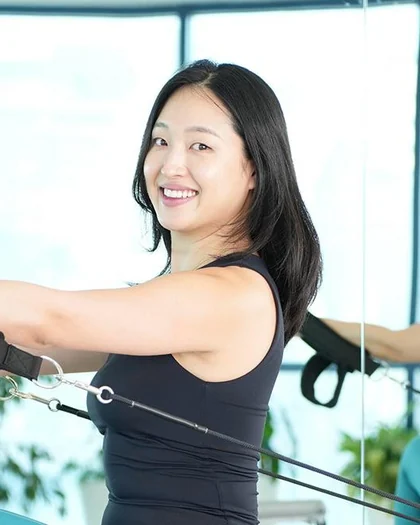 Written by Eun Sol, Pilates Instructor, Prenatal Pilates Certified, Pilates Academy Arjan
You perform the Snake on the Fuse Ladder Barrel by threading your body through the ladder frame in a snake-like motion, demanding precise coordination from shoulders to feet. This classical Pilates exercise builds full body control as you lift, twist and extend over the curved barrel. In classes at Pilates Academy Arjan, capped at five people, instructors teach the anatomical cues for correct form, helping you progress safely. New clients can start with three classes for AED 300 including 5% VAT.
Pilates Academy Arjan offers full classical apparatus including the Fuse Ladder Barrel, unlike many nearby reformer-only studios. You find it at Building 88, Shop 05, Al Barsha South Third (Arjan), Dubai. Classes run Monday to Friday 7 AM to 10 PM, and weekends 9 AM to 5 PM, serving areas like Arjan, Al Barsha South, Dubai Hills, Motor City, Dubai Sports City, JVC and JVT. Booking happens through Glofox.
What is the Snake exercise on the Fuse Ladder Barrel?
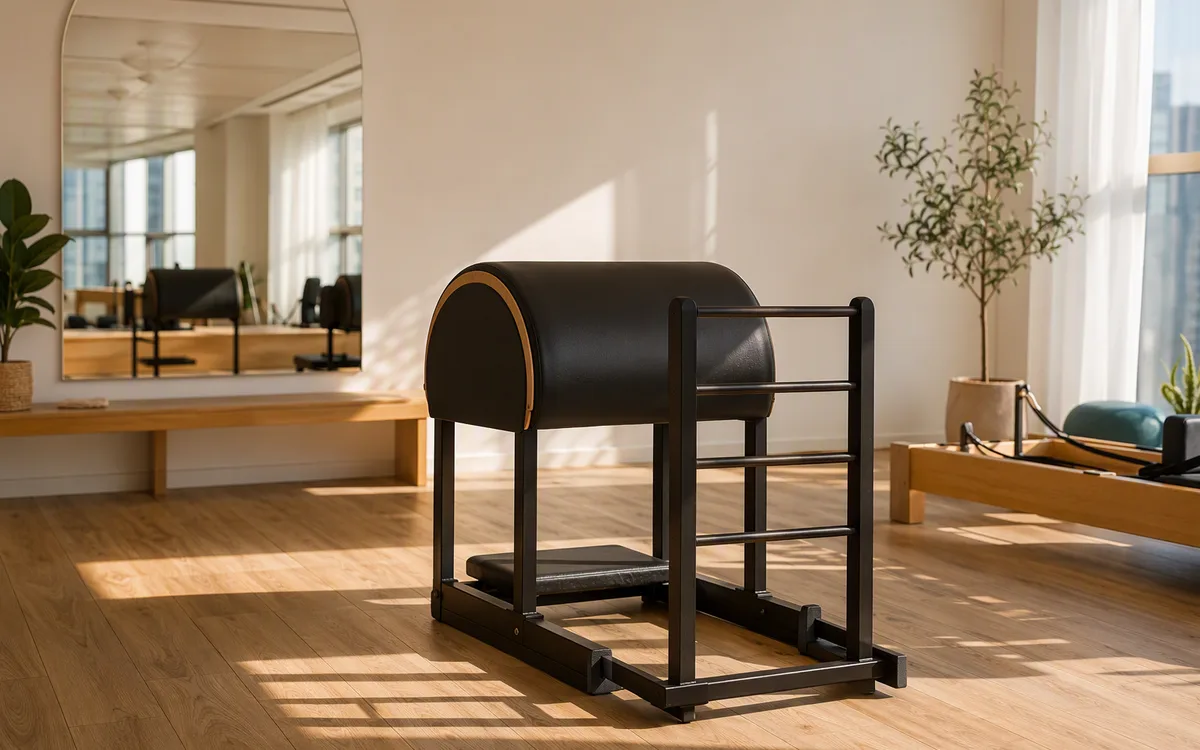
The Snake challenges you to coordinate your entire body in a flowing sequence. You start by placing your hands on the ladder rungs, shoulders wide, and drape your torso over the barrel curve. Your legs extend back, then you thread one leg under the ladder while lifting your hips, mimicking a snake's movement. This requires core stability and shoulder strength.
In classical Pilates, the exercise follows a specific order on the Fuse Ladder Barrel, as covered in our guide to exploring full classical Pilates order on apparatus. You focus on precision to avoid strain, with breath guiding each transition. Instructors at Arjan emphasise the role of the serratus anterior in supporting your plank-like positions.
Groups of no more than five allow detailed feedback, helping you refine the form that links upper and lower body seamlessly.
How do you set up correctly for Snake?
Position the Fuse Ladder Barrel with the curve facing you and ladder upright. Grip the outer rungs at shoulder height, fingers forward. Step one foot onto the lowest rung, the other extended back, hips lifted so your body forms a straight line from hands to back foot. Keep your gaze down to maintain neck alignment.
Adjust the apparatus
Ensure the ladder is stable and the barrel padding supports your ribcage without compressing your lower back. Your shoulders stay away from ears, engaging the back muscles. If new to the apparatus, review Fuse Ladder Barrel workouts for building strength to familiarise yourself.
Exhale to initiate the thread, drawing your front leg under the ladder while the back leg lifts slightly. This setup promotes even weight distribution and prepares you for the full coordination demand.
What are the step-by-step form cues?
Begin in high plank over the barrel. Inhale to prepare, then exhale as you slide your right leg under the ladder to the floor, left leg pressing back and up. Your hips square, core scoops inward. Shoulders stabilise without shrugging.
Reverse by inhaling to lift the right leg back, threading the left under. Switch sides evenly, keeping movements controlled. Instructors cue activation of the transverse abdominis for pelvic stability.
Finish by returning to plank, then dismount carefully. Practice builds the fluid precision that defines good form.
Need form checked? Call the Arjan studio on +971 56 216 8166 or message us on WhatsApp.
Which muscles does Snake coordinate?
This exercise integrates your deep core, including the pelvic floor and obliques, with shoulder girdle muscles like the rhomboids. Your glutes and hamstrings activate to lift the trailing leg, while quads stabilise the front.
Upper body focus
Latissimus dorsi and triceps hold the plank, preventing collapse. The movement teaches scapular control, essential for full body linkage.
Lower body demands hip flexor lengthening alongside glute engagement. Overall, it fosters neuromuscular coordination across the torso.
What common mistakes should you avoid?
Avoid arching your lower back; scoop the abdominals to maintain neutral spine. Do not rush the thread, which compromises control and risks shoulder strain.
Keep hips level instead of twisting unevenly. Breath holding disrupts flow, so exhale on effort. Beginners often grip too tightly, fatiguing forearms early.
Watch for head jutting forward; align it with the spine. In small Arjan classes, you receive cues to correct these promptly.
How does Snake improve full body coordination?
By sequencing unilateral movements, Snake hones your ability to fire muscles symmetrically despite asymmetry. This translates to better everyday balance and athletic poise.
You learn to connect breath with motion, enhancing proprioception. Regular practice sharpens transitions between exercises on the Fuse Ladder Barrel.
For dancers or athletes, it mirrors demands for controlled power, as noted in our piece on Pilates for dancers in Dubai.
Common questions
Is Snake suitable for beginners?
You start with preparatory versions, like partial threads without full leg lift. Build to the complete move after mastering basics such as plank holds. Instructors modify based on your level in max five person classes.
How often should you practise Snake?
Aim for two to three sessions weekly as part of a balanced sequence. Track improvements in control and endurance. Consistency yields better coordination over time.
What if you lack upper body strength?
Use the ladder's lower rungs for easier leverage. Strengthen via chair exercises, detailed here. Progress gradually.
Can you do Snake at home?
The Fuse Ladder Barrel requires studio equipment. Mat variations approximate but miss the full feedback. Join Arjan classes for proper apparatus work.
How does it fit into a class sequence?
Snake appears midway on the Fuse Ladder Barrel, after spine stretches and before advanced extensions. It bridges foundational and dynamic work effectively.