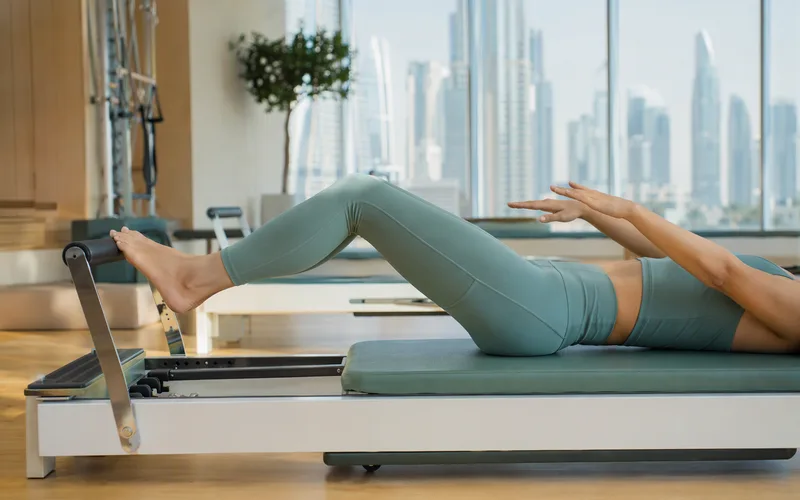
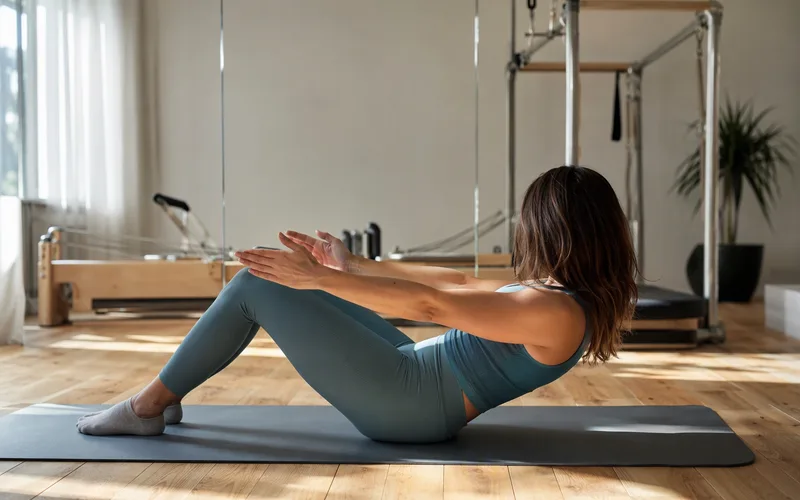
Wunda Chair Side Kick Series technique for balanced leg strength
 Written by Vivien, Pilates Instructor, Prenatal Pilates Certified, Pilates Academy Arjan
Unlike reformer-only studios nearby, Pilates Academy Arjan offers full classical apparatus including the Wunda Chair. Classes cap at five people for individual attention on technique. New clients receive three classes for AED 300 including 5% VAT. Sessions run Monday to Friday 7 AM to 10 PM, and weekends 9 AM to 5 PM, serving Arjan, Al Barsha South, Dubai Hills, Motor City, Dubai Sports City, JVC and JVT.
What is the Wunda Chair Side Kick Series?
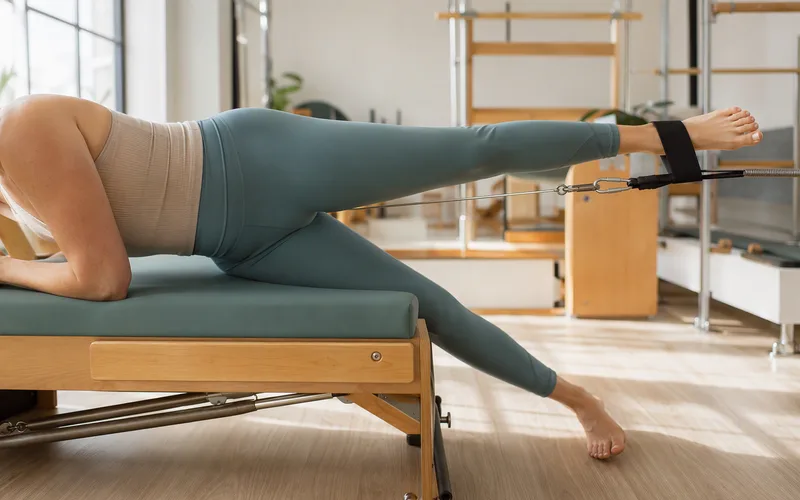
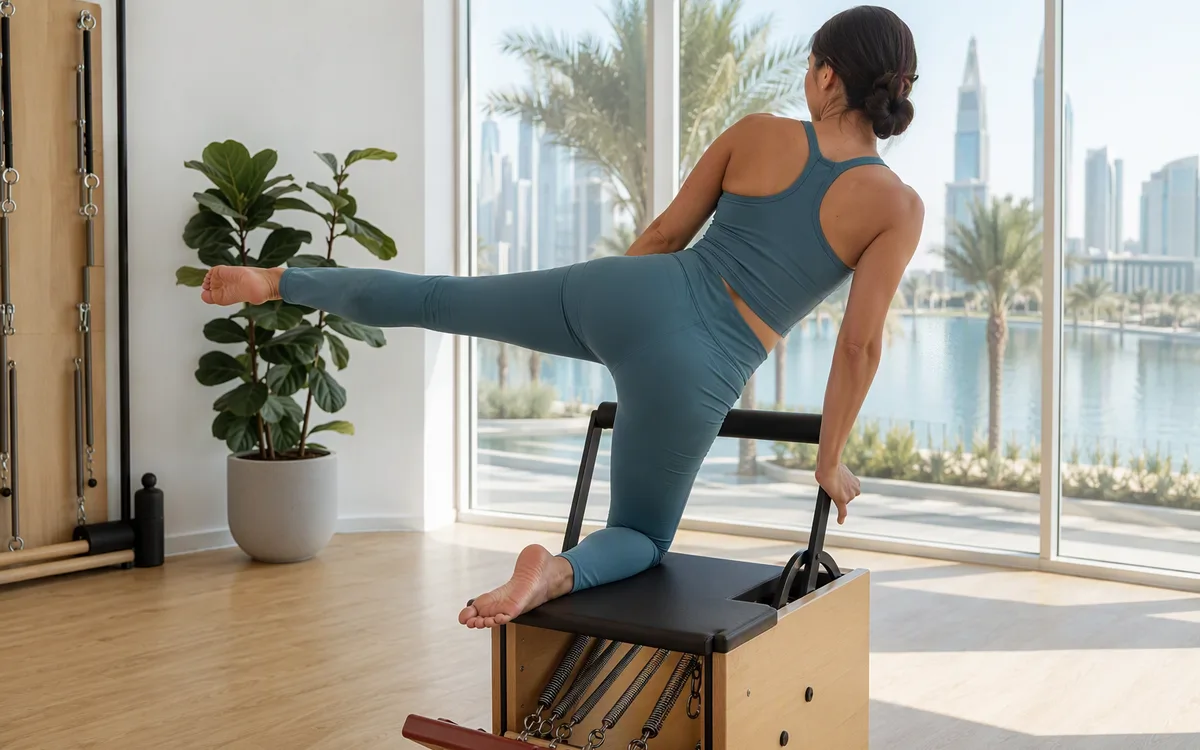
The Side Kick Series on the Wunda Chair involves lying or sitting sideways with your top leg extended to kick forward and back through a controlled range. Springs provide resistance to challenge hip muscles without momentum. This classical exercise from Joseph Pilates targets the gluteus medius for abduction and adductors for return, promoting balance. You feel the steady pull of the springs as your leg moves, which encourages precise control.
You keep your hips stacked and torso still to isolate the legs. Instructors emphasise breath: inhale to prepare, exhale on the kick. Small group sizes allow corrections for common faults like pelvic tilt. In a class at Pilates Academy Arjan, you see others maintaining alignment in mirrors, which helps you match the form.
This series fits into broader leg work sequences, building awareness of how hip muscles support everyday stability. Over time, you notice smoother transitions between front and back kicks.
How do you set up correctly on the Wunda Chair?
Position the chair with springs adjusted to one or two tensions based on your level. Sit sideways with your sitting-side hip at the chair edge, bottom leg bent and foot on the floor for stability. Place your top hand on the chair frame and bottom hand forward for balance. Extend your top leg parallel to the floor, toes pointed. The padded seat feels firm yet supportive under your hip.
Engage your core to lift the torso slightly if lying prone. Check that shoulders and hips align vertically. In the studio, natural light highlights your silhouette in the mirror, making it easy to spot twists.
Need setup advice? Call the Arjan studio on +971 56 216 8166 or message us on WhatsApp.
Before starting, roll your shoulders down and lengthen your spine. This setup ensures the springs engage properly from the first rep, preventing strain.
What are the key steps for the front kick?
From neutral, inhale to prepare. Exhale as you kick the top leg forward to hip height, keeping it straight and hips stable. Pause briefly, then inhale to return slowly against spring resistance. Repeat 6 to 8 times per side. You sense the inner thigh working hard on the controlled return, as the spring resists.
Avoid arching the back or swinging the leg. Focus on glute activation for control. This builds adductor strength on the return. In class, instructors cue you to imagine lengthening the leg away from your centre, which refines the motion.
For progression, add circles after mastering straight kicks. See our Chair Side Kick Series alignment for leg articulation for related cues. Feel the burn build evenly if form holds.
How do you perform the back kick effectively?
Exhale to lift and kick the leg back, squeezing the gluteus maximus without rotating the pelvis. Keep the movement below parallel to protect the lower back. Inhale to return forward precisely. The outer hip feels the deep engagement as you press against the spring, promoting length through the side body.
Common errors include overarching the spine or hiking the hip. Lengthen through the waist to maintain neutrality. This targets abductors for outer thigh balance. In a small group at Arjan, you receive a hands-on adjustment to keep the pelvis grounded, which transforms the exercise.
Visualise your waist elongating as you kick back, countering any tendency to shorten. Repeat smoothly for 6 to 8 reps, switching sides to compare sensations.
Why does this series promote balanced leg strength?
Side Kicks work opposing muscle groups alternately, countering daily habits like crossing legs that favour one side. You develop even power in abductors, adductors and glutes, supporting stable gait and posture. Anatomy cues from instructors highlight how imbalanced strength contributes to hip sway. In practice, one side may feel weaker at first, but consistent work evens it out.
In group classes, mirrors help you self-correct. Combine with matwork for full effect, as in our Mat Roll Up technique with breath cues. You notice improved symmetry after several sessions, with both legs responding similarly to cues.
This bilateral focus ensures no side dominates, fostering control that carries into other apparatus work like the Reformer.
What common mistakes should you avoid?
Do not let the pelvis rock; anchor it with core engagement. Keep kicks smooth, not jerky, to build control over momentum. Breathe steadily to sustain effort. If the leg flings, reduce spring tension and focus on slow returns.
Uneven reps per side can reinforce imbalances, so count precisely. Beginners shorten range until form solidifies. Link to Wunda Chair Leg Spring Series for hip flexor alignment to complement. Instructors spot these issues early in small classes, guiding you to neutral pelvis.
Another pitfall is holding breath; rhythmic breathing keeps the movement fluid and powered.
How can you progress the Side Kick Series?
Increase springs for more resistance or add pulses at end range. Try folding forward for inner thigh focus or side planks for advanced stability. Practice bilaterally to ensure symmetry. These variations intensify the challenge while maintaining control.
Integrate into sequences like those in building your first multi-apparatus sequence. Track progress over weeks in small classes. You feel greater endurance as pulses sharpen end-range strength.
Common questions
Is the Wunda Chair suitable for beginners?
Yes, start with lighter springs and shorter range. Instructors modify for your level in capped classes. Build to full series over introductory sessions. New clients try three classes for AED 300 including VAT. The supportive setup allows safe entry.
How often should you practise Side Kicks?
Aim for 2 to 3 sessions weekly, alternating sides evenly. Combine with other leg work like footwork. Rest days allow recovery for balanced gains. Consistency in small groups refines technique over time.
Can this help with everyday movement?
It supports hip stability for walking and stairs. Even strength reduces strain on one leg. Focus on control transfers to daily activities. You notice steadier steps after regular practice.
What if you feel uneven strength?
Do extra reps on weaker side after even sets. Instructors assess in class. Consistency addresses asymmetries over time. Mirrors aid self-awareness during sessions.
How does it fit group class schedules?
Sessions fit mornings, evenings and weekends. Book via Glofox for Arjan area. Small groups ensure technique focus. Instructors weave it into varied sequences.