Wunda Chair Leg Spring Series Technique for Hip Flexor Alignment
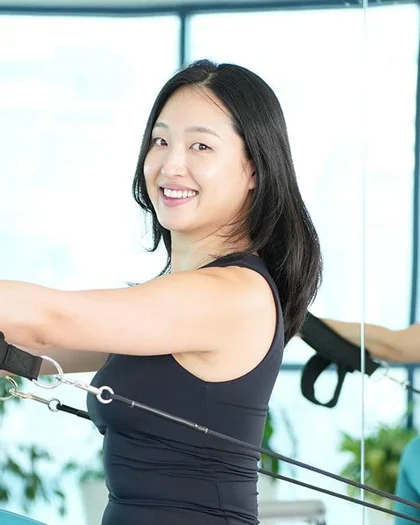 Written by Eun Sol, Pilates Instructor, Prenatal Pilates Certified, Pilates Academy Arjan
Pilates Academy Arjan in Al Barsha South Third offers full classical apparatus, including the Wunda Chair. Unlike reformer-only studios nearby, you access Reformer, Cadillac, Chair, Fuse Ladder and Matwork. Instructors explain the anatomy of movements to help you understand how exercises like the Leg Spring Series contribute to balanced alignment.
Wondering how to start? Call the Arjan studio on +971 56 216 8166 or message us on WhatsApp.
What is the Wunda Chair Leg Spring Series?
The Leg Spring Series on the Wunda Chair involves supine leg work with springs providing resistance. You position your feet on the pedals, hips and knees bent at first, then extend the legs against the springs. The focus stays on keeping the pelvis stable to isolate hip flexor action without compensatory tilting.
Key setup steps
Adjust the chair so your sacrum rests flat against the backrest. Secure the balls of your feet under the spring hooks or pedal bars. Select one or two light springs based on your level; beginners start with the lightest to prioritise control over force.
This series draws from Joseph Pilates original method, emphasising precision. You exhale on leg extension to engage the lower abdominals, supporting hip flexor length without shortening the front of the hip.
How do you align hip flexors in this series?
Hip flexors align when you maintain a neutral pelvis throughout the range. As you press the pedals away, imprint the lumbar spine lightly if needed, but aim for no arching. The iliopsoas and rectus femoris work evenly when the pubic bone stays level with the ASIS.
Visualise drawing the hip flexors back towards the spine rather than pulling the legs up. This prevents over-gripping and promotes length. Instructors cue you to feel the back of the legs lengthening equally.
Common alignment cues
Keep the tailbone weighted and the ribcage knit together. If one hip lifts, reduce spring tension or range of motion. Practice builds the feedback loop for self-correction.
What breathing pattern supports the technique?
Breathing coordinates with movement to stabilise the core. Inhale to prepare with knees bent, exhale fully as you extend both legs to the diagonal. This thoracic breath avoids shallow neck tension, allowing hip flexors to release on the return.
After several repetitions, try single-leg variations. Exhale to extend one leg while the other stabilises, challenging unilateral alignment. Return with control, inhaling to bend the knee.
Consistent breathing reinforces the mind-body connection essential in classical Pilates. Link this to introductory Wunda Chair sequences for first-time participants to build foundational breath control.
Why focus on pelvic stability during Leg Springs?
Pelvic stability prevents hip flexors from dominating with back arching. You engage the transverse abdominis to anchor the pelvis, allowing clean hip dissociation. This mirrors real-life movements like walking or lifting.
Progression for stability
Start with both legs together at 45 degrees, then advance to one leg hovering. If the pelvis rocks, return to parallel footwork. Over time, add ankle articulation for fuller hip flexor recruitment.
For back support, review Fuse Ladder Rowing Series form for back muscle engagement, which complements anterior chain work.
How does this series fit into a group class at Arjan?
Group classes at Pilates Academy Arjan limit to five for individual feedback. The Leg Spring Series often appears mid-sequence after footwork, preparing for upright Chair work. You rotate through apparatus in a logical flow, as detailed in studio flow from Mat to apparatus transitions.
Opening hours suit various schedules: weekdays 7 AM to 10 PM, weekends 9 AM to 5 PM. New clients try three classes for AED 300 including VAT via Glofox booking.
What benefits come from regular practice?
Regular Leg Spring work heightens awareness of hip positioning, aiding everyday posture. You notice improved stride in walking and less tightness after sitting. The series integrates with other Chair exercises like pike progressions for balanced lower body strength.
Sessions serve Arjan, Al Barsha South, Dubai Hills, Motor City, Dubai Sports City, JVC and JVT. Combine with mat classes for variety.
Common questions
Can beginners try the Leg Spring Series?
Yes, start with introductory sequences. Light springs and bent-knee ranges make it accessible. Instructors modify for your level in small groups.
How many springs for hip flexor work?
Begin with one light spring per foot. Increase only when alignment holds. Prioritise control over resistance.
What if my lower back arches?
Tuck the tailbone slightly or bend knees more. Strengthen with preparatory abdominal work first. Seek instructor feedback.
Is this suitable before or after Reformer classes?
It pairs well post-Reformer for hip emphasis. Follow studio flow guidelines for smooth transitions.
How often to practice for alignment gains?
Twice weekly in group classes builds retention. Combine with home mat cues for consistency.