Reformer Control Balance Preparation for Core Stability
 Written by Vivien, Pilates Instructor, Prenatal Pilates Certified, Pilates Academy Arjan
Pilates Academy Arjan offers full classical apparatus including the Reformer for such precise work. Instructors explain the anatomy to guide your form. Classes run Monday to Friday 7 AM to 10 PM, weekends 9 AM to 5 PM, serving Arjan, Al Barsha South, Dubai Hills, Motor City, Dubai Sports City, JVC and JVT.
What is Reformer Control Balance?
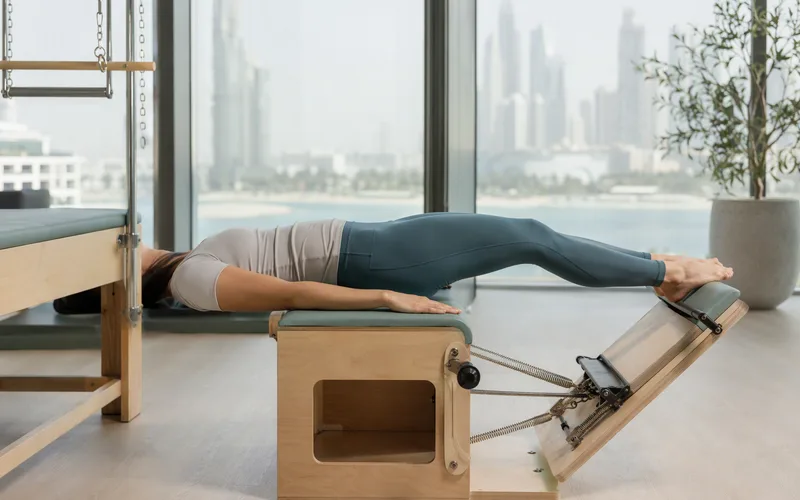
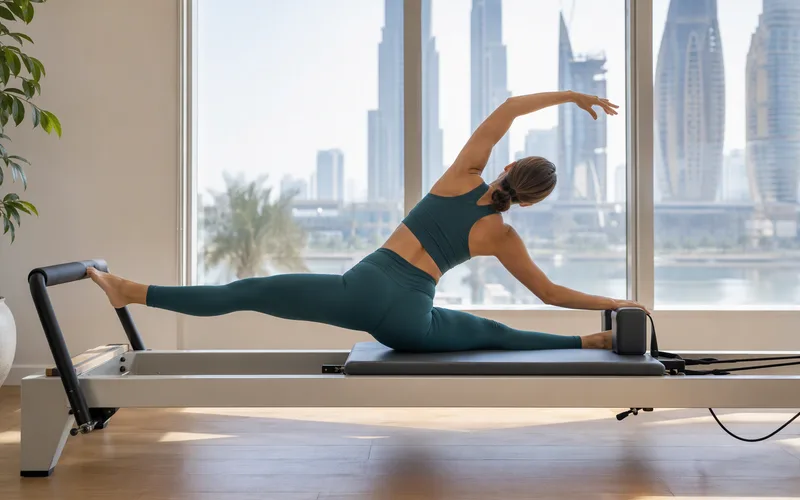
Control Balance challenges your core as you balance upside down on the Reformer carriage, supporting your body weight with hands while legs move in opposition. It requires strong abdominals to lift and stabilise your pelvis against gravity. You build towards it gradually to avoid strain. In the studio, you see the Reformer set up with springs adjusted for your level, the carriage ready for smooth movement as you practice.
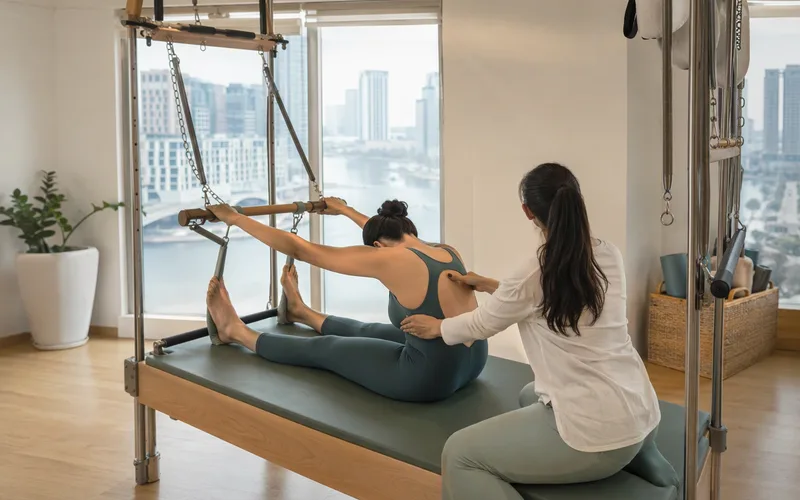
In classical Pilates, this exercise follows foundational moves like the Teaser. At Pilates Academy Arjan, instructors break it down, emphasising the power house connection between breath and movement. Small groups ensure individual attention, allowing cues like 'draw navel to spine' to sink in during each rep. You feel the deep burn in your centre as control builds.
Why prepare for it with core stability work?
Core stability forms the foundation for advanced Reformer exercises. Without it, you risk compensating with your back or shoulders, which disrupts form and reduces effectiveness. Preparatory steps teach you to engage deep abdominal layers first, creating a stable base that supports the inverted position later.
Need guidance on your core prep? Call the Arjan studio on +971 56 216 8166 or message us on WhatsApp.
Link this to exercises like the Cadillac Roll Back progression, which strengthens abdominal control similarly. In practice, you notice how these preps translate to everyday ease in standing or walking, as your centre holds firm.
How do you set up for preparation on the Reformer?
Footbar and strap position
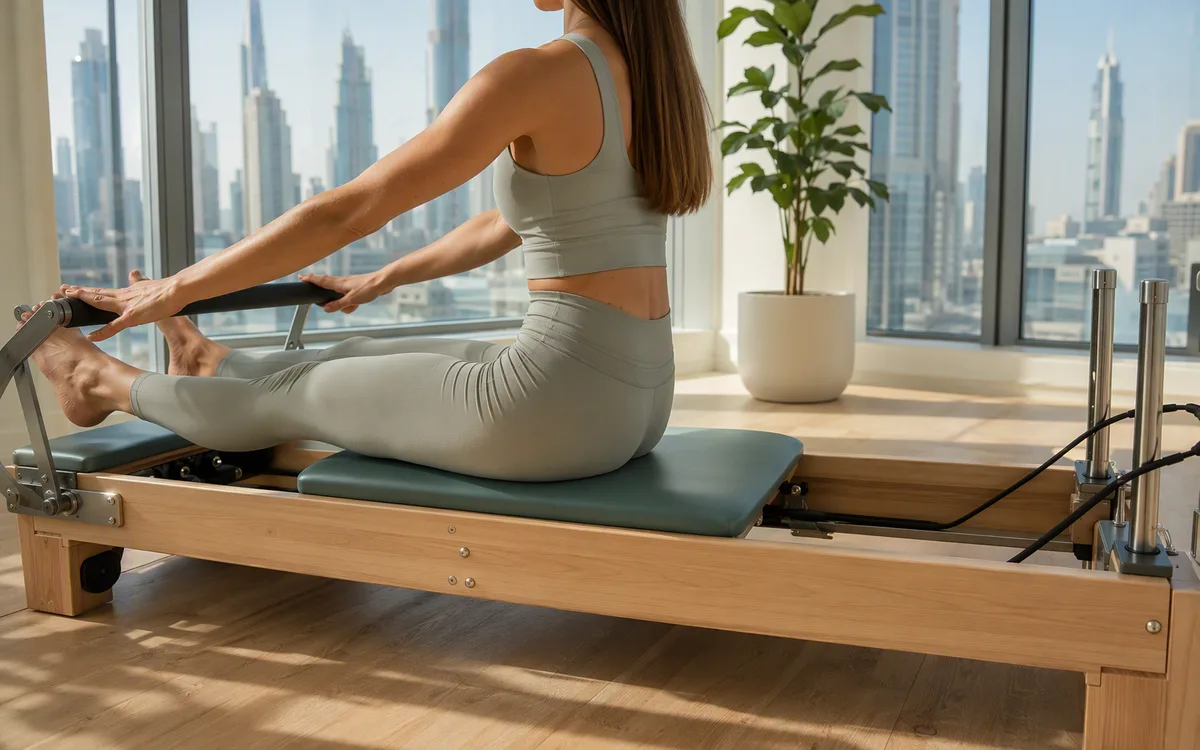
Adjust the footbar to a low setting for seated starts, ensuring it sits just below your sit bones when seated. Place straps at the second notch from the bottom, threading your feet into the loops securely so they hug your arches without slipping. Sit facing the footbar with knees bent at 90 degrees, feet flexed, spine lengthened tall.
Hand placement and imprint
Grip the footbar lightly with straight arms, fingers wrapped around the bar, palms down. Inhale to lengthen your spine, then exhale to imprint your lumbar spine into the carriage by gently pressing your lower back down. This neutralises your pelvis before rolling, creating a stable start. Keep shoulders relaxed away from ears throughout, feeling the support from your core rather than your upper body.
What are the initial preparatory steps?
Begin with Hundred prep: from your seated imprint, roll halfway back to a C-curve, pumping arms vigorously while holding legs at tabletop position, knees over hips, shins parallel to floor. Focus on steady breath and drawing navel to spine to maintain stability. Pump 10 to 20 times before rolling up. Advance to single leg lowers: extend one leg straight towards the ceiling while keeping the other at tabletop, then switch slowly, resisting the carriage's pull.
Next, try short spine massage prep: inhale to roll back with knees to chest, then exhale to extend one leg parallel to the floor while curling the tailbone under. Circle the leg small and controlled before switching. These build the stability needed for full Control Balance, with each movement teaching you to anchor your pelvis.
For back engagement, see the Fuse Ladder Rowing Series form, which complements by strengthening the back extensors to balance your front core work.
How does breath support the movement?
Exhale to initiate the abdominal contraction and initiate the roll back, using the exhale to scoop your belly deep. Inhale at the top of the movement to stabilise and prepare for the lift, filling your ribs fully. Coordinate so breath powers the lift, not momentum, creating a rhythmic flow that steadies the carriage.
Common breath errors
Avoid holding your breath, which tenses your upper body and limits core engagement. Do not pant or breathe shallowly; instead use full rib cage expansion on inhales to support your lift. Practice mat breathwork first if needed, as in Mat Roll Up technique, feeling the breath expand your sides.
Smooth, connected breathing prevents shaking during leg lifts. Instructors at Arjan cue this in every class, adjusting for your pace until it feels natural.
What common form mistakes should you avoid?
Tilting your pelvis forward as you roll back loses core engagement and strains the lower back; instead, keep the imprint by tucking your tailbone. Gripping the footbar too tightly fatigues your arms early and pulls your shoulders up; maintain a light, steady hold. Rushing the roll back skips the precise control needed, so move with deliberation, segment by segment.
Watch for head jutting forward, which shortens your neck; keep your gaze towards your knees to maintain a long spine. Legs flaring wide or splaying indicates weak centre control; press them together actively. Film yourself during practice or ask for instructor feedback in group sessions capped at five, where you receive real time adjustments.
How do you progress to full Control Balance?
Master the prep with both legs at tabletop first, curling halfway back with control, then progress to lifting one leg high overhead while keeping hips square. Switch legs in scissor pattern, resisting the springs' tension. Hands shift to the centre of the footbar as you prepare to roll up inverted, pressing firmly for support.
In Arjan classes, progression follows the classical order, with instructors watching for effortless form before advancing. Book via Glofox for your spot. Combine with Reformer Elephant variation for posterior chain balance, feeling how it integrates into your powerhouse.
Common questions
Can beginners attempt Control Balance prep?
Yes, you start with modified versions in introductory classes, using bent knees or shorter ranges. The three-class offer at 300 AED including 5% VAT suits new clients perfectly. Instructors assess your starting level and provide props like small balls under your spine if needed. Group sizes stay at five for personalised safety.
How often should you practise this prep?
Aim for two to three sessions each week to build endurance without fatigue. Combine with matwork or Chair classes for variety and balanced development. Consistency over weeks lets you track how the carriage moves smoother under your control. Note your reps and sensations in a journal to monitor gains.
Does it help with everyday posture?
The core work supports maintaining a neutral spine in daily activities like sitting at a desk or carrying bags. You notice improved awareness of your pelvis position during walks or stands. It complements full apparatus sessions at the studio, carrying over to better alignment in Dubai's active lifestyle.
What if you feel shaky during prep?
Reduce the range of motion first, like keeping legs lower or bending knees more. Strengthen basics with Chair footwork to build foundational power. Take a breath, rest briefly, and retry with smaller movements. Instructors guide these adjustments in class to rebuild confidence.
Is equipment adjustable for all sizes?
Yes, Reformers at Arjan accommodate various heights and builds with adjustable footbars and straps. Springs adjust for lighter or heavier resistance to match your strength. Inform your instructor of any preferences or limitations before starting, and they adapt the setup accordingly.