Reformer Elephant Variation Form for Posterior Chain Activation
 Written by Vivien, Pilates Instructor, Prenatal Pilates Certified, Pilates Academy Arjan
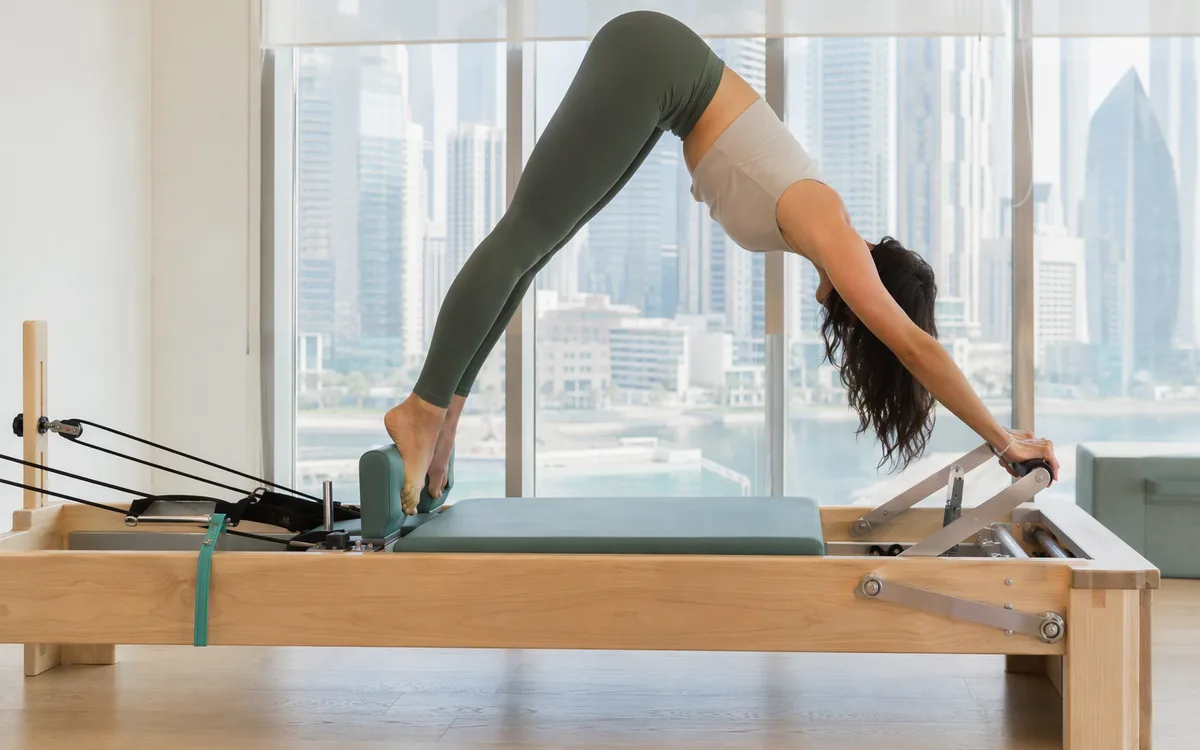
You perform the Reformer Elephant variation by placing your hands and feet on the footbar, lifting your hips into an inverted V shape, and pressing the carriage out and in with control. This engages your posterior chain, including hamstrings, glutes and back extensors, while stabilising the core. At Pilates Academy Arjan, instructors teach the anatomy behind the movement in classes capped at five people using the full classical apparatus. New clients start with three classes for AED 300 including 5% VAT.
Pilates Academy Arjan in Building 88, Shop 05, Al Barsha South Third (Arjan), Dubai, offers Reformer work alongside Cadillac, Chair, Fuse Ladder and Matwork. Sessions run Monday to Friday 7 AM to 10 PM, and weekends 9 AM to 5 PM, serving Arjan, Al Barsha South, Dubai Hills, Motor City, Dubai Sports City, JVC and JVT. Book through Glofox for these small group classes.
What is the Reformer Elephant variation?
The Elephant is a classical Pilates exercise on the Reformer that builds strength in the posterior chain. You stand with hands on the footbar, heels on the carriage, and lift your hips high. As you press the carriage back with your heels, your hamstrings and glutes lengthen under tension, while the back extensors support the lift.
This variation differs from basic footwork by demanding greater hip elevation and unilateral control options. Instructors at Arjan emphasise the anatomical cues: feel the chain from calves through glutes to the erector spinae. Small classes allow adjustments to your form for effective activation.
Unlike mat-based posterior work, the springs provide resistance that mirrors everyday posterior loading, such as walking uphill.
How do you set up for Reformer Elephant?
Apparatus and spring settings
Begin with two to three springs on the Reformer, depending on your strength; lighter for precision, heavier for challenge. Face the footbar, place hands shoulder-width on it, fingers forward. Step heels onto the carriage edge, toes tucked under if flexible.
Body position
Lift hips until your body forms a straight line from hands to hips to heels, like a plank upside down. Engage your core by drawing navel to spine, avoiding lower back sag. Gaze between hands to maintain neck alignment.
Need setup advice? Call the Arjan studio on +971 56 216 8166 or message us on WhatsApp.
What are the steps for correct form?
Exhale to press the carriage back by flexing at the ankles and hips, keeping heels glued to the carriage. Maintain hip height; do not let them drop. Inhale to return slowly, resisting the springs fully.
Progress by alternating single-leg presses after mastering bilateral. Breathe steadily: exhale on effort, inhale on return. Focus on posterior chain lengthening rather than speed.
In group classes at Arjan, watch for common faults like locked knees, which reduce hamstring engagement. Instructors cue adjustments live.
How does it activate the posterior chain?
Your posterior chain activates as hamstrings eccentrically control the carriage return, glutes stabilise the hips, and erector spinae hold the spinal extension. The footbar hand placement reinforces shoulder stability, linking upper and lower body.
Anatomy lesson: the gastrocnemius assists ankle flexion, while biceps femoris crosses knee and hip for dual action. This integrated firing builds endurance for daily activities.
Compared to Reformer prone press-ups for back extensor activation, Elephant adds lower body load for full chain work.
What common mistakes should you avoid?
Avoid dropping hips, which shifts load to the lower back instead of posterior chain. Keep shoulders away from ears by broadening across the collarbones. Do not rush the return; control builds strength.
Another fault is rounding the upper back; press firmly through palms for thoracic extension. If heels lift, reduce springs or strengthen ankles first. Practice in front of a mirror if available during private sessions.
Refer to studio etiquette for group classes at Arjan Pilates Academy to stay mindful of space.
How do you progress the Elephant variation?
Unilateral work
Once bilateral feels stable, lift one foot off briefly, pressing with the other leg. This challenges balance and isolates each side of the posterior chain.
Arm variations
Advance by extending one arm forward, increasing core demand while maintaining lift. Combine with breath holds only if advanced.
Integrate into series after Reformer fundamentals for Arjan area beginners. Aim for 6 to 8 reps per side.
How does it fit into a class at Arjan?
In a full-apparatus session, Elephant follows footwork and precedes long stretch series. It prepares for advanced posterior work like Chair pike progression for hamstring lengthening.
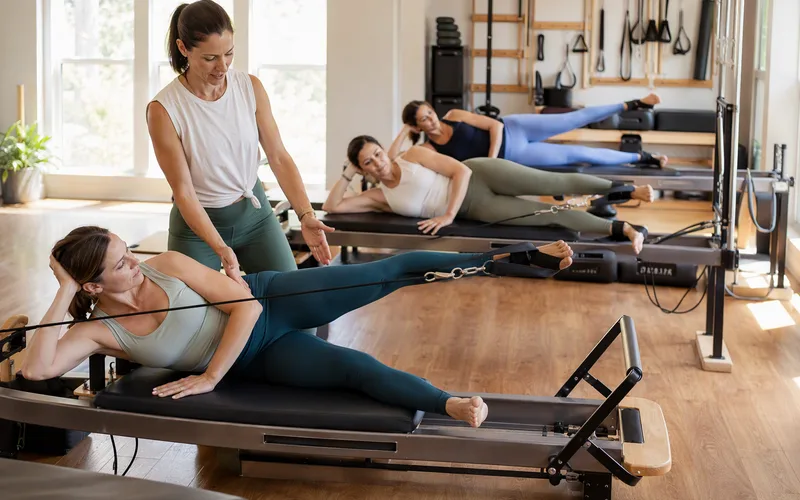
Classes cap at five, allowing instructors to cue anatomy precisely. Book via Glofox for times suiting your area, from Motor City mornings to JVC evenings.
Common questions
Is Elephant suitable for beginners?
You start with modifications like knees bent or lighter springs in introductory classes. Build to full form over sessions. Instructors assess readiness based on prior exercises like footwork.
How often should you practise it?
Include 2 to 3 times weekly in your routine, after warming the chain. Combine with matwork for balance. Track progress in your journal.
Does it help with tight hamstrings?
The lengthening under resistance improves hamstring flexibility over time. Pair with stretches like mermaid for comprehensive work. Consistency matters.
What if you feel back strain?
Check hip height and core engagement. Reduce springs and focus on form. Speak to the instructor for cues; they teach anatomy to prevent issues.
Can you do it privately?
Yes, book private sessions via Glofox for one-on-one form checks. Ideal before group integration. New client packages include introductory privates.