Chair Side Kick Series Alignment for Leg Articulation
 Written by Sajida, Pilates Instructor, Pilates Academy Arjan
The Wunda Chair offers a compact apparatus for challenging exercises like the Side Kick Series. Unlike reformer-only studios nearby, Pilates Academy Arjan provides full classical apparatus including the Chair. Instructors explain the anatomy behind each movement to help you align correctly.
What is the Chair Side Kick Series?
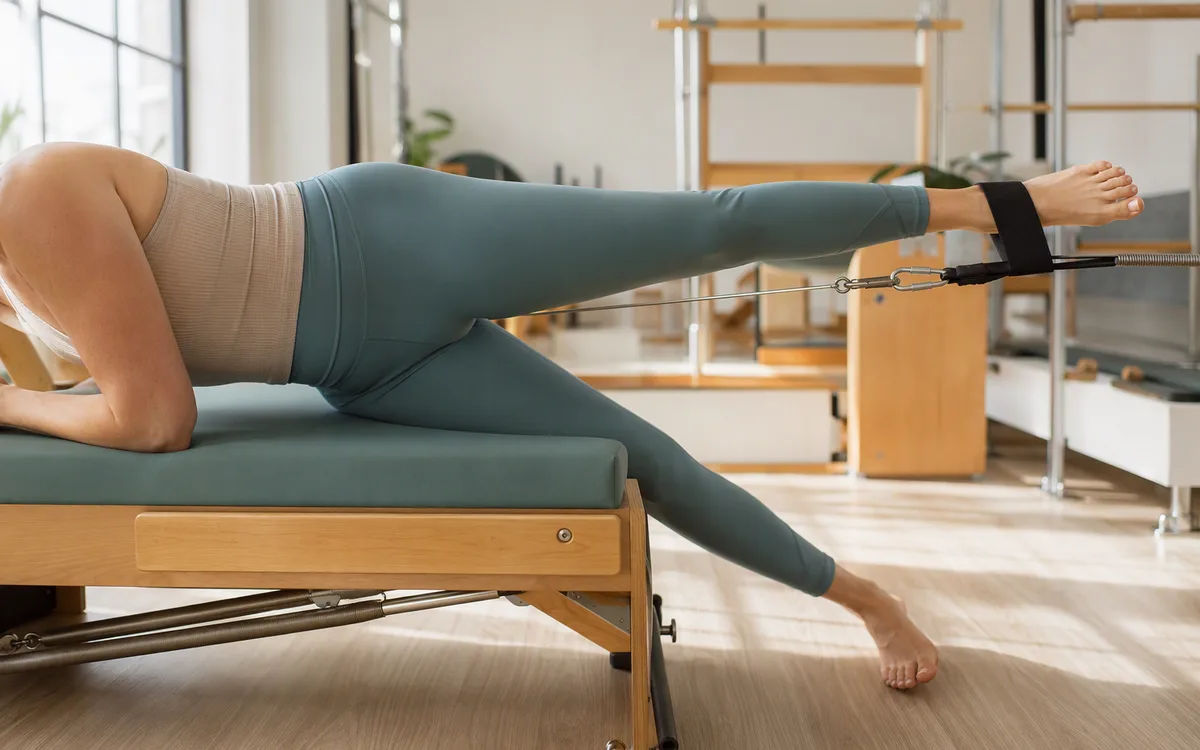
The Side Kick Series involves side-lying on the Wunda Chair with your top foot secured in the leather strap attached to the spring. You support your body on the forearm of the bottom arm, with the top hand placed in front for stability. The bottom leg extends straight, pressing lightly against the chair frame to anchor the pelvis.
From this position, you perform small, controlled kicks: first lift the leg slightly forward from the hip, then return to neutral and kick back. Each repetition emphasises smooth articulation at the hip joint without shifting the torso or pelvis. This series appears in classical Pilates sequences to refine leg control.
Proper setup ensures the spring tension suits your level, typically light to medium for beginners focusing on alignment. Instructors guide adjustments to avoid strain.
How do you set up alignment for the Side Kick Series?
Position your body
Begin by facing the pedal side of the Chair. Sit tall, then roll to your side with hips and shoulders squared to the mat. Bend your bottom elbow to rest your head in your hand, forming a straight line from head to hips.
Anchor the pelvis
Extend your bottom leg along the chair frame, foot flexed to press gently into the wood. This prevents pelvic rocking during kicks. Place your top hand on the frame ahead for counterbalance.
Should
Need help with Chair setup? Call the Arjan studio on +971 56 216 8166 or message us on WhatsApp.
your shoulders remain over hips, gaze forward to maintain neck alignment.What are the key alignment cues for leg articulation?
Keep your hips stacked vertically; imagine a glass of water balanced on your top hip to avoid tilting. Articulate the working leg from the hip socket, not the knee. Flex the foot through the movement to connect the full leg chain.
Breathe steadily: inhale to prepare, exhale on the forward kick to engage the core. On the backward kick, lengthen through the heel without arching the low back. These cues promote precise joint movement.
Common errors include hiking the hip or collapsing the torso. Instructors correct these in real time during Arjan classes. Link this to Chair Footwork for foundational alignment.
How does breathing support the Side Kick movements?
Coordinate breath with action: exhale to initiate the forward kick, drawing the navel to spine for stability. Inhale to return to centre, then exhale for the backward extension. This rhythm prevents holding breath, which tenses the body.
Full rib cage breathing expands the sides, supporting torso stillness. Avoid shallow chest breathing that lifts the shoulders. Over time, this builds endurance for longer series.
Practice mirrors Mat Roll Up breathing techniques for consistency across exercises.
What common mistakes affect leg articulation?
Tilting the pelvis forward or back disrupts hip joint isolation; counter this by pressing the bottom foot firmly. Rushing kicks sacrifices control; slow each to two counts out, two back. Gripping with toes disconnects the leg; keep the foot active but relaxed.
Over-arching the back signals weak abdominals; engage the core first. Beginners often shorten the waist; lengthen both sides evenly. Instructors at Arjan spot these issues promptly.
Progress from introductory Wunda Chair sequences to master form.
How does this series fit into a Chair workout?
Place Side Kicks after Footwork and Leg Springs to warm the legs. Follow with Pike or Push-Ups for full lower body work. In a 50-minute class, allocate four to six sets per side.
It complements hip-focused exercises like Wunda Chair Leg Spring Series. End with stretches for balance.
Progressions for advancing leg control?
Once aligned, add circles: small forward then reverse, keeping pelvis still. Increase spring tension gradually for resistance. Advance to Teaser prep on Chair for dynamic articulation.
Practice unilaterally longer on weaker sides. In small Arjan groups, receive feedback to refine. Track improvements over weekly sessions.
Common questions
Who can try the Chair Side Kick Series?
Participants familiar with Chair basics suit this series. New clients start with three classes for AED 300 including VAT at Pilates Academy Arjan. Book via Glofox for sessions Monday to Friday 7 AM to 10 PM or weekends 9 AM to 5 PM.
How often should you practise Side Kicks?
Include twice weekly in your routine for progress. Combine with matwork or reformer days. Residents from Arjan, Dubai Hills or Motor City access evening slots easily.
Does it help with everyday leg movement?
The series heightens awareness of hip and leg joints for smoother walking and stairs. It encourages controlled articulation without compensation. Instructors teach anatomical cues for transfer to daily activities.
What if I feel strain in the hip?
Reduce spring tension or range of motion. Ensure pelvic anchoring. Speak to your instructor; classes cap at five for personal attention. Progress relates to foundational exercises.
Can beginners modify the setup?
Yes, use no spring initially, focusing on alignment. Keep kicks small. Arjan classes build from basics like Chair Footwork.