Wunda Chair Step Progression: Developing Leg Power Through Controlled Ascents and Descents
 Written by Oxana, Reformer and Mat Pilates Instructor, Pilates Academy Arjan
The Wunda Chair forms part of the full classical Pilates apparatus at Pilates Academy Arjan, located at Building 88, Shop 05, Al Barsha South Third in Arjan, Dubai. Unlike reformer-only studios nearby, this setup includes the Reformer, Cadillac, Chair, Fuse Ladder and Matwork. Instructors teach the anatomical principles behind each movement to help you understand how to activate your muscles correctly.
What is the Wunda Chair step progression?
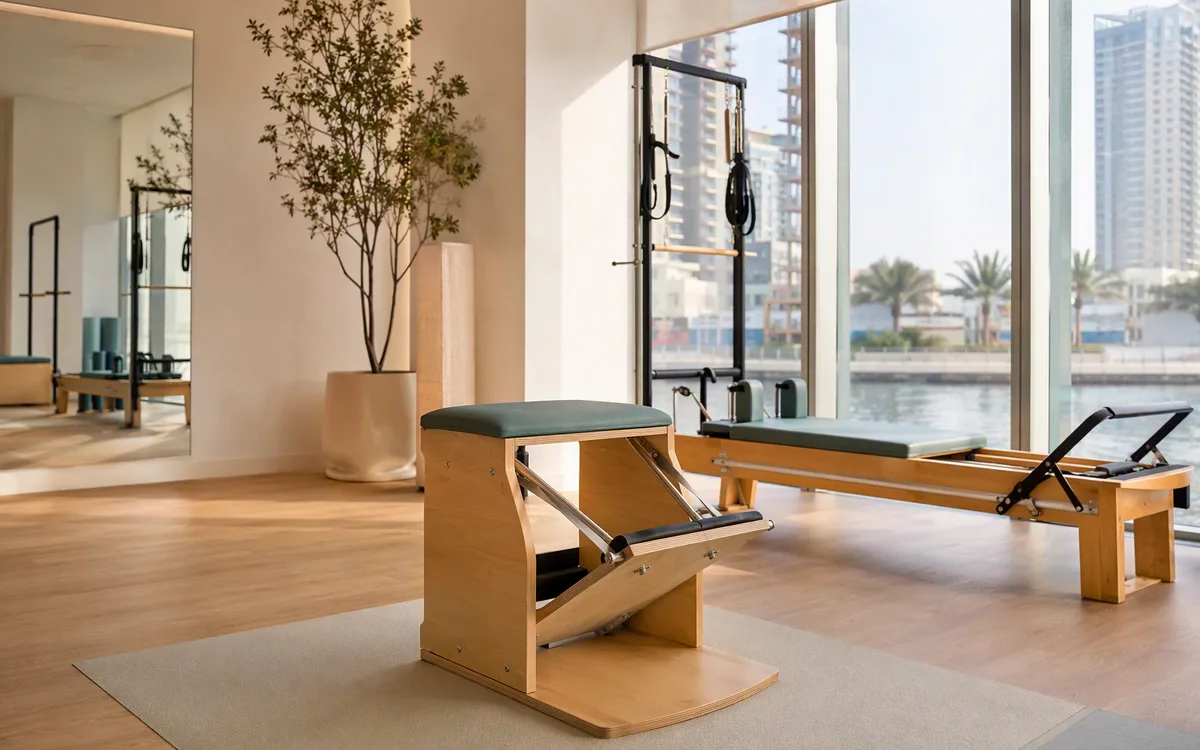
The step progression on the Wunda Chair starts with basic footwork where you press the pedal down and up using your legs. You begin seated or standing, depending on your level, with feet positioned on the pedal's edge or centre. The key is to maintain a neutral spine and engage your core to avoid arching your back.
As you advance, you add single-leg variations. Lift one foot off the pedal while pressing with the other, then switch. This challenges balance and isolates each leg's power. Instructors emphasise slow descents to build control, which strengthens the hamstrings and glutes more effectively than fast movements.
Seated start for beginners
Sit tall on the chair with your sit bones rooted. Place both feet on the pedal, knees soft. Inhale to prepare, exhale to press down fully, then inhale as you float the pedal up without locking knees. Repeat 8 to 10 times, focusing on even pressure through all toes.
How do controlled ascents build leg power?
During ascent, you lift the pedal against spring resistance by extending your knees and hips. This concentric contraction targets the quadriceps and hip flexors. Keep your movement deliberate to maximise muscle recruitment without momentum.
Want to try Wunda Chair steps? Call the Arjan studio on +971 56 216 8166 or message us on WhatsApp.
Progress by pausing at the top of the ascent for two breaths. This isometric hold increases time under tension, enhancing endurance in your legs. Over sessions, you notice improved power for daily activities like climbing stairs.
Why focus on slow descents in this exercise?
Descent, or eccentric phase, occurs as you lower the pedal slowly against the springs. This lengthens the muscles under load, building strength and control in hamstrings and calves. Resist the urge to drop quickly; aim for a count of four on the way down.
Combine with breath: inhale during descent to stay relaxed yet controlled. This pattern mirrors Wunda Chair push-up progressions, where eccentric control also features. Regular practice reduces injury risk by improving muscle elasticity.
Common errors to avoid
Avoid leaning forward or gripping handles too tightly, as this shifts work from legs to arms. Keep shoulders down and gaze forward. If the pedal wobbles, narrow your foot stance.
How does anatomy inform the movement?
Instructors at Arjan explain how the vastus medialis oblique stabilises your knee during extension. Hip extensors like gluteus maximus power the press, while core muscles prevent pelvic tilt. Understanding this helps you cue your body correctly.
Visualise the kinetic chain: feet push evenly, shins stay vertical, thighs align with hips. This full-apparatus studio teaches these details, differing from mat-only classes like the Mat class sequence for beginners.
In small groups, receive hands-on cues to activate the right muscles, accelerating your progression.
What is a typical progression sequence?
Week one: bilateral presses, 10 reps, seated. Week two: add pulses at bottom. Week three: single-leg, 6 reps each side. Advance to standing steps for greater challenge, mimicking step-up exercises.
Integrating into full classes
Steps often follow footwork and precede push-throughs. Book via Glofox; see navigating Glofox rebooking for tips. Classes run Monday to Friday 7 AM to 10 PM, weekends 9 AM to 5 PM.
Track progress by noting ease of control. After your trial, continue to refine.
How to prepare for Wunda Chair steps at Arjan?
Arrive early to park at Building 88; check the first-time parking guide. Wear fitted clothes and grippy socks. Hydrate, especially in Dubai heat.
Warm up with mat twists or cat stretches to mobilise hips. In class, listen for cues on pelvic floor engagement. Post-class, note how legs feel for next session planning.
Common questions
Can beginners do Wunda Chair steps?
Yes, with modifications. Start seated with lighter springs. Instructors assess your form and adjust. Your three-class trial introduces this safely in a group of five maximum.
How often should you practise step progressions?
Twice weekly fits most schedules, allowing recovery. Combine with Reformer or Cadillac work. Areas like Dubai Hills or Motor City residents find evening slots convenient from 7 AM to 10 PM weekdays.
What muscles benefit most from ascents and descents?
Quadriceps, hamstrings, glutes and calves. Core stabilises. This builds balanced leg power for activities beyond Pilates.
Is equipment adjusted for height?
Yes, instructors set springs and pedal height for you. No prior experience needed; they tailor to your body proportions in every class.
How does this link to other Chair exercises?
Steps prepare for push-ups and side planks. See related side plank on Chair for upper body balance work.