Chair Teaser Tuck Progression: Building Abdominal Control from Seated
 Written by Oxana, Reformer and Mat Pilates Instructor, Pilates Academy Arjan
The Wunda Chair offers seated exercises that challenge balance and core strength differently from mat or reformer work. At Pilates Academy Arjan, instructors explain the anatomy of abdominal engagement during these movements. Classes remain small, with no more than five participants, allowing close attention to your form.
What is the Chair Teaser Tuck Progression?
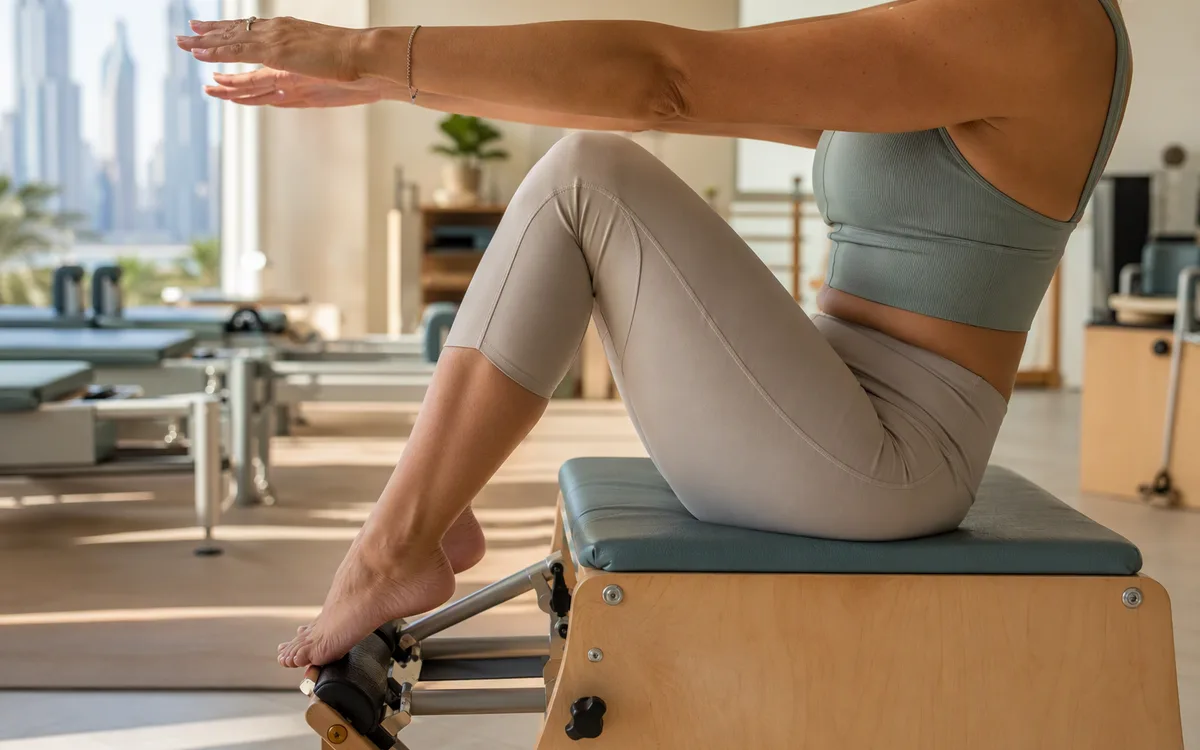
The Teaser Tuck Progression builds on the basic teaser position on the Wunda Chair. You begin seated with hips balanced on the seat edge, feet pressing into the pedal. The tuck refers to the posterior pelvic tilt that scoops the lower abdomen, creating a C-curve in the spine. This isolates the transversus abdominis and supports spinal articulation.
In classical Pilates, this exercise follows foundational footwork, as covered in our Wunda Chair Foot Bar Series article. Instructors emphasise neutral pelvis first, then teach the tuck to deepen core activation without straining the back.
Progression layers include holding the tuck, adding arm reaches, and eventually rolling back slightly before returning. Each step reinforces control from the powerhouse, the centre of the body.
How do you set up correctly for the Teaser Tuck?
Position yourself on the Wunda Chair seat with sit bones forward, spine long. Place feet hip-width on the pedal bar, toes flexed or pointed depending on your level. Hold the pedal down lightly with legs extended at 45 degrees if possible. Relax shoulders away from ears.
Initial seated posture
Lengthen through the crown of your head. Engage the abdominals to stabilise the pelvis in neutral. Breathe fully into the sides of the ribcage, as practiced in First Mat Class Preparation.
Pedal and spring adjustments
Start with one or two springs for resistance. The pedal provides feedback; press evenly through both feet. If new to the chair, ask your instructor to check alignment before tucking.
Common faults include arching the lower back or gripping with hip flexors. Correct by softening the knees slightly and drawing the navel to spine.
What are the steps in the basic Teaser Tuck?
Ready to try it? Call the Arjan studio on +971 56 216 8166 or message us on WhatsApp.
Exhale to tuck the pelvis, rounding the lower spine into a shallow C-shape. Upper body remains lifted; do not collapse forward. Inhale to return to neutral, lengthening the spine. Repeat five to eight times, focusing on smooth transitions.
Coordinate breath precisely: exhale on tuck to deepen abdominal hollowing, inhale to lengthen. Keep gaze forward to maintain cervical neutrality. This mirrors cues in the Wunda Chair Teaser article.
How does the progression advance abdominal control?
Once basic tuck feels stable, reach arms forward parallel to the floor on exhale tuck. This tests balance as shoulders stabilise without rounding forward. Progress to lifting one foot off the pedal briefly, challenging unilateral control.
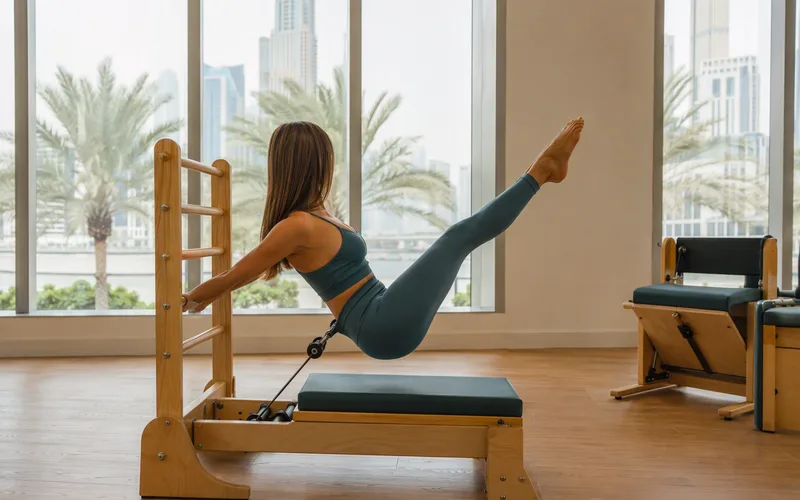
Advanced variations include rolling the spine back halfway while tucked, then rolling up to seated teaser. Maintain the tuck throughout to build endurance in the rectus and oblique muscles.
Each layer demands greater precision, preventing compensation patterns. Instructors watch for pelvic shifts and correct them on the spot in our capped classes.
What common errors occur and how to fix them?
Tilting the pelvis anteriorly or flaring ribs disrupts core engagement. Counter this by imagining a marble rolling up your spine on inhale. If shoulders hike, widen collarbones and breathe laterally.
Breathing pitfalls
Shallow chest breathing reduces abdominal power. Practice diaphragmatic breath first, expanding the lower ribs.
Gripping toes or ankles strains the neck. Release tension by lengthening through fingertips instead.
Why focus on pelvic tuck in Chair Teaser work?
The tuck imprints the neutral-to-imprinted pelvis transition, key for all classical exercises. It teaches differentiation between lumbar flexion and hip flexion, enhancing movement quality.
On the chair, the unstable seat amplifies feedback, making control more attainable than on mat. This prepares you for fuller teasers across apparatus.
Regular practice improves posture in daily activities, with carryover to walking and sitting.
How does this fit into a full Chair session at Arjan?
The Teaser Tuck slots after footwork and push-downs, building seated control progressively. Follow with side splits for oblique work, as in our Chair Side Splits Progression article.
In group classes, instructors demonstrate anatomy, linking tuck to transversus activation. New clients start with three classes for AED 300 including 5% VAT, booking via Glofox.
Common questions
Can beginners attempt the Teaser Tuck?
Yes, with modifications. Start with bent knees and hands on shins for support. Build to straight legs over sessions. Instructors scale based on your readiness in small Arjan groups.
How often should you practise this progression?
Include it two to three times weekly in classes. Consistency builds control faster than intensity. Track progress with your instructor during Monday to Friday 7 AM to 10 PM hours.
Does it help with everyday posture?
The tuck awareness strengthens habitual abdominal support. You notice better spinal alignment when seated at desks. Combine with mat roll backs for fuller benefits.
What if I feel strain in my lower back?
Reduce spring tension and shorten range. Ensure full exhale on tuck to avoid bracing. Speak to your instructor; they adjust cues for comfort.
Can I do this outside of full apparatus classes?
Practice seated tucks on a firm chair at home, but chair resistance provides unique feedback. Visit Pilates Academy Arjan at Building 88, Shop 05, for proper apparatus.