Fuse Ladder Pull-Up Bar Dips: Upper Body Strength with Hip Stability
 Written by Sajida, Pilates Instructor, Pilates Academy Arjan
Pilates Academy Arjan offers full classical apparatus including the Fuse Ladder, unlike many reformer-only studios nearby. You find the studio at Building 88, Shop 05, Al Barsha South Third in Arjan, serving areas such as Dubai Hills, Motor City and JVC. Opening hours run Monday to Friday 7 AM to 10 PM and weekends 9 AM to 5 PM. New clients begin with three classes for AED 300 including 5% VAT, booked via Glofox.
What is the Fuse Ladder pull-up bar dip?
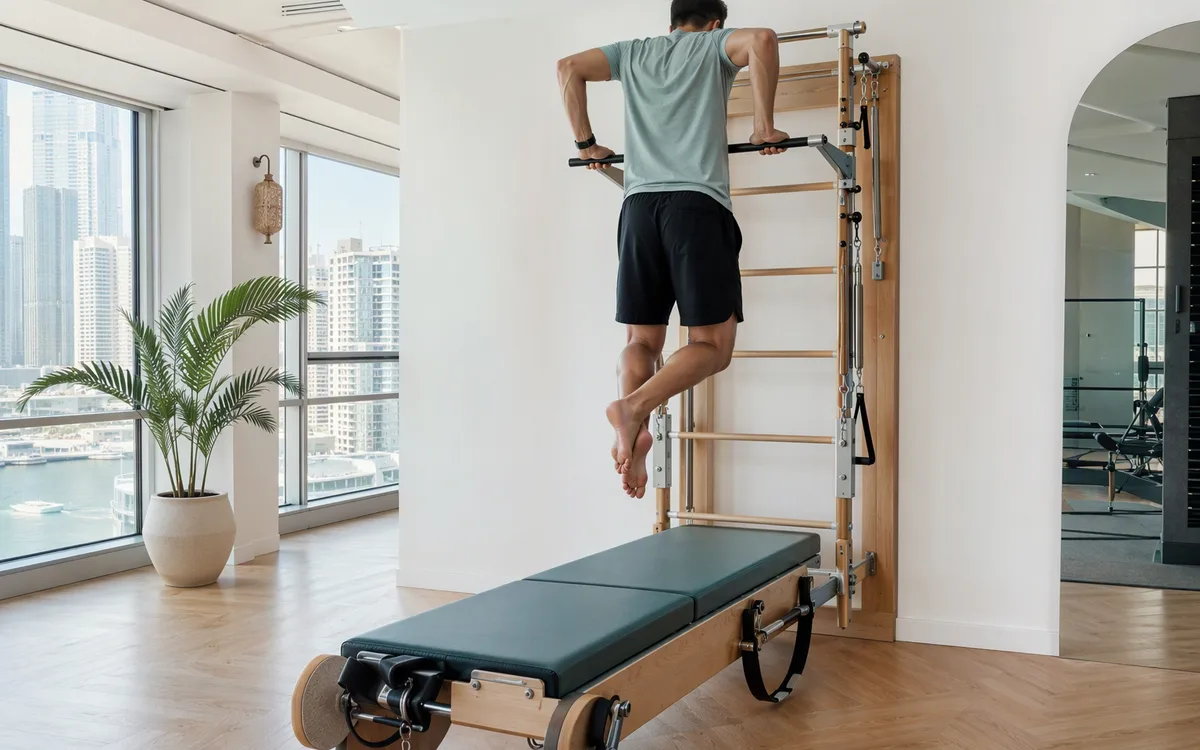
The Fuse Ladder pull-up bar dip uses the pull-up bar attached to the top of the Fuse Ladder apparatus. You position yourself facing away from the ladder, hands shoulder-width on the bar, legs extended forward or hooked under the lowest bar for support. This setup allows dips that target the upper body while the ladder's structure enforces hip and pelvic control.
In classical Pilates, the exercise draws from Joseph Pilates' original method, integrating strength with stability. Your instructor demonstrates how to initiate the dip from the elbows bending, not the shoulders shrugging. At Arjan, you learn this in group classes where anatomy is explained, such as the role of the latissimus dorsi in the pressing phase.
Shoulder stability comes from keeping the scapulae drawn down and together. This prevents strain and builds even strength across the upper body.
How do you set up for pull-up bar dips on the Fuse Ladder?
Stand facing away from the Fuse Ladder with the pull-up bar adjusted to chest height. Grip the bar with palms facing forward, hands just outside shoulder width. Step your feet forward onto the lowest ladder rung or extend legs if advanced, shifting weight to create a slight lean back.
Need setup help? Call the Arjan studio on +971 56 216 8166 or message us on WhatsApp.
Engage your core by drawing the navel to spine before lowering. Your head aligns with the spine, gaze forward. Instructors check your neutral pelvis, a key difference from gym dips.
What are the basic steps for performing the exercise?
Bend your elbows to lower your body until elbows reach 90 degrees, keeping hips level and shoulders away from ears. Press through the palms to extend arms fully without locking elbows. Inhale to prepare, exhale on the press up, coordinating breath with movement as in all Pilates work.
Perform 6 to 8 repetitions, resting briefly between sets. Beginners hook toes under the ladder bar for support. Progress by extending legs fully, increasing the stability demand.
Common faults include flaring elbows outward; keep them tracking back close to the body. This protects the shoulders and maximises triceps engagement.
How does hip stability factor into the dips?
Hip stability prevents the pelvis from tucking or tilting during the dip, which would compromise core integrity. You maintain a neutral pelvis by imagining a bowl of water balanced on your pubic bone, avoiding spills forward or back. This links to exercises like Mat Single Leg Circles for pelvic stability.
The Fuse Ladder's design naturally cues hips to stay square as legs resist gravity. Instructors emphasise glutes and inner thighs activating isometrically. This builds endurance in the hip girdle alongside upper body work.
Over time, you notice improved control in other apparatus moves, such as those on the Fuse Ladder Teaser progression.
What muscles does this exercise target?
Primary movers are the pectoralis major, triceps brachii and anterior deltoids during the press. The latissimus dorsi and rhomboids stabilise the back. Core muscles, including transverse abdominis and obliques, work to hold the pelvis steady.
Upper body focus
Chest and triceps receive direct strengthening from the eccentric lowering and concentric press. Shoulders gain stability without bulk.
Core and hip contribution
Hips and lower abs counterbalance the upper body load, fostering full-torso integration. This mirrors cues in Wunda Chair Side Press progression.
Regular practice enhances posture by balancing pushing strength with spinal support.
How do you progress the pull-up bar dips?
Start with knees bent or feet supported, advancing to straight legs hovering. Add a hold at the bottom of the dip for 2 to 3 seconds to intensify core demand. Reduce support gradually as strength builds.
Once proficient, incorporate a slight trunk lean back to increase resistance. Always prioritise form over repetitions. In Arjan classes, your instructor tailors progressions based on observed alignment.
Combine with upper body sequences like Cadillac side presses for comprehensive development.
Common questions
Is this suitable for beginners?
New clients at Pilates Academy Arjan start with modifications, such as feet on the floor. Instructors provide hands-on cues during the capped classes. After your introductory package, you progress safely.
How often should you practise dips?
Aim for 2 to 3 sessions weekly, integrated into full apparatus classes. Allow recovery days for muscle adaptation. Track form improvements over weeks.
Can this help with everyday strength?
You gain functional upper body power for lifting or carrying, plus hip stability for walking or standing. Pilates builds balanced fitness for daily Dubai life.
What if you feel shoulder discomfort?
Stop and inform your instructor, who adjusts setup or springs. Focus on scapular control. Classes emphasise anatomy to prevent issues.
How does it fit into a class sequence?
Dips often follow core warm-ups and precede leg work on the Fuse Ladder. Book via Glofox to experience the flow.