Fuse Ladder Standing Arm Work Progression for Shoulder Girdle Control
 Written by Vivien, Pilates Instructor, Prenatal Pilates Certified, Pilates Academy Arjan
Pilates Academy Arjan in Al Barsha South Third offers classical Pilates on full apparatus, including the Fuse Ladder. Unlike reformer-only studios nearby, you access Reformer, Cadillac, Chair, Fuse Ladder and Matwork. Instructors teach the anatomy behind each exercise to help you understand movement mechanics.
Want to try standing arm work? Call the Arjan studio on +971 56 216 8166 or message us on WhatsApp.
What is the Fuse Ladder?
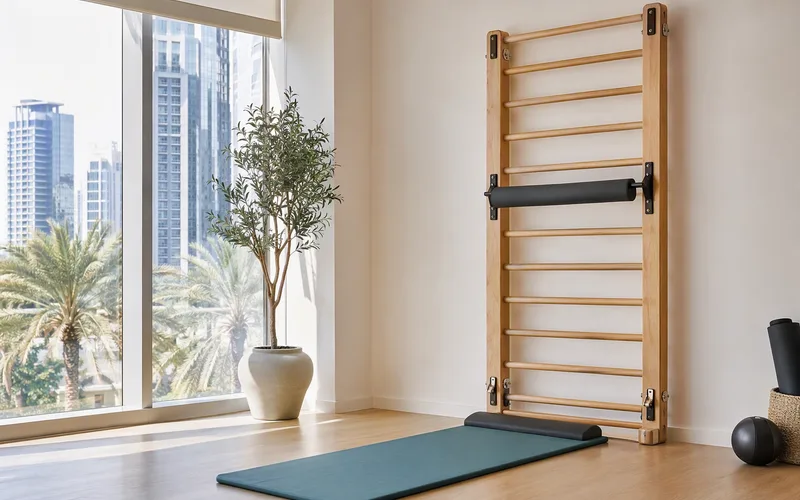
The Fuse Ladder is a vertical apparatus with a padded ladder back, bar, and adjustable springs. You position yourself against the ladder for standing, seated or supine exercises. It supports progressions in strength and control, particularly for upper body work.
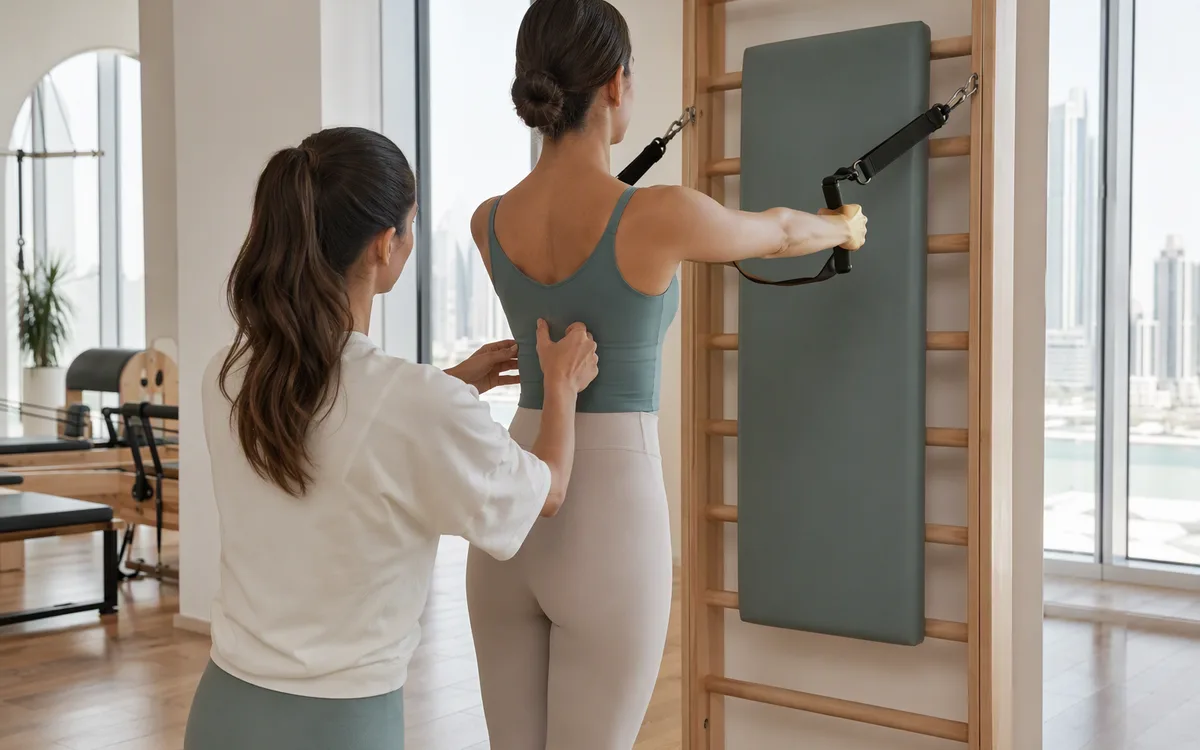
In standing arm work, you face or straddle the ladder, using the bar or push-through bar for resistance. Springs attach to these bars, providing variable tension. Your back stays in contact with the ladder to maintain alignment during arm movements.
This setup differs from free-standing exercises, as the ladder offers stability for scapular retraction and protraction. Instructors at Arjan emphasise how the apparatus isolates shoulder girdle actions without lower body compensation. New clients begin with lighter springs to master basics.
Why focus on shoulder girdle control?
Your shoulder girdle includes the scapulae, clavicles and associated muscles like serratus anterior and levator scapulae. Control here ensures smooth arm motion without strain. Pilates standing work trains this girdle to move independently of the torso.
Poor control often leads to compensatory patterns, such as shrugging shoulders during presses. Through Fuse Ladder progressions, you learn to keep scapulae depressed and retracted. This builds endurance for daily tasks and other Pilates exercises.
Key muscles involved
Main muscles are trapezius (upper, middle, lower fibres), rhomboids and serratus anterior. Instructors explain how lower trapezius activation pulls scapulae down. You feel this during controlled reaches against spring resistance.
Serratus anterior protracts the scapula forward, vital for punches or presses. Anatomy cues help you engage it without winging the scapula. Practice in small groups refines these sensations.
How do you start the progression?
Begin with standing wall presses. Stand with feet hip-width, back against the ladder, hands on the bar at chest height. One light spring provides resistance. Press forward as you exhale, keeping shoulders away from ears.
Inhale to return, focusing on scapular retraction. Perform 8 to 10 reps per side. Instructors check your neutral spine and even weight distribution through feet.
This entry-level move builds awareness of shoulder stability. Progress only when you maintain form without arching the back. Arjan classes cap at five, so you receive prompt corrections.
What comes next in the sequence?
Advance to overhead presses. Place hands wider on the bar, press upward while standing tall. Exhale on the press, inhale to lower slowly. Keep elbows soft to avoid locking.
Next, add diagonal reaches, mimicking functional patterns. Turn palms outward for better serratus engagement. Aim for 10 reps, alternating arms if instructed.
These steps layer complexity, demanding girdle control under increasing resistance. Link this to Fuse Ladder footwork for standing stability, as lower body grounding supports upper work.
How do advanced variations challenge you?
Progress to standing rows or pulls. Grip the push-through bar high, pull elbows back as if squeezing a ball between scapulae. Use two springs for more challenge.
One-arm variations increase unilateral demand. Step one foot forward for balance, pull with the opposite arm. This integrates core and girdle control.
Breathing integration
Coordinate breath: exhale on effort (pull or press), inhale on return. This stabilises the ribcage, aiding scapular glide. Instructors cue anatomy, like how breath supports intercostal muscles.
Advanced holds at end-range build isometric strength. Hold for three breaths, feeling trapezius engagement. Small class sizes at Arjan allow real-time feedback, as noted in group size benefits for full apparatus sessions.
What benefits do you gain from regular practice?
Consistent standing arm work improves posture by strengthening scapular stabilisers. You notice better shoulder alignment in daily activities. It enhances performance in other apparatus work, like Fuse Ladder pull-up bar dips.
Over weeks, you develop endurance for sustained positions. Instructors track your progress, adjusting springs as control improves. This supports overall Pilates practice in areas like Arjan and Dubai Hills.
Practice fits schedules from JVC to Motor City, with hours from 7 AM to 10 PM weekdays. Book via Glofox for your spot in capped classes.
Common questions
Do I need prior experience?
No, new clients start with an initial assessment. Instructors tailor the progression to your level. Book three introductory classes for AED 300 including VAT to begin safely.
How often should I practise this?
Aim for two to three sessions weekly. Combine with matwork or other apparatus for balance. Consistency builds control faster than sporadic practice.
Can men join these classes?
Yes, all classes welcome everyone. Men often progress quickly in arm strength due to anatomy. Small groups ensure suitable challenges for all.
What if I feel shoulder discomfort?
Stop and inform the instructor. They adjust springs or cues. This is fitness, so listen to your body and progress gradually.
How does this fit group classes?
Perfectly, with five-person caps. You get individual anatomy explanations while others practise. See class options within opening hours.