Transitioning from Mat to Reformer: Smooth Progression Tips for Arjan Clients
 Written by Sajida, Pilates Instructor, Pilates Academy Arjan
Mat Pilates develops foundational strength and awareness on the floor. The reformer introduces apparatus with springs that add challenge through resistance and mobility. Pilates Academy Arjan in Al Barsha South Third offers full classical apparatus, unlike reformer-only studios nearby, serving areas from Arjan to Dubai Hills.
What changes when you move from mat to reformer?
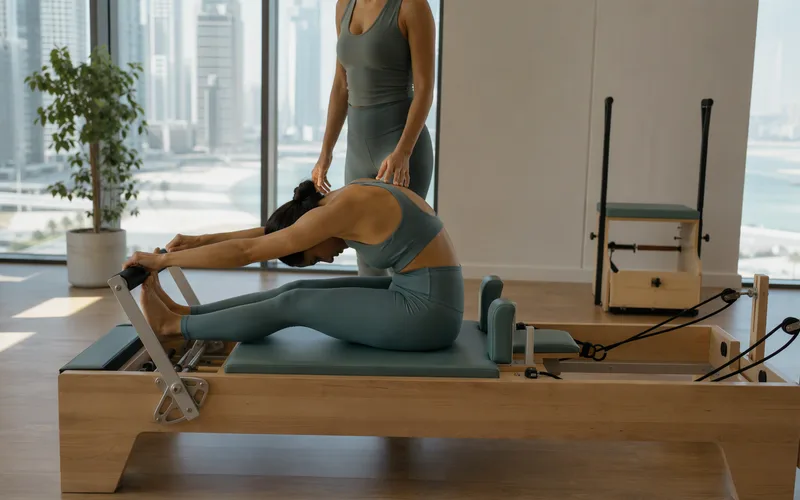
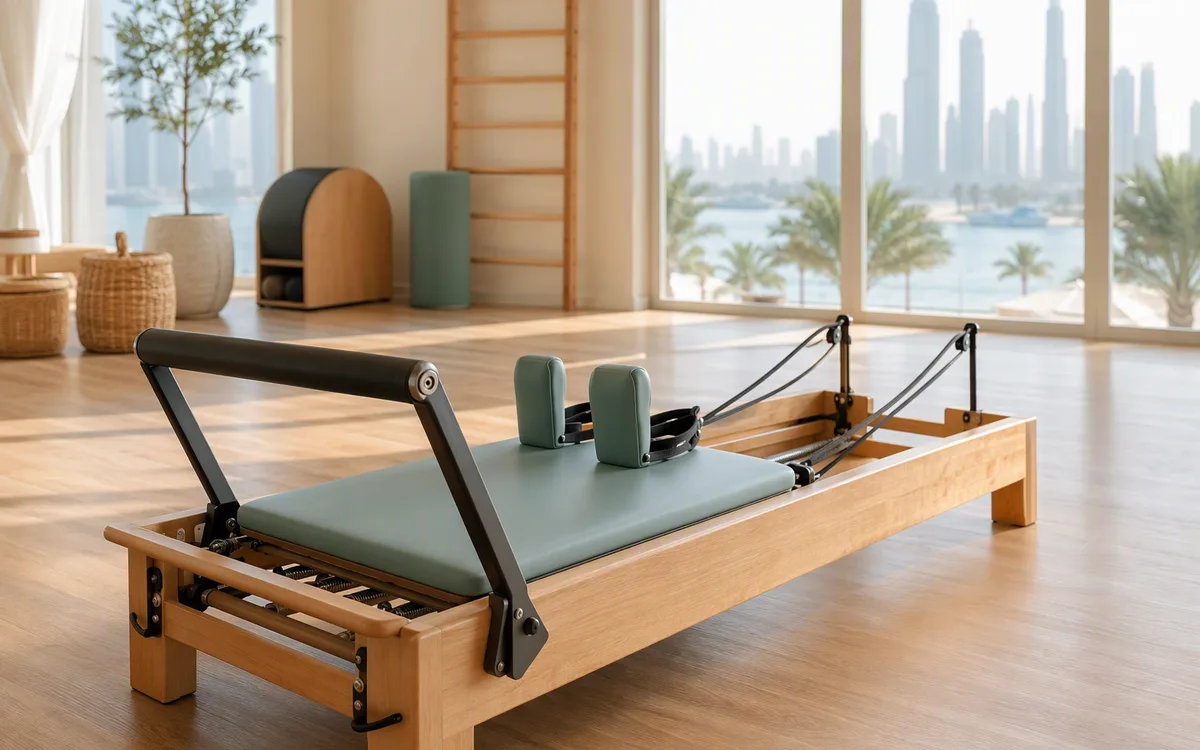
On the mat, you rely on body weight and gravity for resistance. The reformer carriage slides on rails, and springs provide variable tension you control by pushing or pulling. This shifts focus to precise resistance management while keeping the mat-honed alignment.
Your breathing stays the same: inhale to prepare, exhale to exert. However, the spring feedback demands quicker adjustments. In Arjan classes, instructors cue these differences, drawing on classical order to bridge mat fundamentals like the roll up to reformer equivalents.
Expect a learning curve in the first one to two classes. With groups of five maximum, you receive individual feedback to integrate changes without overwhelm.
How do you prepare your body before reformer classes?
Strengthen your core and hip stability from mat work first. Practice exercises like the hundred and single leg stretches to build endurance. These prepare you for footwork on the reformer, where ankle and knee alignment is key, as detailed in reformer footwork cues.
Mat warm up routine
Before class, do five minutes of mat footwork: heels, arches and toes in tabletop position. This mimics reformer footbar work. Add spine twists to mobilise your torso against future spring pull.
Mobility checks
Assess your hamstring flexibility with a forward fold. Limited range affects short spine massage on reformer. Gently stretch daily to ease the transition.
Arrive early to discuss your mat background with the instructor for tailored cues.
Which reformer exercises match your mat experience?
Footwork on reformer directly builds on mat pelvic curls. Push the carriage out with controlled breath, heels on the footbar. This progresses the mat bridge by adding spring resistance.
Hundred prep transitions from mat hundred: straps in hands, head lifted, pumping arms. Maintain scapular stability as on the mat. Short spine massage follows roll over from mat, guiding legs overhead with carriage support.
Practice these in sequence during your trial classes. Instructors at Arjan link them to anatomy, such as how springs engage the posterior chain differently from floor work.
What breathing adjustments help on the reformer?
Mat breathing emphasises lateral expansion. On reformer, add focus to resisting spring rebound on inhale. This maintains intra abdominal pressure during dynamic carriage movement.
Exhale on exertion
For pulls like leg circles, exhale fully to stabilise against springs. This prevents breath holding, common when new to apparatus. Link to your mat single leg circle practice for continuity.
Inhale for lengthening
In long stretch, inhale as you extend forward, using breath to lengthen spine against resistance. Practice mirrors mat swan prep extensions.
Record your sessions mentally: note where breath falters for next class refinement. Small groups allow real time corrections.
Need advice on your mat progress before reformer? Call the Arjan studio on +971 56 216 8166 or message us on WhatsApp.
How does small group size aid your transition?
Classes capped at five provide close observation. Instructors spot mat habits like arching the back and cue reformer specific fixes, such as neutral pelvis in footwork.
Unlike larger studios, you practice transitions multiple times per class. This builds confidence in exercises like coordination, progressing from mat boomerang twists.
Group dynamics encourage peer observation without pressure. Share mat experiences to contextualise feedback.
What common errors do you avoid when starting reformer?
Gripping springs too tightly fatigues arms early. Use core initiation as in mat teaser, relaxing shoulders. Another error: overarching the back in pulls; imprint lightly as in mat roll over.
Carriage control
Allow smooth return without slamming. Exhale to draw carriage in precisely, echoing mat control balance lowering.
Follow class etiquette by wiping handles post use. Track errors in a notebook for instructor review.
How quickly can you expect to progress?
After three trial classes, most handle basic reformer series with control. Attend two to three times weekly, aligning with beginner frequency advice. Consistency builds spring intuition.
By week four, integrate advanced footwork variations. Instructors assess readiness for full classical order on all apparatus.
Opening hours from 7 AM to 10 PM weekdays support frequent visits from JVC or Motor City.
Common questions
Do I need prior mat experience for reformer?
You benefit from basic mat work to understand principles like neutral pelvis. New clients start here in trial classes. Instructors modify for complete beginners while accelerating those with mat foundation.
Can I book reformer only classes?
Classes follow classical order, blending reformer with mat or apparatus cues. Book via Glofox for your level. Trials introduce reformer progressively within group format.
What if reformer feels too challenging?
Lighten springs and shorten range initially. Instructors adjust on site. Build via mat prep between classes for steady gain.
How does reformer differ from Cadillac?
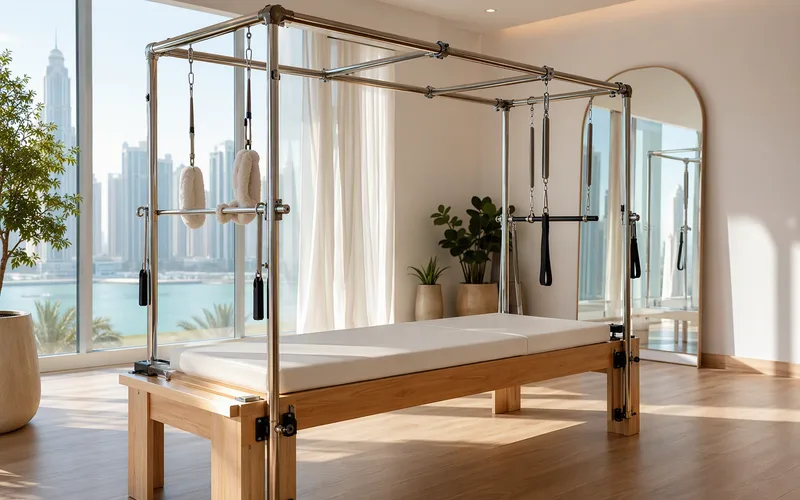
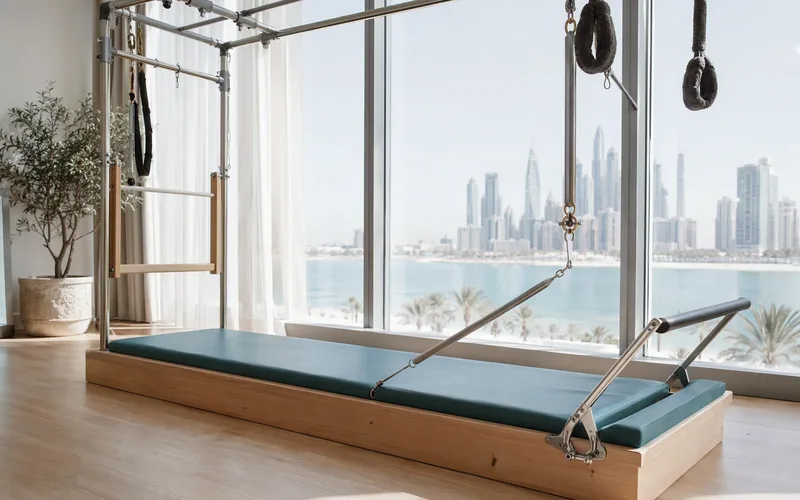
Reformer emphasises prone and supine work; Cadillac adds vertical trapeze. Both use springs but different planes. Progress to Cadillac after reformer comfort, as in Cadillac intro.
Is parking easy near Arjan?
Ample street parking at Building 88, Shop 05. Dubai Hills and Sports City clients reach in 10 to 15 minutes. Check evening schedules for post work slots.